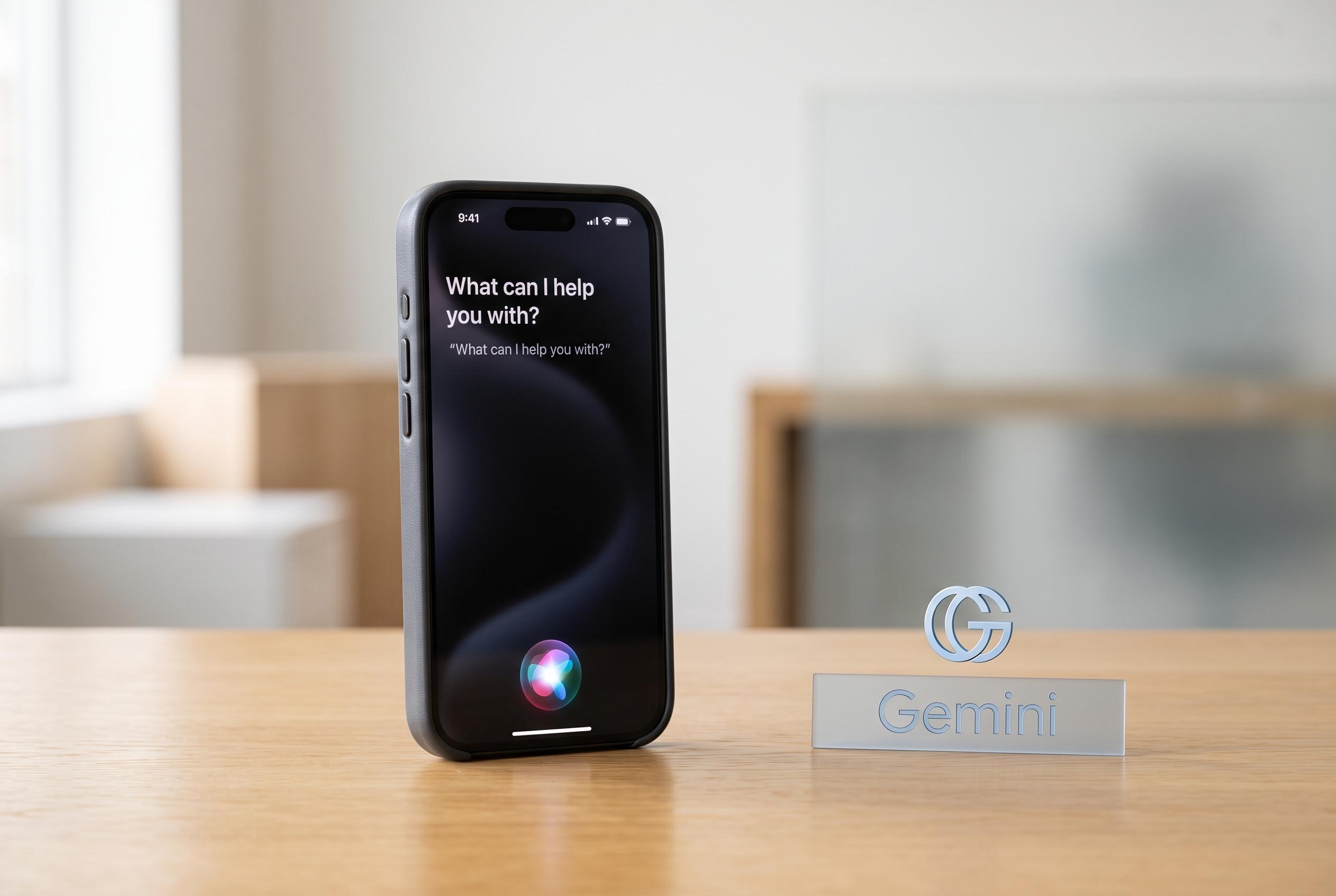

Apple’s latest Siri overhaul, backed by a multi-billion dollar partnership with Google for its Gemini AI model, blurs the lines between privacy promises and cloud-based processing, sparking regulatory and trust concerns.
Apple has built much of its brand around privacy, presenting itself as a company that offers a cleaner bargain than rivals that monetise user data. The latest overhaul of Siri, however, shows that the promise is more complicated once the assistant has to handle harder requests and more ambitious AI tasks.
According to reporting from MacRumors, Apple and Google agreed in November 2025 to a multi-year deal that would bring Gemini into Siri, with Apple paying about $1 billion a year for access to a 1.2 trillion-parameter model. In January 2026, Apple widened that collaboration to future Apple Intelligence features, while Tim Cook said the company was not changing its privacy framework and would keep the system split between on-device processing and Private Cloud Compute. Apple later unveiled the redesigned Siri at WWDC in June, describing it as its biggest Siri update in 15 years.
Apple says the assistant will rely on three routing tiers. Simple tasks are handled on the device itself, using the Neural Engine on supported iPhones. More demanding requests are sent to Apple’s Private Cloud Compute, which the company says is stateless and designed not to retain user data. The heaviest reasoning tasks, though, are expected to move to a custom Gemini model running on Google Cloud infrastructure, with reports saying Apple uses a system orchestrator to decide where each request goes.
That final tier is where the privacy questions sharpen. Apple says it strips personally identifiable and account-linked information before sending a query to Gemini, and that Google is barred by contract from using Siri interactions to train future models. But those protections are contractual rather than independently verifiable, and the underlying cloud processing depends on Nvidia’s Blackwell B200 chips with confidential computing features. Reports in June also said the cloud side would use encrypted processing and remote attestation, which can help prove the hardware has not been tampered with, but do not remove the need to trust the implementation.
There is also a regulatory dimension. The US Department of Justice has already challenged the broader Apple-Google search arrangement, and legal analysts have questioned whether a new Siri-Gemini deal could face similar scrutiny. In the European Union, Apple says Siri AI will not arrive on iPhone or iPad at launch, though it will be available on Mac, Apple Watch and Vision Pro. The European Commission has disputed Apple’s explanation, saying the delay is not forced by the Digital Markets Act. For now, the practical picture is clear: Apple’s new Siri may still be private by design, but the most advanced queries will leave Apple’s own infrastructure and rely on Google’s models, Google’s cloud and Nvidia’s hardware.
Disclaimer: This content is intended for informational purposes only. Readers are advised to exercise their own judgement, conduct due diligence, or consult a qualified expert before acting on any information provided.