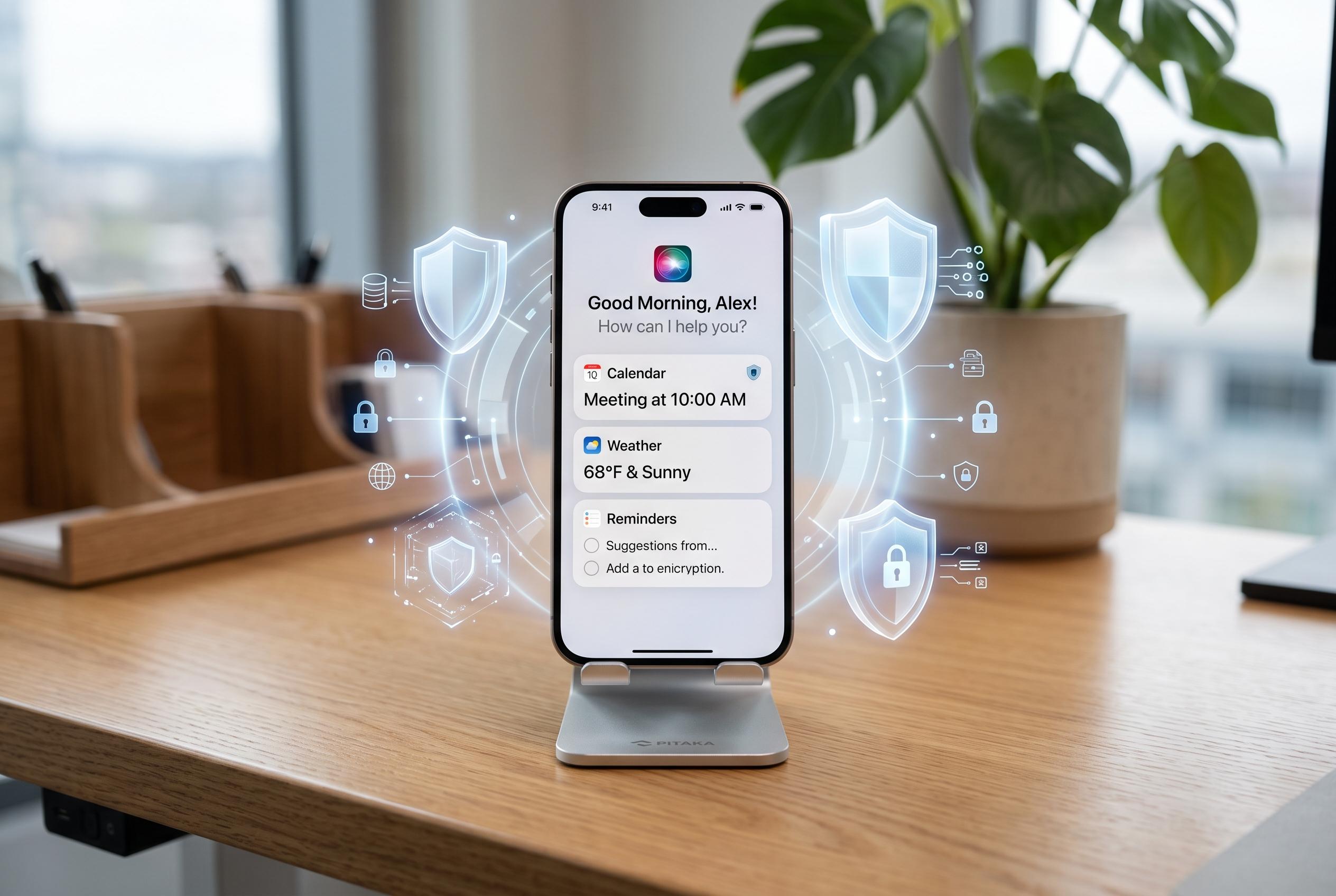

Apple’s push to enhance Siri with context-aware capabilities raises renewed privacy concerns, balancing convenience against data security in the evolving AI landscape.
Apple is pushing Siri into a more ambitious era, one in which the assistant is meant to understand context rather than wait for blunt voice commands. That shift is designed to make the iPhone feel more responsive, but it is also fuelling a familiar privacy unease: the more useful an assistant becomes, the more personal information it may need to examine.
The concern is not limited to whether Apple can keep data secure. Many users are asking a more basic question: do they want software scanning messages, photographs, calendars and what is on their screen in order to work out what they might need next? According to Apple’s privacy pages, the company is trying to answer that by processing as much as possible on the device itself, with more complex requests handled through Private Cloud Compute, a system Apple says is designed so personal data is not stored or accessible to Apple. Apple also says data sent to its servers is tied to a random identifier rather than an Apple Account.
That privacy pitch matters because the new Siri is meant to be far more contextual. It is designed to connect information across apps, surface details from conversations and help find appointments or photos without the user having to remember exactly where something is stored. Apple has presented that as a way to make the assistant feel more natural and more helpful, but the same capability can feel intrusive when software appears to discover information without a conventional search.
The cloud side of that system is where some of the tension sharpens. Ars Technica reported in June that Apple has said Siri and other AI features can remain private even when they rely on Google’s infrastructure, with the company insisting that personal data is not exposed to Google or any other third party. Apple’s security blog describes Private Cloud Compute as stateless and transparent, while Macworld has also argued that the Gemini-powered elements will not simply run on Google’s servers in the ordinary sense. Even so, the fact that some processing leaves the handset is enough to keep privacy-conscious users cautious.
Apple is not alone in trying to build assistants that can anticipate needs. Google and other technology firms are moving in the same direction, and the debate increasingly turns on trust as much as technical design. Apple has long marketed itself as privacy-first, which gives Siri an advantage in perception, but contextual AI still raises the same broader question for the industry: how much should an assistant know in order to be genuinely useful?
For smart home users, the issue goes beyond the iPhone. As speakers, cameras, appliances and automation systems become more capable, they also become more aware of daily routines and household patterns. That can make life easier, but it also expands the number of places where personal data is processed. The next phase of Siri will therefore test not only Apple’s engineering, but also how far users are willing to trade privacy for convenience.
Disclaimer: This content is intended for informational purposes only. Readers are advised to exercise their own judgement, conduct due diligence, or consult a qualified expert before acting on any information provided.