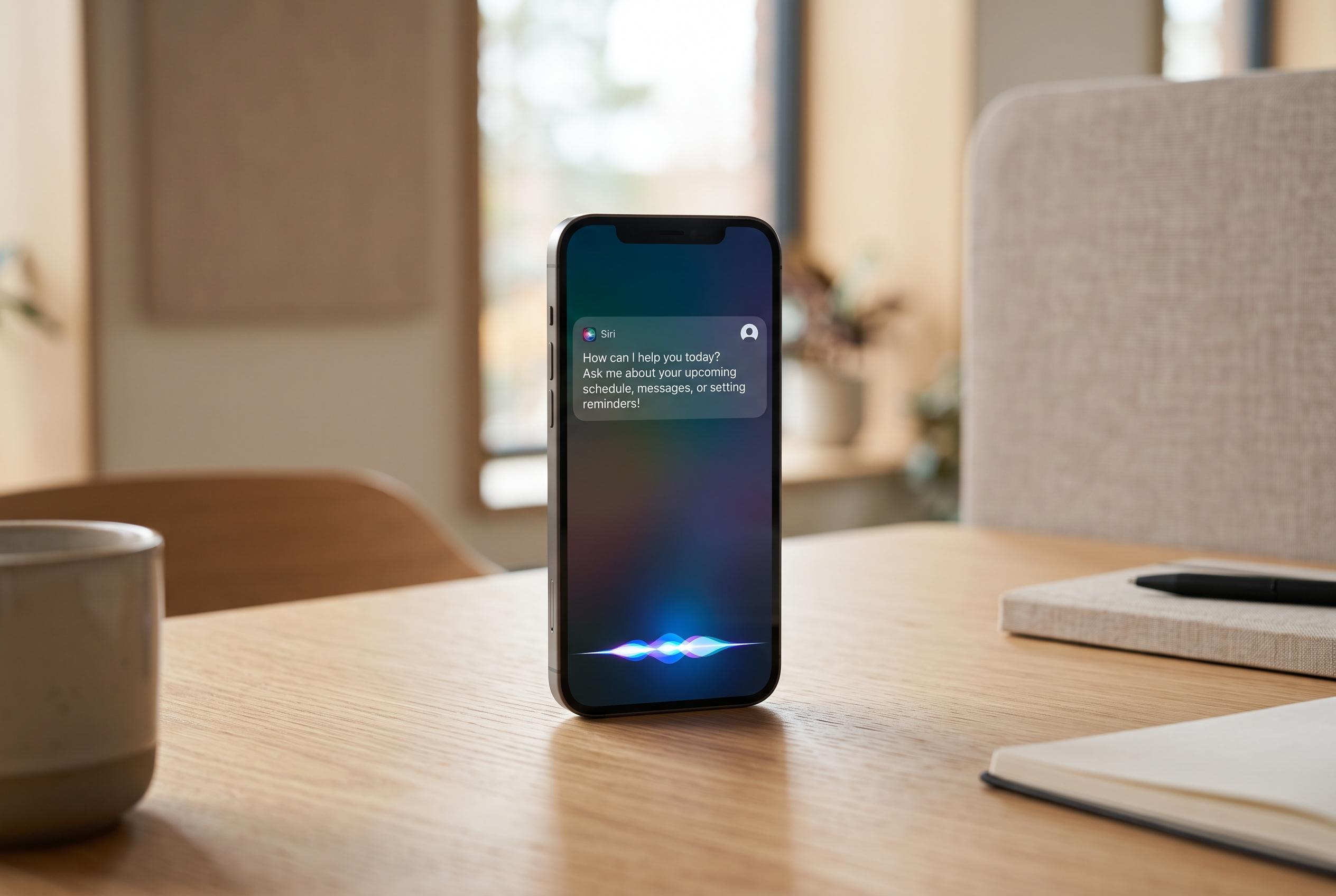

Apple has announced its most significant Siri update in years, introducing Siri AI that enables more natural conversations, broader access to personal data, and across its entire hardware ecosystem, set to roll out in 2026.
Siri has moved from being a convenient add-on to something much closer to a proper assistant again. Apple’s June overhaul, branded Siri AI, is the company’s most substantial update to the voice service in years, giving it a more conversational style, broader access to personal data and a new visual layer through Camera-based intelligence, according to Apple. It is also designed to work across iPhone, iPad, Mac, Apple Watch and Vision Pro, with the rollout tied to the company’s 2026 software releases.
That makes the basics worth revisiting. On current Apple devices, Siri can still be summoned by voice or by pressing the relevant hardware button, while Apple’s support guidance also covers activation on AirPods, Mac, Apple Watch, HomePod, Apple TV, CarPlay and Vision Pro. MacRumors says the approach varies by device, but the principle is the same: Siri works best when the shortcut to starting it is second nature.
The new version is more capable, but it is still only as useful as the commands people actually use. For everyday communication, Siri can place calls, start FaceTime sessions, send messages, read new mail, check voicemail and place calls on speaker. It can also handle quick device tasks such as switching on Wi‑Fi, Bluetooth, low power mode or the torch, taking photos, opening apps and adjusting brightness or volume without forcing users through menus.
Siri remains particularly strong at small, repetitive jobs that save time. It can set timers and alarms, convert currencies and measurements, solve basic calculations and give weather or stock-price updates. It can also help with scheduling, from checking the calendar to creating reminders and lists in natural language, which Apple says has become easier under the newer software.
Navigation is another area where the assistant is genuinely practical. Siri can give directions by car, foot or bike, find nearby places, estimate arrival times, report traffic conditions and even help with flight status or parking. For people using Apple’s ecosystem in the car, HomePod or on the wrist, those commands reduce the need to touch a screen at all.
Apple’s latest update also pushes Siri further into search and context. The new Siri AI can draw on Mail, Messages, Photos, Notes, Reminders and Calendar, while a dedicated Siri app is intended to let users carry a conversation from one device to another without losing context. Apple says Private Cloud Compute and on-device processing are central to the privacy model, and the company has tied the upgrade to devices such as the iPhone 15 Pro and newer.
For more advanced use, Siri’s real power still comes from Shortcuts. Users can chain actions together, trigger them by name and, in Apple’s newer software, even ask Siri AI to help build a shortcut. That opens the door to multi-step routines such as leaving work, starting a commute, sending an estimated arrival time and launching a playlist in one request. Apple also supports Vocal Shortcuts for custom phrases, which makes the system less dependent on Siri’s exact wording.
There is still some distance between the promise and the finished product. Apple says Siri AI remains in public beta and is rolling out later this year, with English support first and no immediate launch in the EU. Even so, the direction is clear: Siri is no longer just a command parser, but an assistant Apple is trying to make genuinely conversational, context-aware and useful across its hardware range.
Disclaimer: This content is intended for informational purposes only. Readers are advised to exercise their own judgement, conduct due diligence, or consult a qualified expert before acting on any information provided.