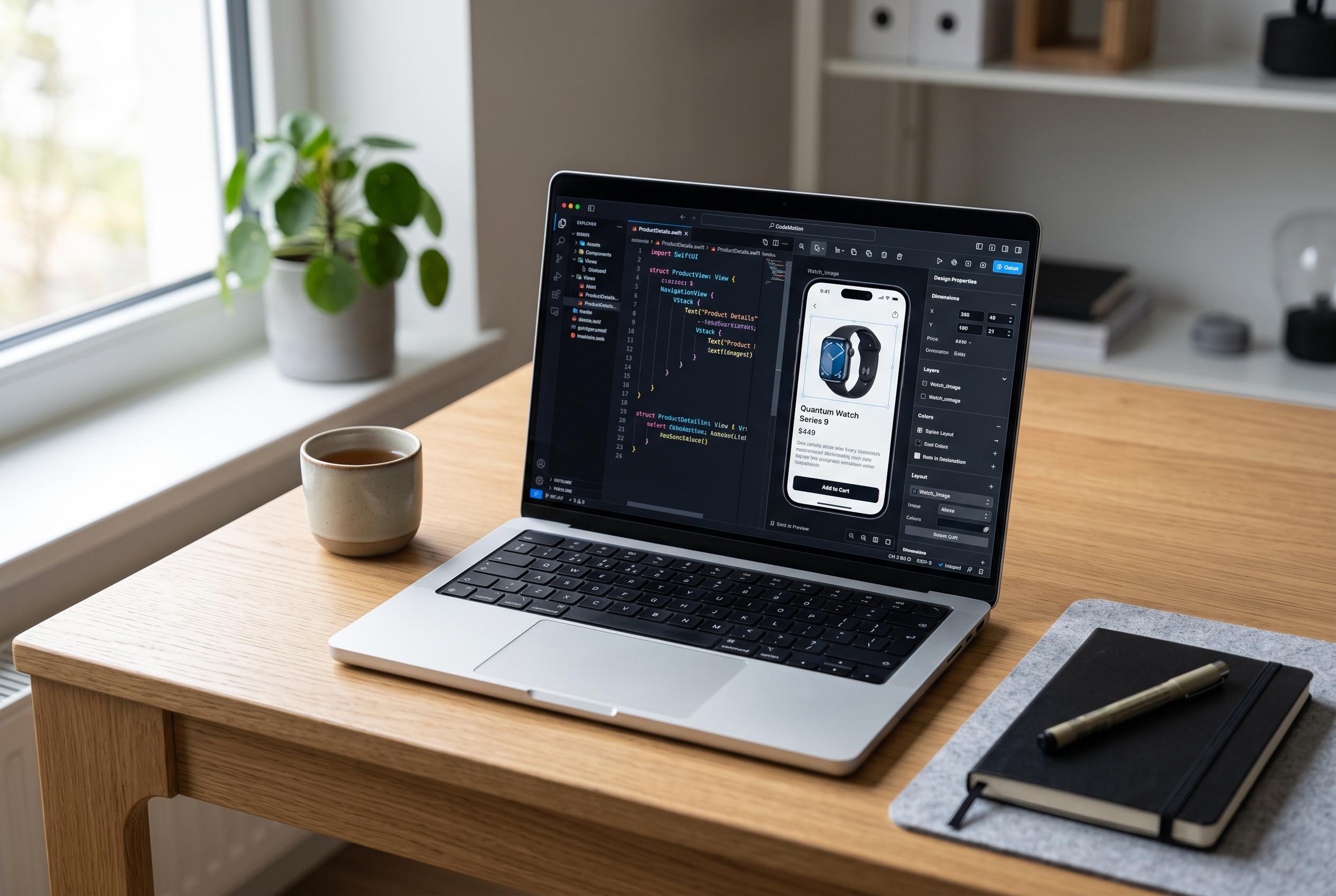

Claude Code signals a shift in product design methodology, allowing designers to build, edit, and run files directly within their development environment, reducing reliance on engineers and streamlining prototyping and collaboration.
For product designers, Claude Code marks a shift from describing work to building it directly. Yaron Schoen argues that the tool matters because it brings the model out of a chat box and into the local development environment, where it can create, edit and run files rather than merely explain what to do. Anthropic’s own Claude Design materials point in the same direction, describing a workflow in which ideas can be turned into prototypes, mock-ups and other design outputs, then refined or passed on to other tools. For designers used to relying on engineers to translate concepts into working software, that is a meaningful change in practice, not just in language.
The guide is also useful because it strips away some of the terminology that often makes AI tooling feel harder than it is. Claude Code is presented as the terminal-based version of Claude, built to work inside a project folder and manipulate files directly. Schoen explains that large language models are the engines behind these products, while context is the short-term working memory that can eventually fill up and cause the system to lose track of earlier details. That is why long sessions can become less reliable and why starting fresh sessions, or keeping a separate plan file, is a practical habit for larger projects. A course from Claude Architect Certification similarly frames Claude Code around workflow, context management and customisation features such as subagents, skills, MCP and CLAUDE.md.
The operating model is deliberately lightweight, but it is not purely hands-off. By default, Claude Code asks for approval before making changes, though users can switch to more automated behaviour or to a planning mode in which the system proposes work before acting. Schoen says he prefers automation and uses his own project notes to keep the tool aligned with his process. Anthropic’s documentation echoes that collaborative pattern, describing Claude Design as available in beta for Pro, Max, Team and Enterprise users and accessible from the web or Claude Desktop. For design teams, the practical value is clear: the system can reduce repetitive implementation work while leaving the designer in control of direction and judgement.
The broader appeal is that Claude Code extends familiar design thinking into the repository itself. Git and GitHub become the mechanism for making the work shared rather than solitary, while commands, skills and the Model Context Protocol provide repeatable ways to teach the system how a team likes to operate. Schoen’s point is not that designers need to become full-time engineers, but that they no longer need to stop at the mock-up stage. As other guides for designers and beginners now emphasise, the real question is less whether these tools can assist design work than how quickly designers can learn to use them well.
Disclaimer: This content is intended for informational purposes only. Readers are advised to exercise their own judgement, conduct due diligence, or consult a qualified expert before acting on any information provided.