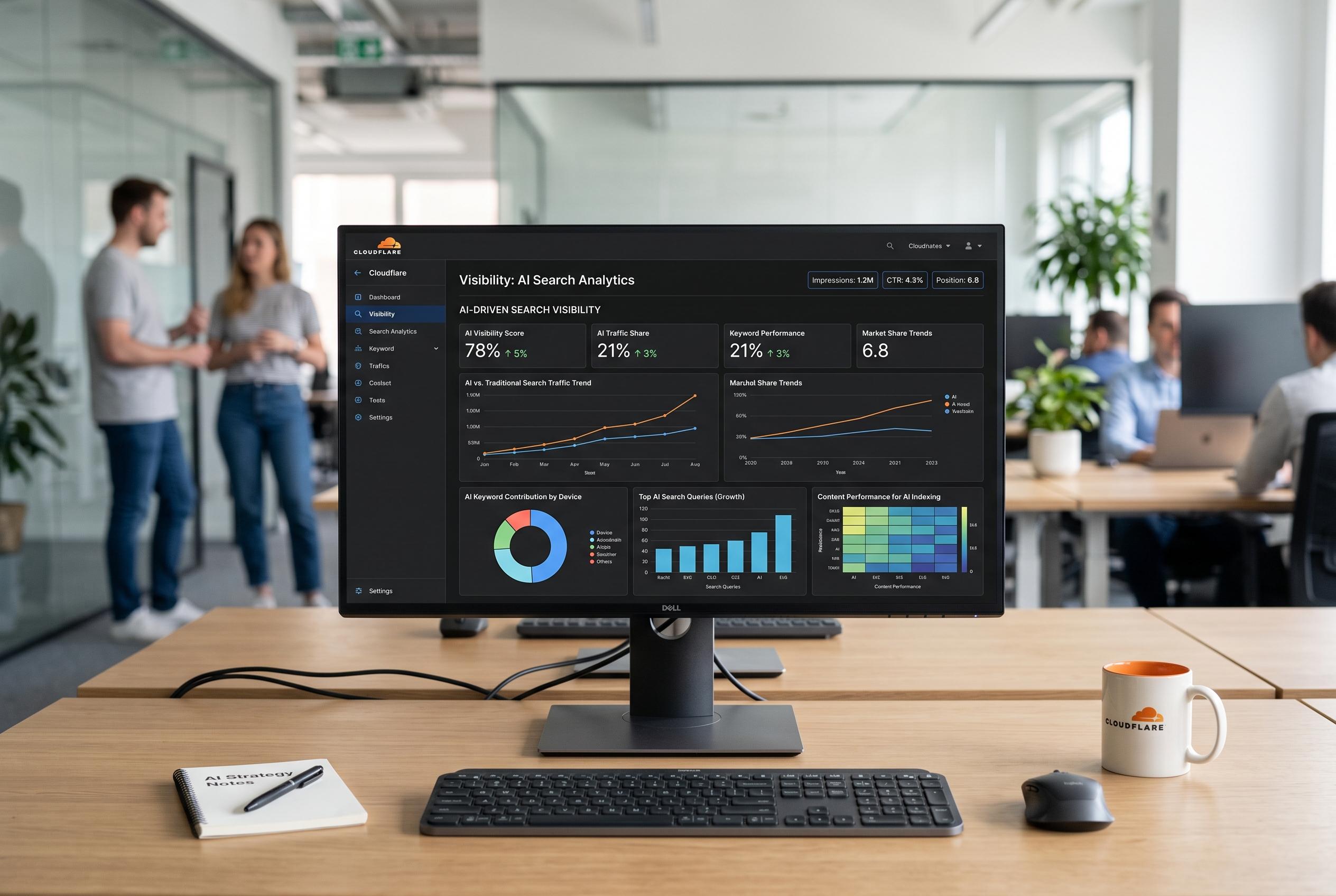

Cloudflare’s new dashboard highlights the rapid evolution of AI-focused visibility tools in SEO, amid increasing scrutiny and market competition, raising questions about trust and independent verification.
Cloudflare has added a new visibility panel to its Answer Engine Optimisation suite, a move that underlines how quickly marketers are being pushed from search rankings towards AI-generated recommendations. The company says the dashboard is meant to show whether chatbots and other assistants are naming a business when users ask relevant questions, a process it argues has been largely opaque to site owners until now. Cloudflare says the feature is designed to sit alongside its existing Agent Readiness tool, which checks whether AI systems can technically reach and read a website.
The timing matters because the wider AEO market is already crowded with vendors claiming to measure the same thing. A review published by WebBoss surveyed roughly 30 monitoring tools and found a mix of budget, mid-market, enterprise and managed-service products, which suggests the sector is still young but commercially active. Several rivals, including AEO Table and Searchable, market dashboards that track brand mentions, visibility scores, citation counts and competitor performance across AI platforms such as ChatGPT, Perplexity, Gemini and Google AI Overviews.
There is, however, a trust problem at the centre of the category. The most visible commentary on AEO remains heavily influenced by companies that sell AEO software, dashboards or consulting services, which makes independent verification difficult. That matters because the claims are not purely theoretical: Salesforce’s Fourth Edition State of Commerce report said traffic referred from AI chats to commerce sites rose between 150% and 428% year on year across each quarter it measured, pointing to a genuine change in consumer behaviour even if the best way to measure it is still unsettled.
For smaller businesses, the practical first step does not require a paid subscription. The usual advice from vendors and non-vendors is to test the same prompts a customer might use, check whether the brand appears in the answer and then fix the basics: keep content current, answer questions clearly, maintain an up-to-date Google Business Profile and make sure the site is easy for crawlers to access. Cloudflare’s own pitch is that it can see more of this activity because of its position at the network layer, but that is also why buyers will want to treat its claims with caution until there is more independent analysis of what these tools actually deliver.
Disclaimer: This content is intended for informational purposes only. Readers are advised to exercise their own judgement, conduct due diligence, or consult a qualified expert before acting on any information provided.