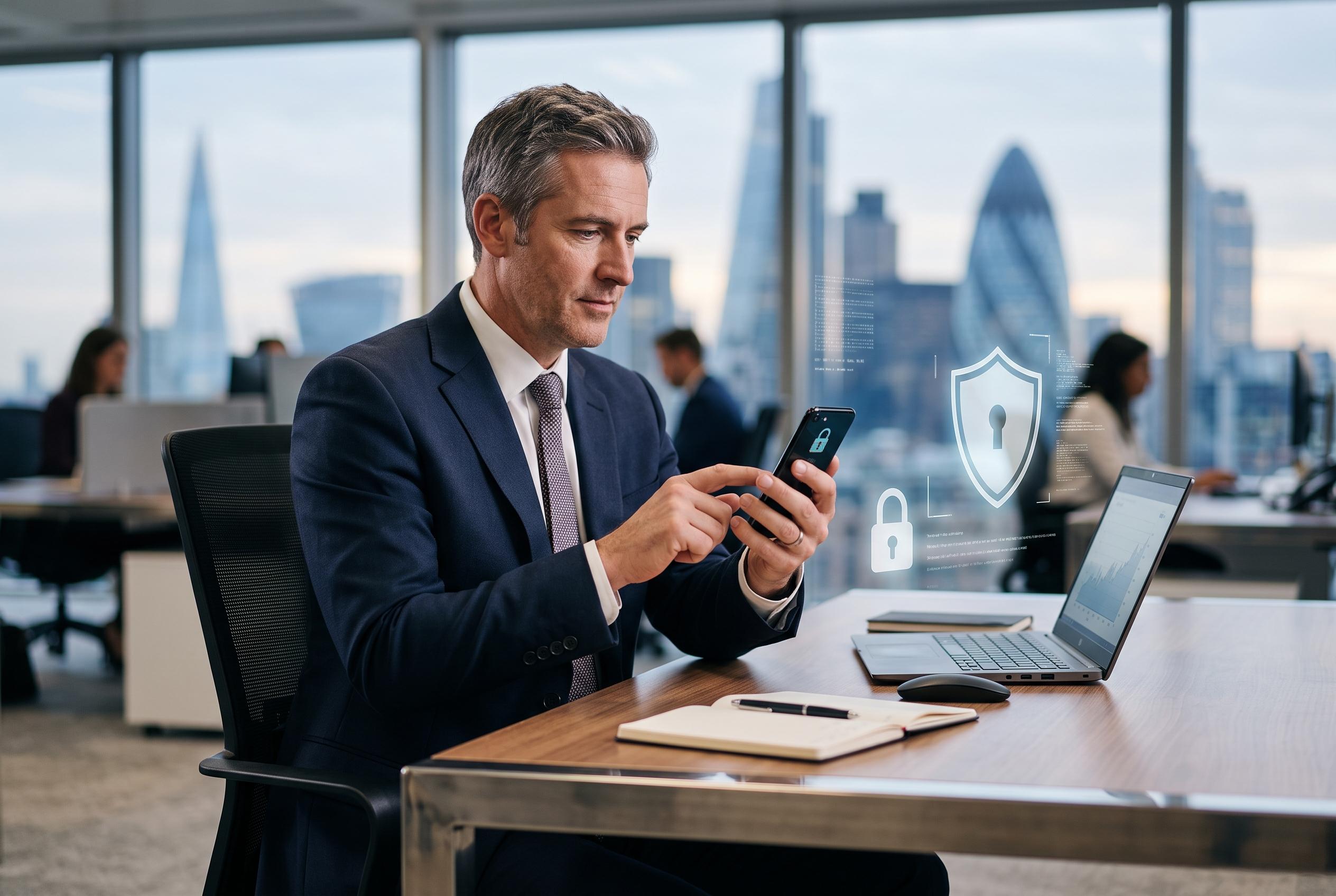

Kaspersky warns that despite the surge in personal and professional data stored on smartphones, European users’ security practices are insufficient, exposing them to rising cyber threats and malware attacks, particularly in Portugal.
Kaspersky says mobile security habits across Europe are lagging behind the amount of sensitive data now stored on phones, even as the handset becomes the centre of daily life for younger users. Its latest research found that 40% of Europeans still rely primarily on a computer to access the internet, compared with 56% who do so globally, but the smartphone is the main device for 67% of people in Generation Z aged 18 to 28.
The data collected on these devices goes well beyond photos and messages. In Europe, 61% of respondents keep personal images and video on their phones, 57% store contacts, 41% retain message histories and 29% hold important documents such as passports or identity cards. Kaspersky also said 28% store work email or access details for company systems on the same device, while 17% keep chat histories with artificial intelligence tools and 15% maintain active gaming accounts. Anton Kivva, a Kaspersky cyber-security specialist, said smartphones have become personal assistants that hold much more than basic communication data, making protection as important as the information itself.
The warning carries particular weight in Portugal. Kaspersky says more than 2.3 million attacks involving malware, adware and other unwanted software were intercepted there in the first quarter of 2026, alongside the discovery of more than 306,000 malicious installation packages. The company’s wider threat reporting has also shown that mobile attacks are rising sharply, with adware among the most common forms of mobile threat. Another Kaspersky survey found that 28% of users know little or nothing about mobile malware, while large shares of Android phones and tablets still lack even basic antivirus protection or password locks.
Kaspersky argues that users should not rely on the phone as the only place for essential records. It recommends encrypted password managers, automatic backups, immediate screen locking and built-in location tools to reduce the damage from loss or theft. The company has also said family security needs to be more systematic, after another study found that while 47% of families discuss online safety, only 33% protect all of their devices. Kivva said users often underestimate how much valuable information sits on their phones and suggested that a regular digital tidy-up, stronger authentication and routine backup checks should be treated as basic security hygiene.
Disclaimer: This content is intended for informational purposes only. Readers are advised to exercise their own judgement, conduct due diligence, or consult a qualified expert before acting on any information provided.