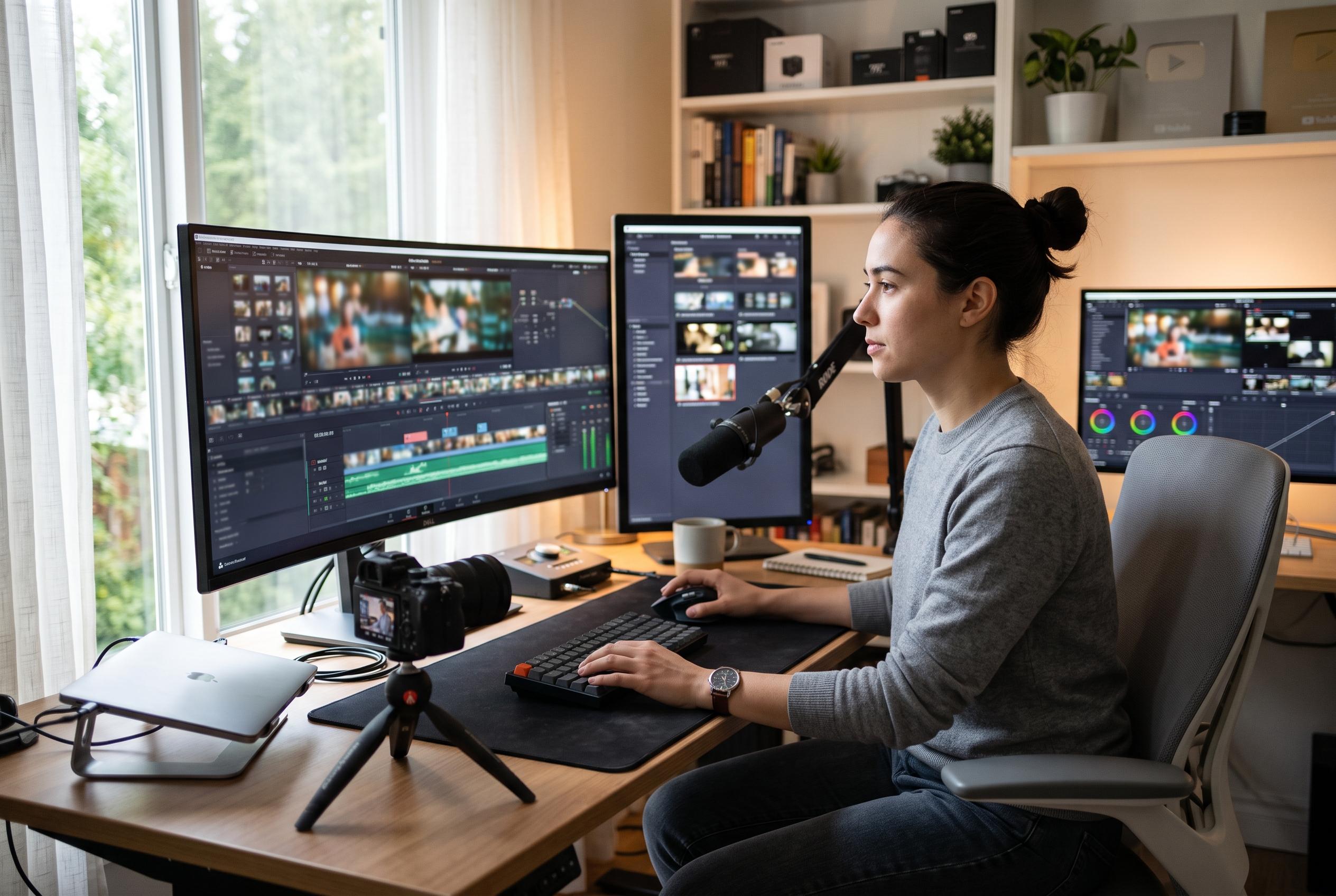

Wondershare’s latest Filmora release uses AI to organise footage, generate captions and automate tracking, targeting creators who want to cut post-production time without adopting high-end professional software.
Wondershare has released Filmora 16, the latest version of its video editor, with a clear emphasis on using artificial intelligence to remove some of the most time-consuming parts of post-production. The update is aimed at creators who want professional tools without spending hours on tasks such as sorting footage, checking captions and building tracking keyframes by hand. According to Wondershare’s launch material, the company is positioning the software as a practical assistant rather than a replacement for the editor.
One of the central additions is AI Media Analysis, which scans imported video and image files for people, scenes, locations and actions, then turns that information into searchable tags, descriptions and timestamps. Wondershare says the feature is designed to help editors find usable material more quickly, while the Smart Media Bin uses those insights to organise large projects into a more manageable library. The effect is to reduce the need for manual review before the actual edit begins.
Filmora 16 also expands on motion and colour tools that are normally labour-intensive in traditional editing software. Camera Tracking can follow a head, body or custom area without the editor building every movement frame by frame, while the Color Mask tool allows local grading with either shapes or AI masks. Wondershare says the 360° Video Reframing function is intended to make immersive footage easier to adapt for standard screens, giving users more control over how a shot is repurposed.
The software adds further workflow tools that reflect the same approach. AI Subtitle Generation creates captions automatically and then lets users correct errors rather than transcribe audio from scratch. Multi-source recording captures screen, camera, microphone and system audio in a single session, while keeping those elements separately editable afterwards. That makes the software more suitable for tutorials, livestreams and other productions where several feeds must be handled together.
Wondershare is also pitching Filmora 16 as accessible to a wider range of users than high-end professional suites. The company says the software runs on relatively modest hardware, with an Intel sixth-generation or AMD Ryzen 3 1300X processor meeting the Windows minimum and Apple silicon supported on Mac. Sixteen gigabytes of memory is recommended for 4K work, suggesting that the package is intended for independent creators, small teams and enthusiasts as much as for experienced editors.
The release comes as major software makers continue to push AI deeper into creative work. TechCrunch recently reported that YouTube has been testing conversational editing tools, while Engadget said Adobe has optimised Premiere Pro and Photoshop for NVIDIA’s RTX Spark platform. In that context, Filmora 16 fits a broader industry shift: software is increasingly handling organisation, correction and routine adjustments so that editors can concentrate on pacing, structure and visual style.
Disclaimer: This content is intended for informational purposes only. Readers are advised to exercise their own judgement, conduct due diligence, or consult a qualified expert before acting on any information provided.