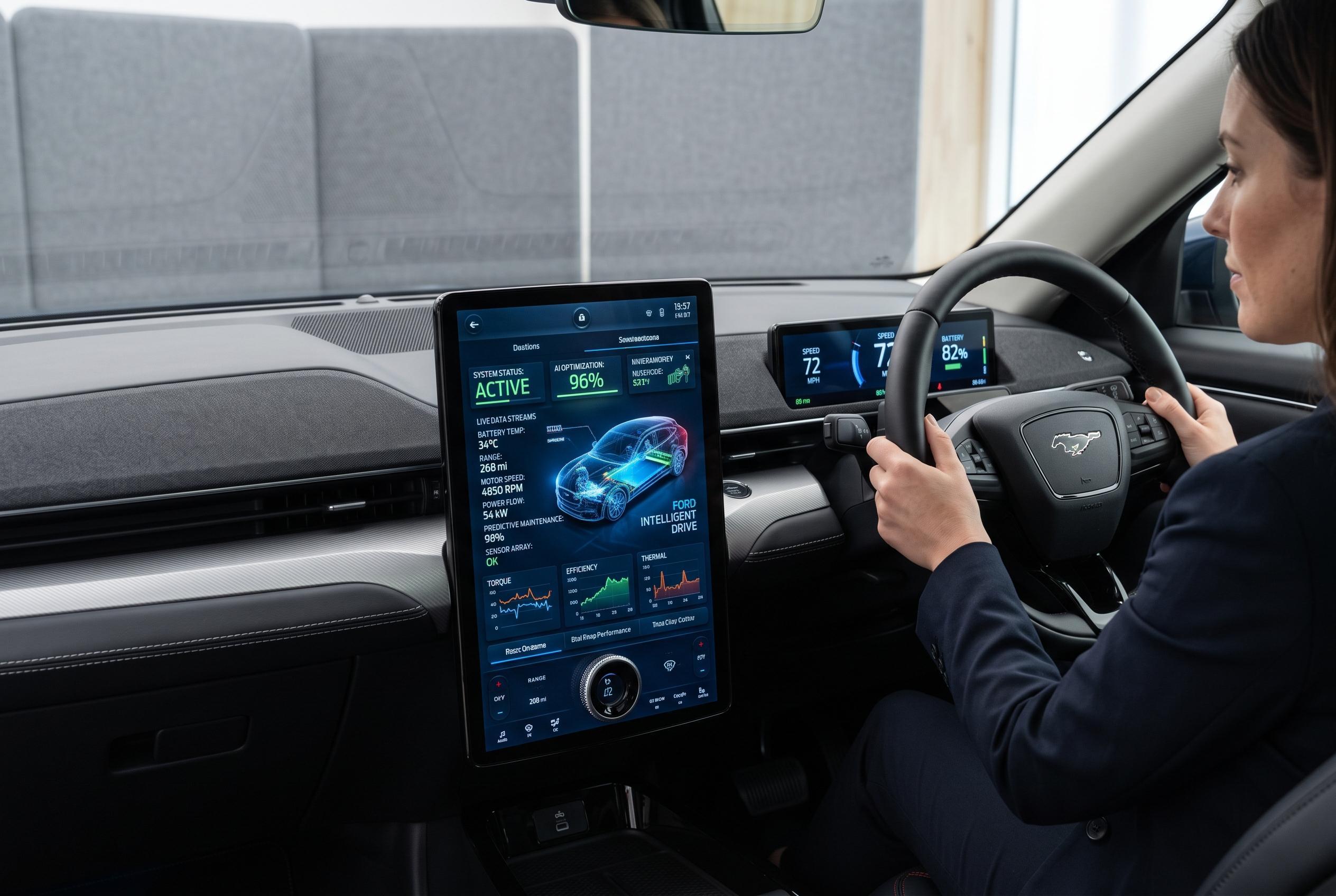

Ford is expanding its AI assistant to access real-time vehicle information, promising more precise troubleshooting and user support starting in 2026, with wider industry adoption on the horizon.
Ford is moving to make artificial intelligence more useful by tying it to one thing a generic chatbot does not know: the driver’s actual vehicle. The company’s AI assistant, available through the Ford and Lincoln mobile apps, can answer questions about features, walk users through troubleshooting and retrieve live vehicle data such as fuel or charge level, tyre pressure and oil life. Ford says the rollout began in the first half of 2026 and is now widening across eligible models, with about 8 million customers in scope.
The key distinction is context. Instead of asking owners to type in their model details before getting help, the system is linked to the specific vehicle in the app. That lets it handle more targeted queries, including step-by-step guidance for certain faults. Ford has pointed to a jammed window that keeps reversing as one example of the kind of problem the assistant can help diagnose. Users can also upload an image, giving the system another clue when they are trying to identify a part or explain a fault.
Ford says the assistant draws not only on static guidance but also on the vehicle-status data already available through the app. In practice, that means it can respond to the condition of the car at that moment rather than giving only general advice. Ford support pages already show that the app can surface tyre pressure information once the vehicle has been added and the modem activated, while other Ford systems have long exposed data such as fuel economy, oil life and distance to empty.
The app launch is part of a broader push to bring more AI into Ford’s products. The company plans to place its own assistant inside selected vehicles in 2027, extending the same vehicle-aware approach from smartphone to dashboard. In the nearer term, Ford is also adding Google Gemini as an opt-in voice option in vehicles with its latest digital interface, positioning Gemini for general tasks such as navigation, texting, climate control and entertainment while Ford’s own assistant focuses on vehicle-specific questions. The wider industry is making similar moves, with Rivian and Mercedes-Benz rolling out voice assistants, BMW using Amazon Alexa technology and General Motors turning to Gemini. Ford’s longer-term test will be whether access to live vehicle data turns AI into a practical ownership tool rather than just another voice interface.
Disclaimer: This content is intended for informational purposes only. Readers are advised to exercise their own judgement, conduct due diligence, or consult a qualified expert before acting on any information provided.