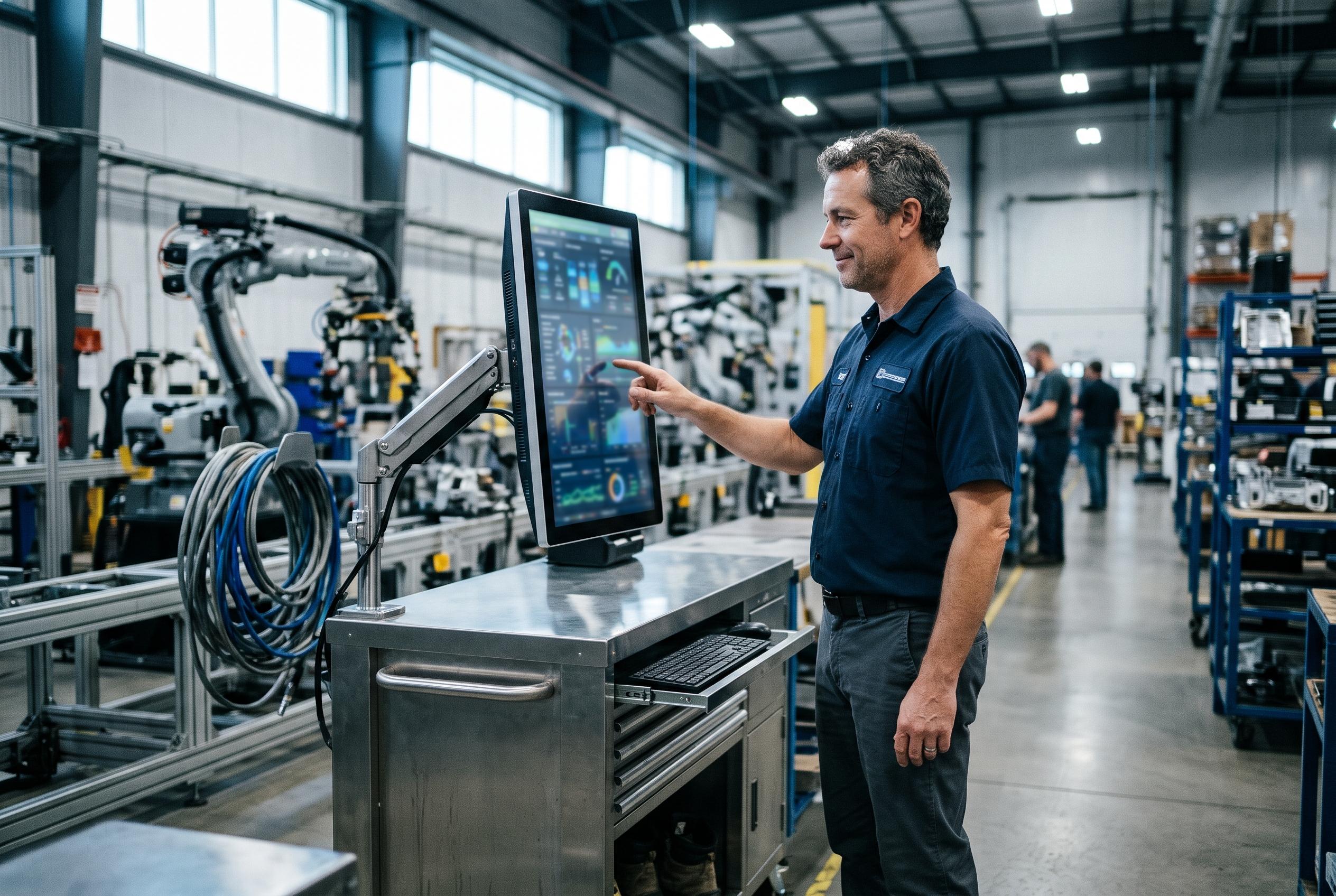

Fulcrum’s new Builder tool turns plain-language requests into live manufacturing dashboards, workflows and apps, including actions that update jobs and retain their history.
Fulcrum has introduced Builder, a new tool designed to let manufacturers create custom dashboards, apps and workflow tools by describing what they want in plain language, rather than waiting for a vendor release or commissioning outside development. The company says the system is intended to fill the gap left by highly specific shop-floor processes that standard software rarely covers, from customer-specific shipping labels to instructions still trapped in binders or spreadsheets.
According to Fulcrum, users can enter a request such as a list of jobs behind schedule, grouped by department and showing the current operation for each one, and the platform will assemble a working application from the underlying live data. The software is then able to generate practical actions as well, including buttons that advance a job to the next operation and update its due date, with those changes written back to the system and retained in the job history.
The launch sits alongside Fulcrum’s wider push into AI-assisted manufacturing software. The company already promotes live dashboards, reporting tools and AI-driven report generation for operations, personnel tracking, scrap reporting and production reporting. It also offers an AI form builder that turns natural-language descriptions into structured workflows, forms and conditional logic, suggesting that Builder extends the same approach from forms and reports into broader shop-floor applications.
That positioning places Fulcrum among a growing group of software vendors pitching no-code or low-code manufacturing tools aimed at faster deployment and less dependence on specialist developers. Other providers, including BlackBox Manufacturing, MACH Reporting & Analytics, Softr and Blocsys, all market configurable dashboard-building or analytics systems that promise real-time visibility without long implementation cycles. The common thread is clear: manufacturers are increasingly being offered tools that translate operational knowledge directly into software, rather than forcing teams to adapt their processes to rigid off-the-shelf systems.
Disclaimer: This content is intended for informational purposes only. Readers are advised to exercise their own judgement, conduct due diligence, or consult a qualified expert before acting on any information provided.