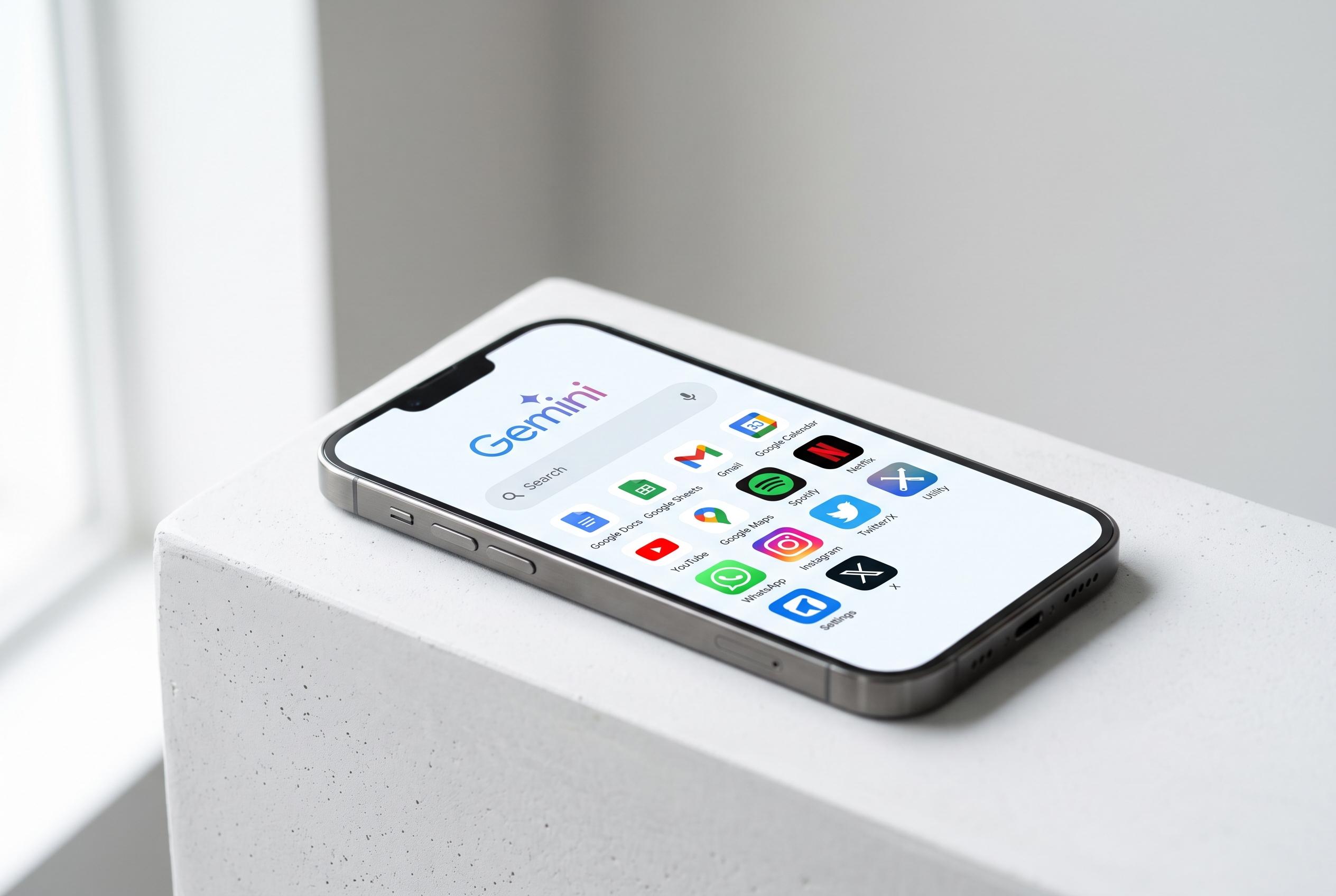

Google is transforming its Gemini AI from a simple Q&A tool into a broader, action-based assistant by integrating more than a dozen new app connections, pushing it towards becoming a unified platform for everyday tasks amid rapid user growth.
Google is widening Gemini’s role from a question-and-answer tool into a more action-oriented assistant, as it prepares to add more than a dozen new app connections. The move comes as the company says Gemini has passed 1 billion monthly active users, placing the service among Google’s fastest-growing products and underscoring how quickly AI assistants are moving into everyday workflows. The new integrations are intended to reduce the need to move between separate apps for tasks such as planning, booking and document handling.
According to TechCrunch, Gemini had already climbed to more than 950 million monthly active users in the second quarter of 2026, up from 750 million earlier in the year, showing the scale of its recent growth. The same reporting said Google chief executive Sundar Pichai had pointed to features such as Daily Brief and the personalised Gemini Spark agent as drivers of uptake, while the app has also seen strong adoption on iOS. The latest expansion suggests Google wants to convert that audience into regular users of a broader task platform rather than a simple chatbot.
The newly announced connections span productivity, home services, healthcare, entertainment and travel. Google says Gemini will work with Otter.ai and Granola for meeting notes, with Wix for website edits, and with services such as Angi, Thumbtack and Zocdoc for finding tradespeople or booking medical appointments. In leisure and planning, the assistant will tie into Ticketmaster, Fever, GetYourGuide, Localiza and OpenTable, while Pandora and iHeartRadio are being added for music playback. The OpenTable extension, already available in the United States, is now being rolled out in the United Kingdom.
This wider push builds on Gemini’s existing connected-apps system, which Google says can already handle tasks across services such as Gmail, Calendar, GitHub, Google Home, Instacart and WhatsApp when users grant permission. The company’s aim is to turn Gemini into a single conversational layer for completing actions, not just retrieving information. That ambition also raises the stakes: the more Gemini is allowed to execute bookings, edits and purchases, the more its language model has to interpret instructions precisely and reliably.
Disclaimer: This content is intended for informational purposes only. Readers are advised to exercise their own judgement, conduct due diligence, or consult a qualified expert before acting on any information provided.