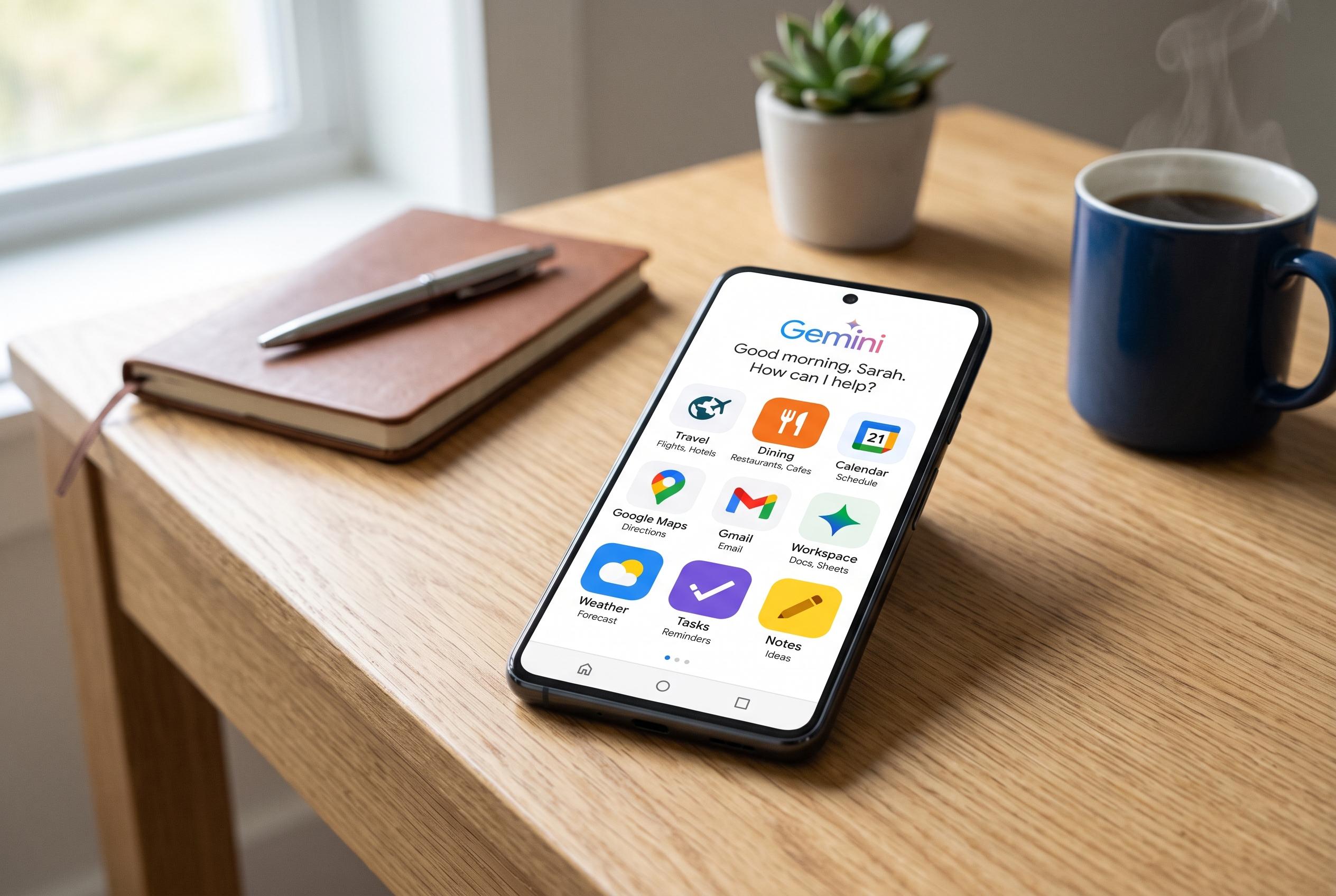

Google’s Gemini AI assistant is set to integrate with a range of third-party apps, transforming it from a chatbot to a practical task execution platform across travel, dining, and productivity services, with enhancements arriving over the coming weeks.
Google is widening Gemini’s reach with a fresh set of app links that turn the assistant into a more practical task hub. Announced at Made by Google, the additions are due to arrive over the coming weeks and are aimed at letting users plan, book and complete everyday jobs without switching between services.
The expansion builds on Google’s broader push to make Gemini less of a chatbot and more of an action layer across its products. Google said in August 2024 that Gemini already worked with several of its own apps, including Keep, Tasks, Utilities and YouTube Music, while deeper Android integration was designed to make the assistant aware of what is on screen and able to help more directly.
This next wave extends that approach beyond Google’s ecosystem. On the productivity side, Gemini is being connected to Granola and Otter.ai for meeting summaries, and to Wix for website edits from within the assistant. In practice, that means users should be able to ask Gemini to carry out work that previously required opening separate apps and moving data between them.
The more immediately consumer-facing changes are in travel, dining and live events. Gemini is set to work with Fever for events and tickets, GetYourGuide for travel experiences, Ticketmaster for concert access and Localiza for car hire. OpenTable is also being added, although Google says that integration is currently limited to the United Kingdom.
Google’s own support pages show that the OpenTable link already goes further than simple search. Users can check availability, book tables and manage reservations through Gemini on mobile and web, provided they are signed in, over 18 and have activity tracking enabled. That makes OpenTable one of the clearest examples yet of Gemini shifting from information retrieval to direct task execution.
The broader direction is also consistent with Google’s recent AI strategy. Since introducing Gemini in 2023, the company has steadily tied the model into more of its consumer and cloud products, while recent updates to Gemini Live and other AI tools have pushed towards more natural, multimodal interactions across voice, text and vision. The new partnerships suggest Google now wants Gemini to become the front end for third-party services as well.
Disclaimer: This content is intended for informational purposes only. Readers are advised to exercise their own judgement, conduct due diligence, or consult a qualified expert before acting on any information provided.