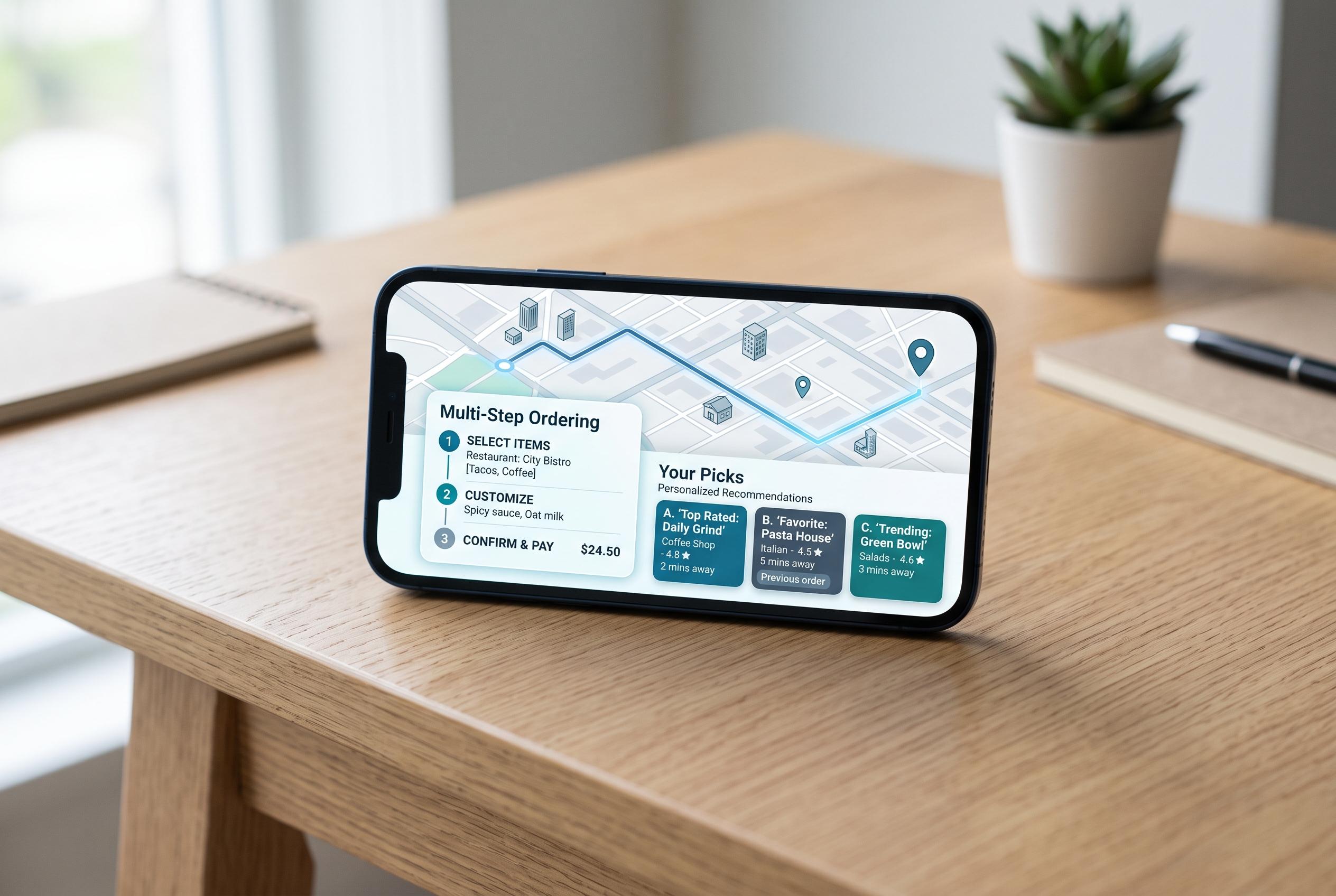

Google Maps introduces Ask Maps and Personal Intelligence layers to facilitate food orders, hotel searches, and event discovery, moving closer to a transactional assistant capabilities while maintaining user control over final steps.
Google Maps is moving further towards an assistant-like role, with its Ask Maps feature now able to help people with food orders, hotel searches and event discovery. The update is designed for multi-step requests, but Google still stops short of full automation: users can ask for a meal that fits a dietary requirement, review the options, add items to a cart and then complete payment themselves. For hotel searches, the tool can compare prices, vacancy, ratings, exact locations and amenities, though booking still happens through a partner website.
The changes build on Ask Maps, Google’s conversational layer inside Maps, which can answer more complex local queries and return tailored recommendations. According to reporting by 9to5Google, the feature is being rolled out in the United States and India on Android and iOS, with desktop support expected later. Google’s own Maps information page describes Ask Maps as a way to surface answers, tips and suggestions based on a user’s preferences and saved places.
Google is also adding a layer it calls Personal Intelligence, which draws on information from other Google services to make responses more relevant. The company says users can choose to connect Gmail so Ask Maps can use travel and reservation confirmations when answering questions about trips, flights and hotels. That integration is turned off by default, and links with Google Calendar and other apps are expected to follow later.
Early reporting suggests Google is also broadening how far Ask Maps can go in practical tasks. Tom’s Guide said the food-ordering capability is being tied to partners such as Toast and Square, with Uber Eats support said to be on the way, while Android Authority reported that code hints at ordering functionality still being prepared in the app. Taken together, the changes point to Google trying to make Maps less of a navigation tool and more of a transaction layer, while keeping the final confirmation steps with the user.
Disclaimer: This content is intended for informational purposes only. Readers are advised to exercise their own judgement, conduct due diligence, or consult a qualified expert before acting on any information provided.