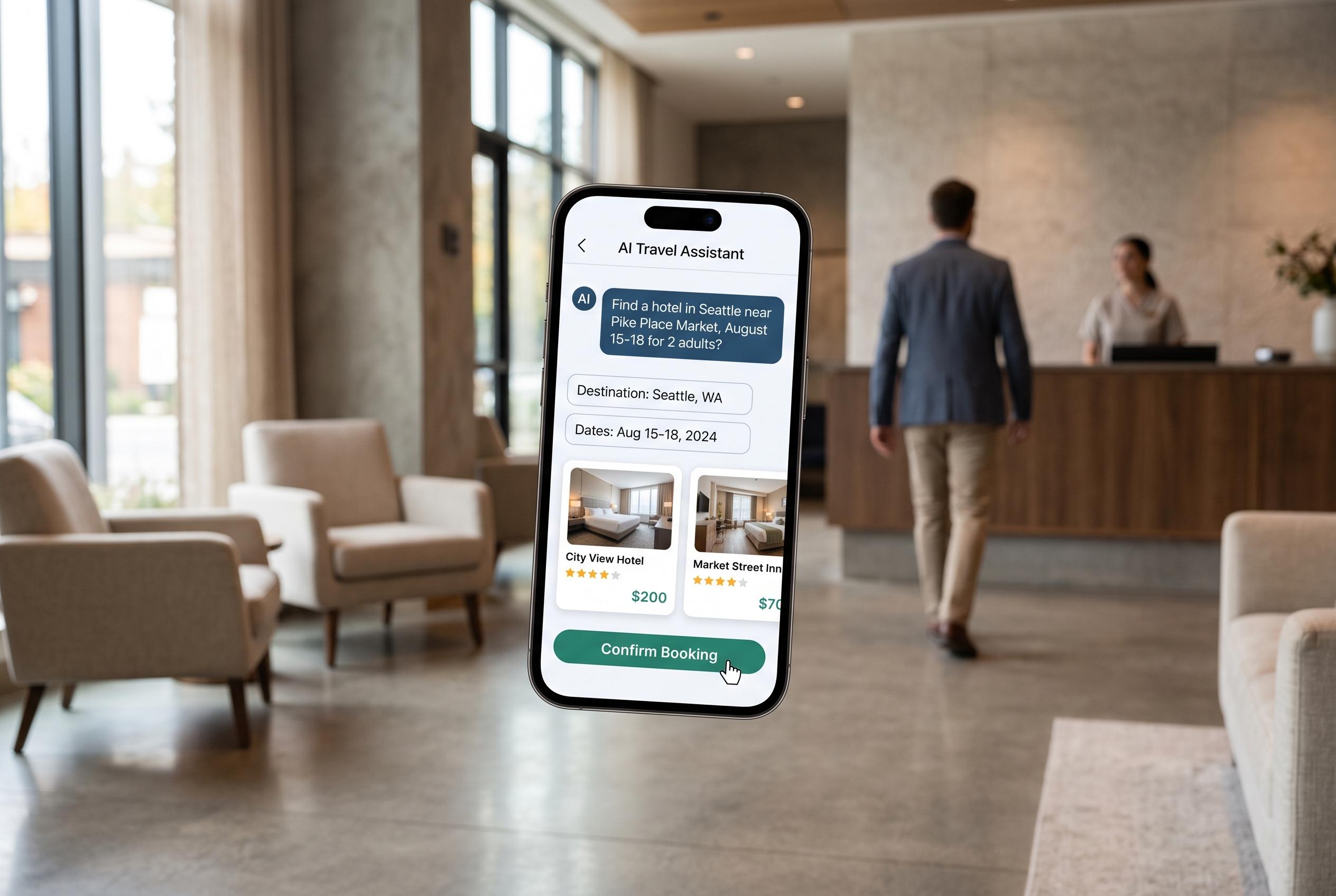

Google’s limited test of agentic hotel bookings within AI Mode signals a shift towards more conversational, personalised travel shopping, blending discovery and purchase in a seamless, AI-driven experience.
Google has started testing agentic hotel booking inside AI Mode for a limited group of users in the United States, a move that underlines how quickly search is being folded into transaction-ready travel tools. According to Google’s support material, the feature lets eligible users search for hotels and complete bookings without leaving AI Mode, provided they have a Google Account and a valid payment method. The merchant still confirms the reservation, processes payment and handles changes, which means Google is acting more as the interface than the seller.
For hoteliers, the significance is less about a single booking flow than about where Google is positioning itself in travel. Coverage of Google I/O 2026 described the company’s broader agentic search effort as a way to build itineraries from live data, pricing and availability while keeping users inside Google’s own environment. That fits a wider pattern: search, comparison and booking are being pulled into one conversation-led experience, which could reduce the distance between inspiration and purchase.
Google has also been careful to say it does not want to become an online travel agency. Hospitality Today said the company’s strategy is to support discovery and comparison while preserving bookings through partners, including OTAs, hotel groups and technology providers. Marriott’s Anthony Capuano has publicly discussed the brand’s work with Google on agentic AI booking, a sign that major hotel companies are already preparing for a distribution model in which AI intermediaries may influence demand as much as traditional metasearch or direct search.
The practical impact may be gradual, but it is likely to be structural. Google’s hotel test, together with its broader agentic commerce plans, suggests that travel shopping will become more conversational, more personalised and more action-driven. For hotels, that raises familiar but sharper questions about visibility, pricing parity, data access and who owns the guest relationship once booking begins inside an AI layer rather than a conventional website.
Disclaimer: This content is intended for informational purposes only. Readers are advised to exercise their own judgement, conduct due diligence, or consult a qualified expert before acting on any information provided.