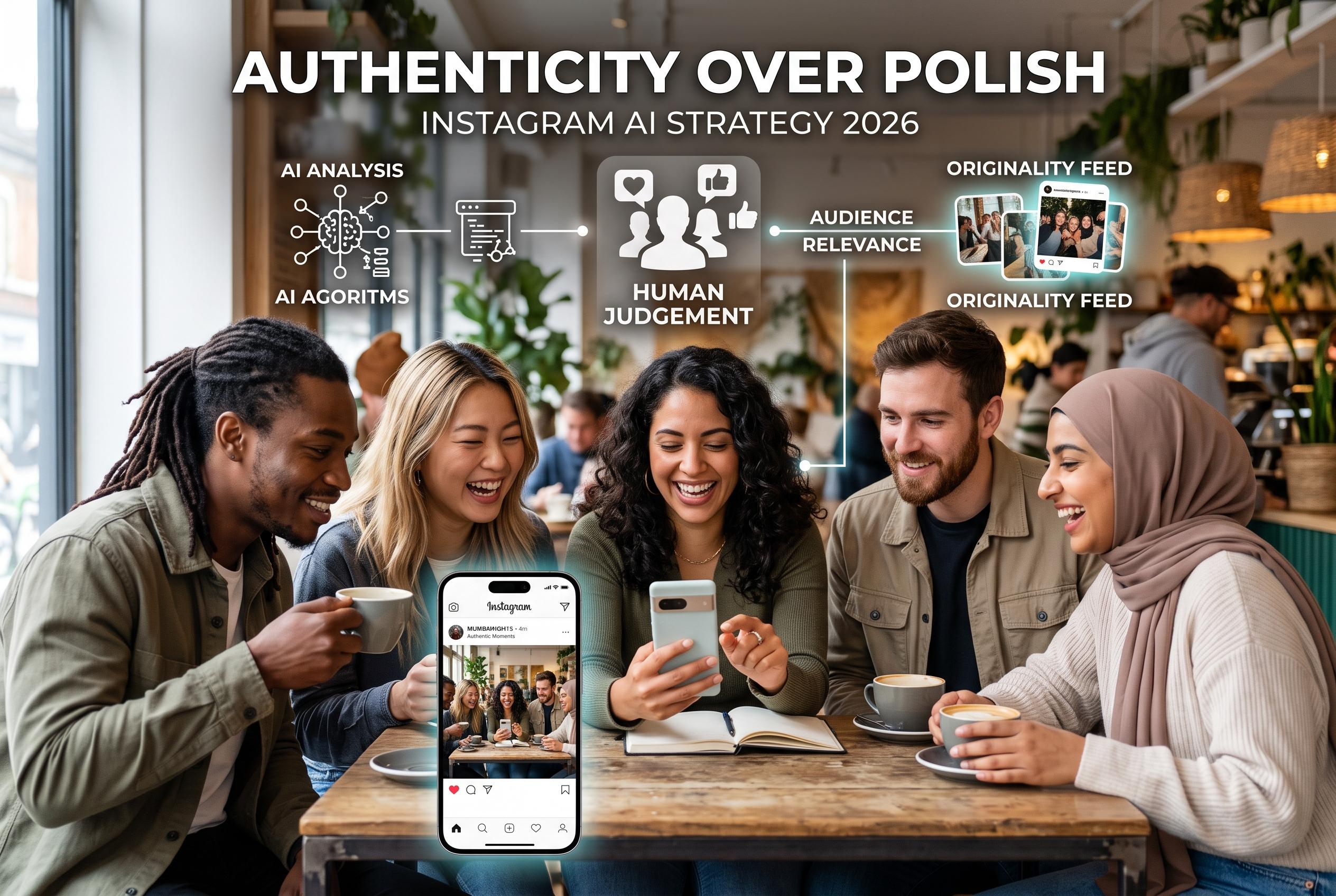

In 2026, Instagram’s utilisation of AI is shifting focus from automation to fostering genuine engagement, prioritising audience relevance, authenticity, and human judgement over polished automation and one-size-fits-all strategies.
Instagram’s use of artificial intelligence in 2026 is less about replacing human judgement than about shaping where human behaviour still matters most. The platform does not rely on a single ranking system. Instead, it uses separate models for Feed, Reels, Stories and Explore, which means the same post can perform very differently depending on where it appears. Several recent explainers agree that this segmentation is central to how Instagram distributes content and why a one-size-fits-all posting strategy is rarely effective.
Within those systems, the strongest signals are tied to real audience behaviour. Watch time, shares and likes relative to reach carry particular weight, while Stories tend to reward recency and close relationships. The clearest pattern is that forwarding, replying and sustained viewing matter more than passive exposure. That helps explain why polished content does not automatically win: Instagram appears designed to prioritise material that triggers genuine interest rather than content that simply looks production-heavy or heavily automated.
That does not mean AI has no place on the platform. It can still save time by drafting captions, resizing assets, repurposing video and managing schedules. But the same tools can also make accounts feel repetitive if they are used as a substitute for editorial judgement. The more effective approach is to use automation for mechanical tasks and keep people involved in the parts that shape tone, originality and context. Several of the source pieces make the same broader point: content may be easier to produce at scale, but it is still audience relevance that determines whether it travels.
That logic extends to customer service in Instagram direct messages, where automated replies can handle routine questions and speed up responses. The material reviewed suggests AI assistance can improve reply times by about 20 percent, but it also stresses that human handoff remains essential for complaints, refunds, sensitive information and unusual requests. In practice, the platform’s automation works best as a first layer, not a final authority. The larger lesson is straightforward: Instagram may increasingly automate delivery, but it still rewards authenticity, context and timely human intervention.
Disclaimer: This content is intended for informational purposes only. Readers are advised to exercise their own judgement, conduct due diligence, or consult a qualified expert before acting on any information provided.