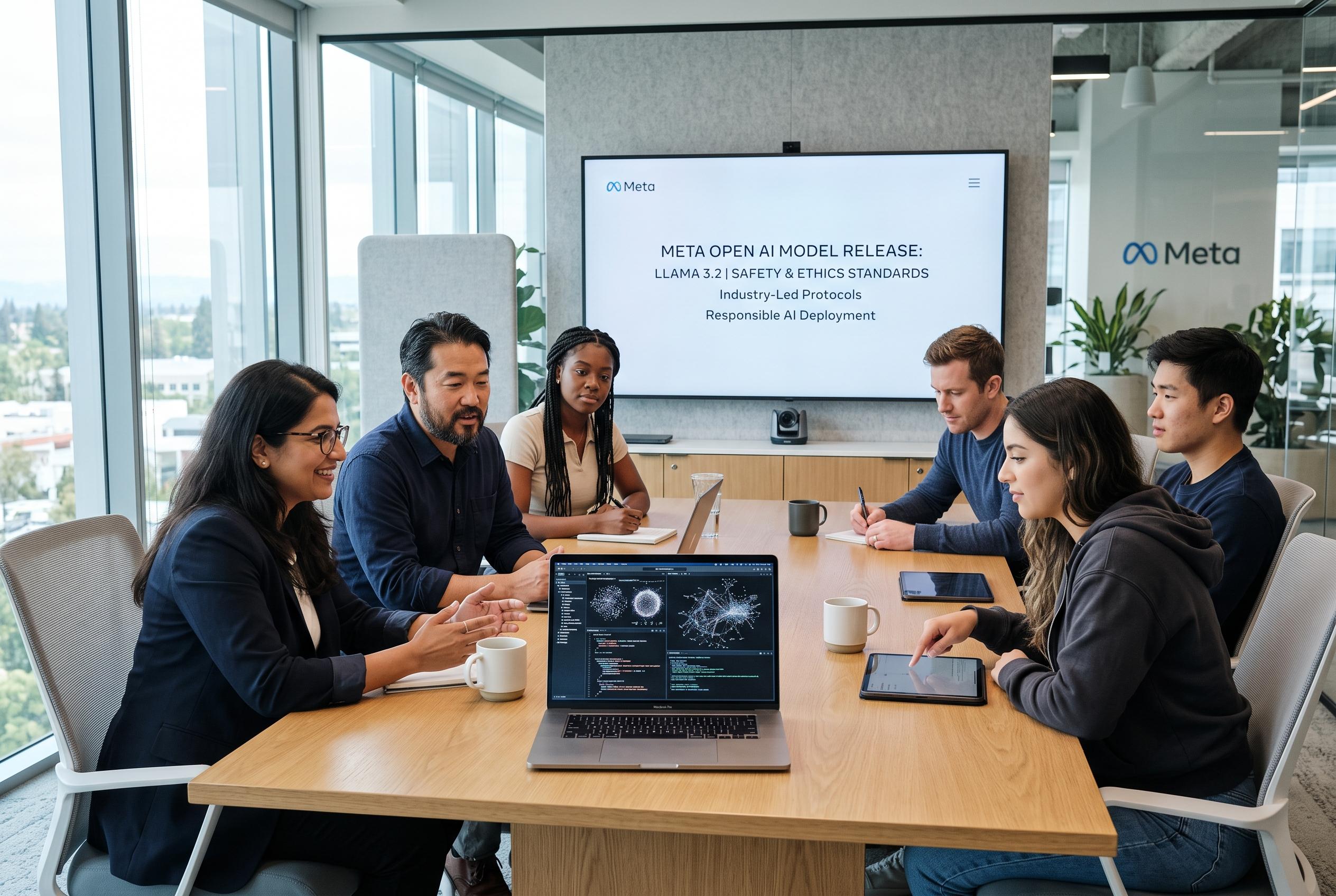

Meta Platforms has emphasised its commitment to open artificial intelligence, unveiling a new model and proposing wider access and industry-led safety standards, as Mark Zuckerberg advocates for AI tools that empower individuals against concentrated power.
Meta Platforms has set out a sharper public case for open artificial intelligence as Mark Zuckerberg used a long essay on Monday to argue that advanced AI should be available broadly, not confined to large institutions. In the same vein, Meta introduced a new model from its Meta Superintelligence Labs and said it was releasing the model weights for external use, signalling that openness remains part of its strategy even as the company invests heavily in frontier systems. According to PYMNTS, Zuckerberg framed that approach as a way to give individuals more leverage as AI becomes more capable.
In the essay, Zuckerberg said Meta should aim to provide free or low-cost access to what he described as superintelligence tools, including personal AI agents. He argued that if AI is concentrated inside governments, corporations and other major organisations, the balance of power would tilt away from individuals. Axios reported that he also called for closer coordination between AI developers and governments, but without slowing access for ordinary users.
Meta also outlined a governance change intended to give its board a formal role in setting safety standards for future AI models and deciding whether those standards have been met. Zuckerberg said he did not think it was in his, Meta’s or the world’s interest for deployment decisions to rest with a single person. He added that a broader industry process would be preferable, suggesting that safety oversight should become more structured as AI systems grow more powerful.
The company’s latest release, Muse Glimmer, is a 30 billion-parameter model designed for always-on local agent workloads, meaning it can support tasks such as local coding, function calling and evaluation on a consumer GPU, according to Meta. The model follows the beta launch last week of Muse Code, a terminal coding agent powered by Muse Spark 1.2. PYMNTS noted that Meta faces pressure to turn its AI spending into revenue and to prove that the scale of its investment can generate meaningful growth.
Disclaimer: This content is intended for informational purposes only. Readers are advised to exercise their own judgement, conduct due diligence, or consult a qualified expert before acting on any information provided.