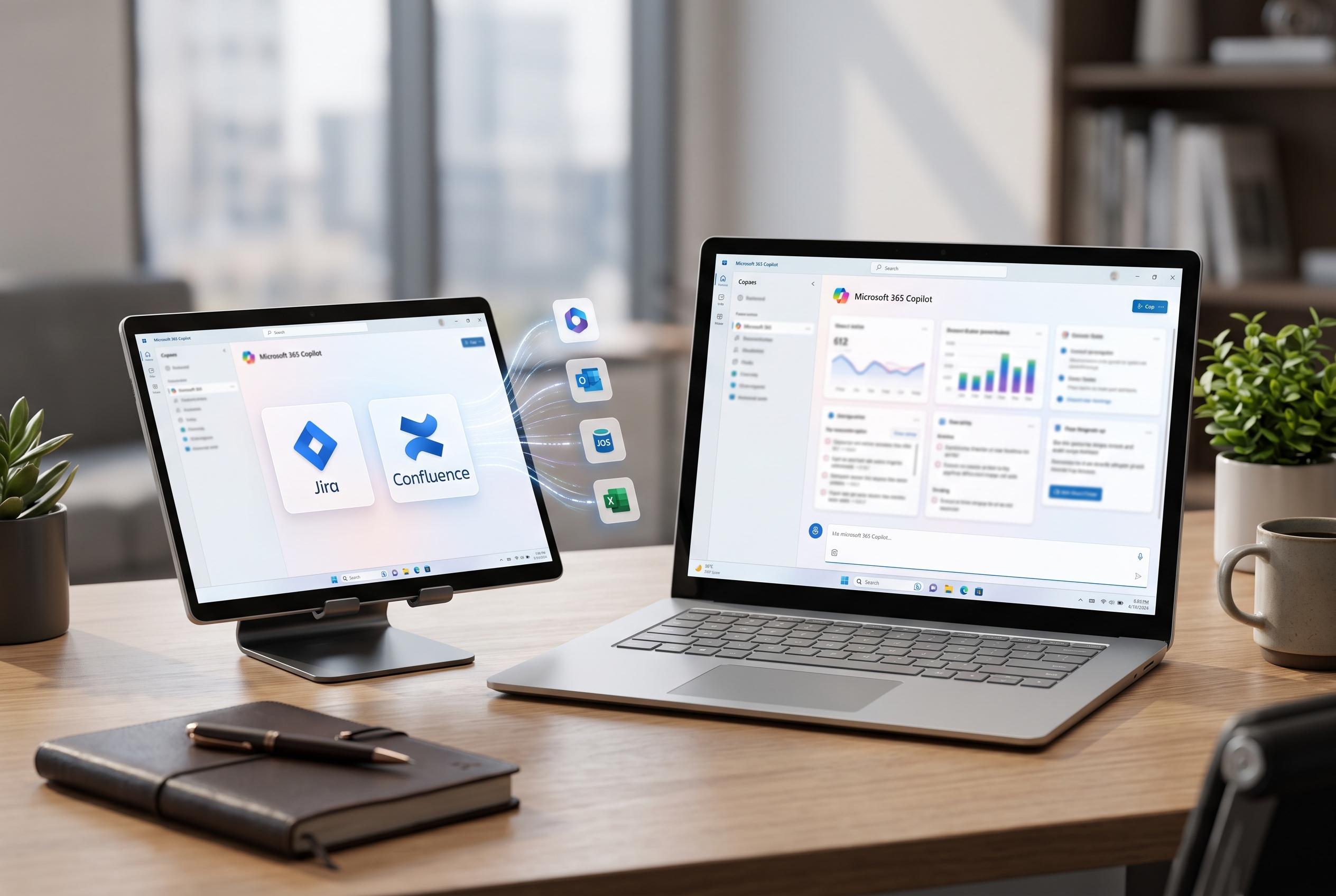

Microsoft is rolling out self-serve connectors for Microsoft 365 Copilot, enabling organisations to integrate external systems like Jira Cloud and Confluence Cloud directly into their workflows, enhancing searchability and productivity while maintaining control over access.
Microsoft is widening the scope of Microsoft 365 Copilot with self-serve connectors that let employees link supported external systems directly to Microsoft 365 using their own credentials. The initial emphasis is on workplace tools such as Jira Cloud and Confluence Cloud, with the aim of making content held outside Microsoft’s core productivity suite searchable through Copilot and Microsoft Search.
The practical effect is to reduce the gap between documents, tickets, notes and meetings that are often spread across separate software systems. Microsoft says the connector model does not grant new access rights; it only exposes material a user is already allowed to see in the source service. That permission-led approach is central to the design and is meant to keep discovery aligned with existing identity controls.
For administrators, the change is not a free-for-all. Microsoft’s support material says connectors can be reviewed and managed in the Microsoft 365 admin centre, with availability able to be enabled or disabled at the tenant level and limited to selected Microsoft Entra ID groups. That gives organisations room to pilot the feature with smaller teams before deciding whether to expand it more widely.
The inclusion of Jira and Confluence is especially relevant for technology-heavy organisations, where project tracking and documentation frequently sit outside Microsoft 365. Microsoft Learn documentation shows that both cloud and on-premises or data-centre deployments are already part of the broader connector story, with setup and authentication handled through the admin centre and related Graph connector tooling. In practice, that means a project manager, developer or technical writer could surface relevant material without repeatedly moving between applications.
Microsoft Search is also part of the picture. The company is positioning connectors not only as a Copilot enhancement, but also as a way to make enterprise content easier to find through conventional search. That matters because many users still begin with search rather than an AI prompt, especially when they are looking for a specific ticket, policy or reference document.
Microsoft says the worldwide rollout is due to start in late August 2026, with public preview expected to finish by mid-September and general availability following in mid-September before completing in mid-October. For organisations already using Copilot, the key task will be governance: checking which connectors are approved, which groups should see them and how third-party access fits into existing compliance and information-management policies.
Disclaimer: This content is intended for informational purposes only. Readers are advised to exercise their own judgement, conduct due diligence, or consult a qualified expert before acting on any information provided.