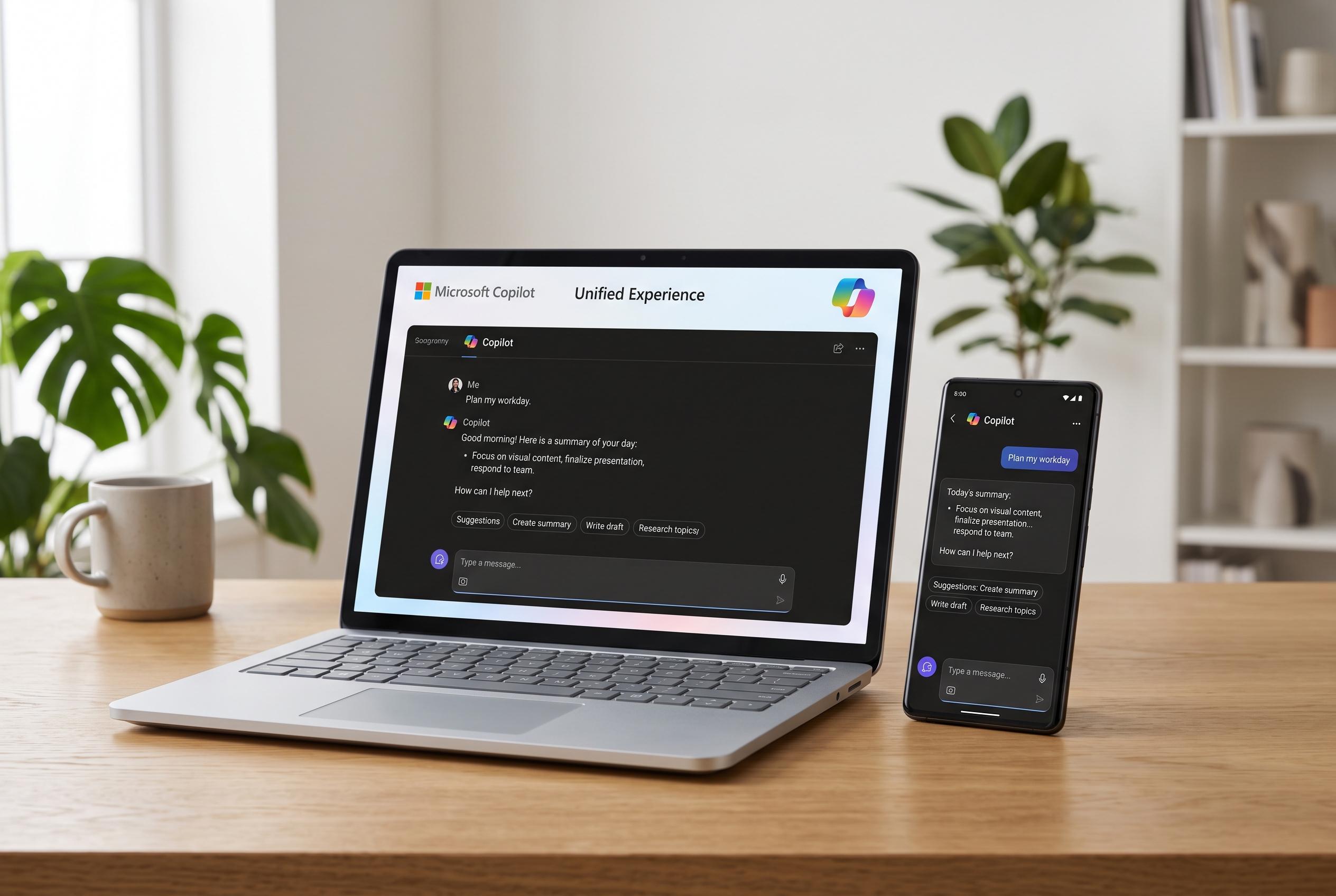

Microsoft is consolidating its consumer and business Copilot experiences into one unified app, simplifying AI integration on Windows, Mac, and mobile platforms amid revamped design and feature adjustments.
Microsoft is bringing its consumer and business Copilot experiences into a single app interface, ending the awkward split between two separate icons and two parallel entry points on Windows. According to TugaTech, the redesigned Copilot app is being positioned as a broader hub for chat, image generation and Microsoft 365 integration, while still keeping personal Microsoft accounts and work or school identities separated behind the scenes.
The rollout begins in mid-August on mobile devices and the web, with Windows and Mac versions due from mid-September. Microsoft insiders on Windows are set to see the changes first this week. The company says users of the free Copilot app should move over automatically with their chat history and content intact, while Microsoft 365 Copilot users will see a new icon, lighter navigation changes and direct access to chat. Where both apps are in use, the conversations are being merged into the new app, but the account boundaries remain in place through Microsoft Entra ID for enterprise and education users. Microsoft’s support pages say the Microsoft 365 Copilot app is available to both work or school accounts and personal Microsoft accounts, although Copilot Chat in that app is limited for some personal subscriptions.
The transition is not entirely seamless. TugaTech reports that Podcasts and Deep Research will be withdrawn from 18 August, and that group chat topics, messages and content will not be carried across to the new application. Microsoft also warns that shopping and health features may be temporarily unavailable while the migration is under way. The core assistant remains free, although usage caps may differ in the no-cost version.
The consolidation also reflects a wider adjustment in Microsoft’s Copilot strategy. The redesign comes months after a leadership change in the unit and appears to move the product away from the more consumer-style visual identity introduced in 2024. At the same time, Microsoft continues to push its AI stack deeper into Windows and adjacent tools: Windows Central recently reported that PowerToys is gaining on-device AI support through Phi Silica, the small language model also used in Copilot+ PCs, while the latest Windows 11 August update adds more AI controls and system refinements for users.
Disclaimer: This content is intended for informational purposes only. Readers are advised to exercise their own judgement, conduct due diligence, or consult a qualified expert before acting on any information provided.