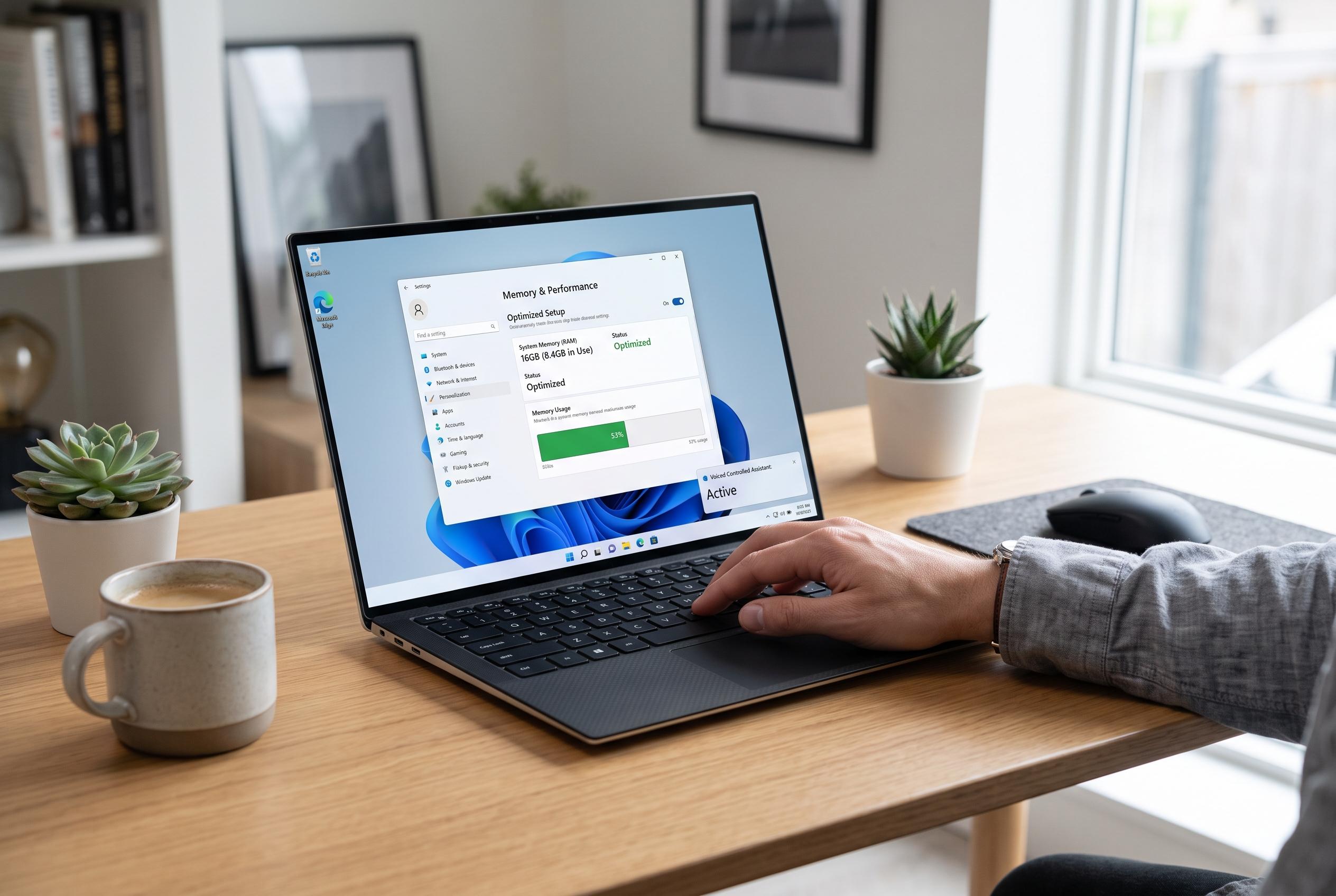

Microsoft plans a significant update to Windows 11 this year, focusing on a faster initial setup, better memory management for lower-spec devices, simplified parental controls, and more natural voice input, signalling a push towards a lighter and more responsive operating system.
Microsoft is preparing a wider refresh of Windows 11 this year, with a focus on areas that users notice most: first-time setup, memory use on lower-spec machines, family controls and voice operation. Windows Central reported that the work is part of a broader push inside Microsoft to make the operating system feel lighter and more responsive after the end of support for Windows 10 has allowed the company to concentrate more fully on Windows 11.
One of the clearest targets is the out-of-box experience. Windows Central said Microsoft wants the initial setup process to feel much quicker and less cumbersome, with the aim of making a new PC feel closer to ready-to-use from the moment it is switched on. Microsoft has already started to adjust the setup flow in Windows 11 version 24H2, including interface changes that align it more closely with the Media Creation Tool and simplify clean installs.
A second priority is memory efficiency. According to Windows Central, Microsoft is trying to make Windows 11 run better on systems with 8GB of RAM, a configuration that remains common in lower-cost laptops and tablets. The company is working across the software stack, from interface components to kernel behaviour and drivers, to reduce the operating system’s memory footprint and limit unnecessary background load. That effort reflects both rising memory prices and stronger competition from thin-and-light devices that advertise efficient performance despite modest hardware.
The timing is notable because Microsoft has also shipped some Surface models with 8GB of RAM in North America, a move that drew criticism from reviewers who argued the software should have been better tuned first. Windows Central said Microsoft is now trying to close that gap by trimming legacy elements, reducing clutter in menus and managing preloaded apps more intelligently when memory pressure rises. The result, if the work lands as planned, could be more capable entry-level PCs without forcing buyers immediately into 16GB models.
Microsoft is also refining Family Safety, its parental control system, to make it easier to configure and manage on shared household PCs. At the same time, the company wants Windows 11 to rely more naturally on voice input, building on its Copilot push so users can launch apps and carry out tasks by speaking rather than reaching for a mouse or keyboard. Windows Central said Microsoft is still not satisfied with the current state of voice control, suggesting that the company sees room for a more fluid conversational interface. In that sense, the changes fit a larger internal effort, reported as Windows K2, that is also aimed at reducing update disruption, cutting advertising inside the operating system and restoring some long-requested customisation options.
Disclaimer: This content is intended for informational purposes only. Readers are advised to exercise their own judgement, conduct due diligence, or consult a qualified expert before acting on any information provided.