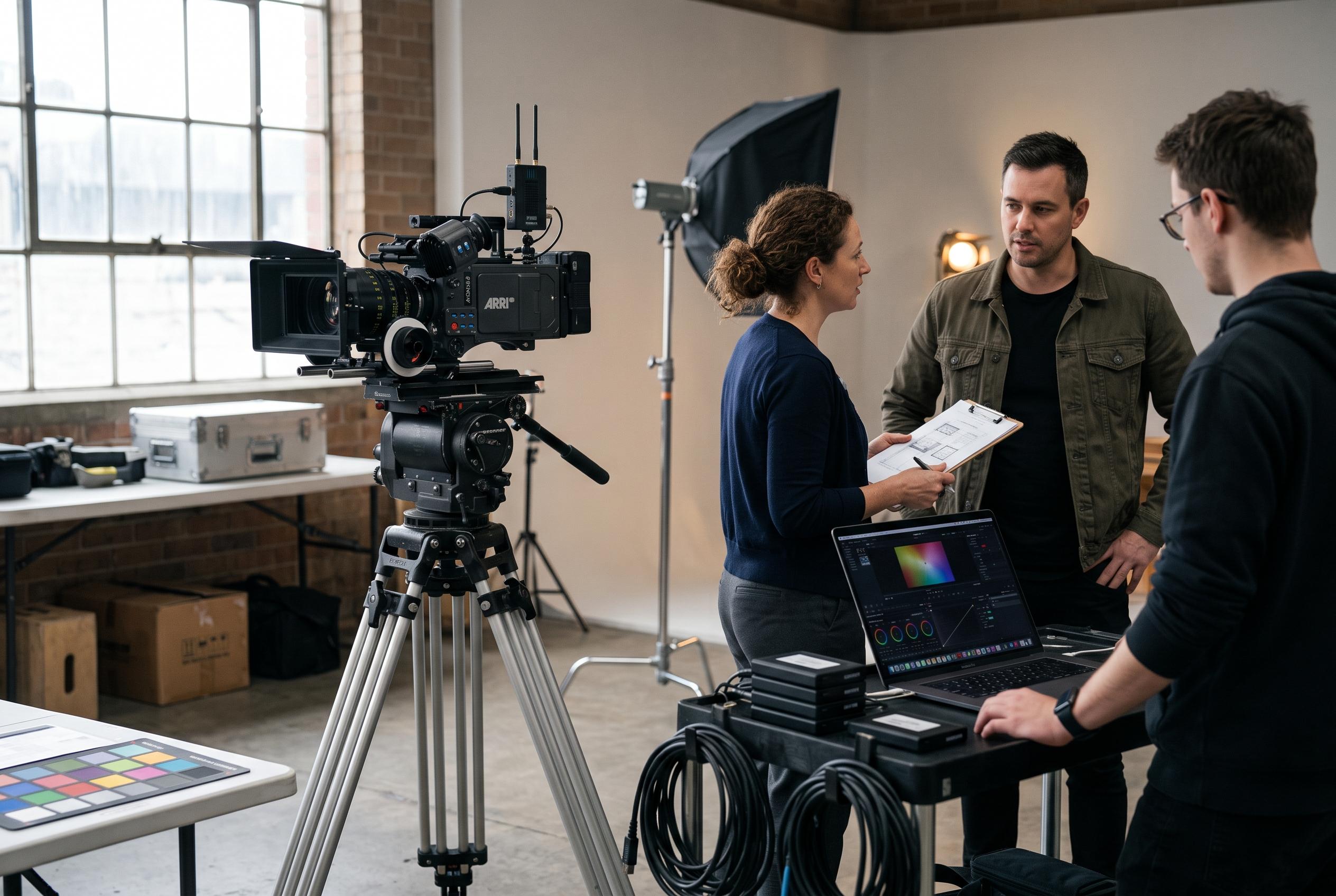

Melbourne entrepreneur Nicholas Carlton transforms his stance on AI, launching a studio that leverages generative tools to revolutionise film production and challenge traditional creative barriers, amid a rapidly evolving industry landscape.
Nicholas Carlton has moved from warning about “AI slop” to building a business around generative filmmaking, in a shift that mirrors the wider recalibration now under way across creative industries. The Melbourne founder, who first came to prominence with the social app Spoony, has since launched Parallax, an AI filmmaking worksuite, and then Gobstopper, an AI creative studio established with filmmaker James Lawler. According to SmartCompany’s interview with Carlton, the change was driven less by ideology than by a rapid improvement in the quality of generative tools and by the commercial reality that capital is now flowing towards AI ventures.
Carlton told SmartCompany that he had been broadly sceptical of AI in creative work when Spoony was still operating, particularly because of concerns over intellectual property, artistic integrity, consent and copyright. That view shifted after he saw stronger results from newer models and watched the technology improve at pace. He argued that the technical gains were no longer hypothetical, but were already affecting advertising, brand content and filmmaking workflows. The appeal, he said, was not simply that AI could make production faster and cheaper, but that it could expand what creators are able to attempt in the first place.
That thinking helped push him away from Parallax as a software subscription product and towards a studio model. Carlton said potential customers wanted the company to handle entire projects rather than sell them tools, which made the agency format look more commercially realistic than a low-cost software package. Campaign Brief and AdNews reported that Gobstopper, based in Melbourne, offers AI motion and stills production, as well as hybrid work that extends live-action shoots with generative tools. The studio also offers monthly subscriptions for a fixed volume of finished work, alongside standard project-based commissions.
For Carlton, the central advantage of AI is not automation alone, but the way it changes the balance between process and judgment. He told SmartCompany that many filmmakers value the production process itself, but said he has always cared more about the outcome than the machinery used to achieve it. In his view, AI lowers the barriers that have long made filmmaking expensive and gatekept, allowing a single creator to generate worlds that once demanded large crews and substantial budgets. That, he said, shifts the competitive advantage towards taste, rather than towards technical access.
At the same time, Carlton acknowledged that the sector remains unsettled on the legal and ethical foundations of generative media. He said AI model-makers need to secure licensed access to training material and compensate the artists whose work has been ingested, rather than relying on what he described as industrial-scale appropriation. He also drew a line between new forms of generation and the older creative practice of using references, saying that filmmakers and directors have always built treatments and productions around visual influences. For Gobstopper, the immediate market appears to include brands, advertisers and start-up founders seeking quick turnaround on launch films, visual effects and synthetic or mixed-production work. Carlton’s broader conclusion is blunt: in a funding environment where investors are prioritising AI, companies that cannot position themselves within that category may struggle to raise capital at all.
Disclaimer: This content is intended for informational purposes only. Readers are advised to exercise their own judgement, conduct due diligence, or consult a qualified expert before acting on any information provided.