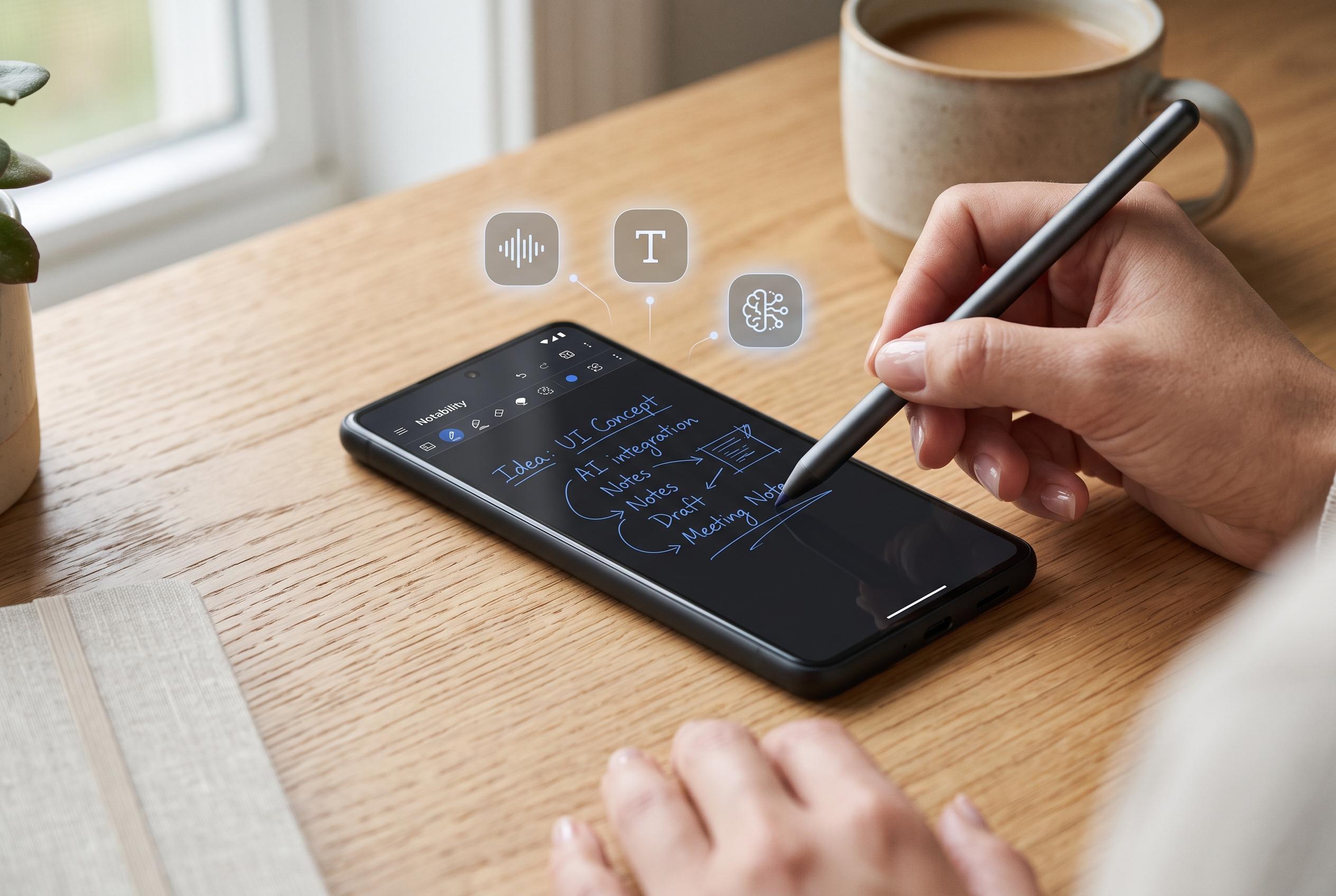

After years as an Apple-exclusive, Notability makes its debut on Android, bringing handwriting, voice transcription, and AI-powered tools to a broader audience, with subscription-based features for serious users.
Notability’s arrival on Android is a notable shift for a note-taking app that spent years tied to Apple’s ecosystem. After a beta period that began in April 2026, the app reached Google Play in early August, ending its long run as an iPhone, iPad and Mac-only product. 9to5Google reported that early Android users have responded well, with ratings above 4.5 stars, as the app brings handwriting, voice recording with transcription and AI features to a wider audience.
For users who think visually, the app’s appeal is straightforward. Its canvas-centred approach allows free placement of text, sketches and annotations, rather than forcing ideas into a rigid sequence. The Google Play listing says it supports handwriting, typing, sketching and PDF annotation, along with importing slides, textbooks and images. That makes it more than a simple memo pad; it is closer to a digital workspace for drafting, marking up and rearranging ideas.
The wider Apple listing shows that the product’s core identity has long been cross-device organisation as much as note capture. Notability supports synced audio recordings, searchable handwriting and transcripts, and folder-based sorting. Those same foundations now matter on Android, where the app also offers collaboration and access across devices. For people who move between platforms, that continuity can be more useful than a feature list alone.
The pricing model is where the trade-offs become clear. Notability’s free Starter tier limits users to five notes, while paid plans unlock broader storage and advanced tools. According to Notability’s pricing page, Lite and Plus expand note limits and add features such as backups, AI-powered quizzes and flashcards, with a Classic one-off purchase also available. The company says its higher tiers add transcription, note chat and longer version history. For Android users, the result is an app that is finally available, but still structured to push serious use towards a subscription.
Disclaimer: This content is intended for informational purposes only. Readers are advised to exercise their own judgement, conduct due diligence, or consult a qualified expert before acting on any information provided.