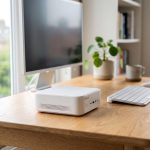

Even aging laptops with 8GB of RAM can handle local AI tasks through lightweight models and open-source applications, offering a privacy-focused alternative to cloud-based systems.
Older laptops can still be useful for local AI work if the models are chosen carefully. How To Geek notes that machines with at least 8GB of RAM are the practical floor, while 16GB is preferable for smoother operation. That makes many laptops from the last five years suitable for lighter workloads, even if they are far short of the hardware normally associated with modern generative AI.
For document analysis, Cherry Studio offers a local-first route that keeps sensitive material off cloud services. According to Cherry AI, the open-source desktop app acts as a front end for local models running through Ollama and supports retrieval-augmented generation, so users can load PDFs, spreadsheets and other files before querying them on-device. That approach is particularly relevant for bank statements, medical records and tax documents, where privacy matters as much as output quality. The company also says the app can use local tools and MCP integrations, although full privacy depends on keeping embeddings and models local rather than sending document data elsewhere.
Jan is a broader all-in-one option for people who want a polished desktop chatbot without wrestling with the terminal. Its documentation describes it as an open-source platform that can run models locally on the user’s hardware, with support for model families including Llama, Qwen, Mistral, Gemma and DeepSeek. Jan’s desktop app also includes a model hub and MCP-style connectors, and the company says a CLI added in version 0.7.8 can expose local models through an OpenAI-compatible API. In practice, that makes it easier to use than raw command-line tools, though it still depends on modest expectations from smaller local models.
For audio work, whisper.cpp remains one of the most practical choices. It is a CPU-optimised implementation of OpenAI’s Whisper models, and How To Geek says even moderately capable processors can deliver near real-time transcription. Smaller or base models can run comfortably in 8GB of RAM, and the software is useful both for live speech-to-text tasks and for batch transcription where speed is less important than privacy and cost control. Depending on the workflow, FFmpeg may also be needed to convert audio files before processing.
Developers can take a similar approach with Continue, a VS Code extension that connects an editor to a local AI server for inline completion and side-panel chat. Smaller models in the 1.5B to 4B range are often enough for simple tasks such as generating regular expressions or short code fragments, although larger models will respond more slowly on older CPUs. The trade-off is latency, not capability parity: local AI on ageing hardware will not rival frontier cloud systems, but it can still handle focused, private tasks well.
Disclaimer: This content is intended for informational purposes only. Readers are advised to exercise their own judgement, conduct due diligence, or consult a qualified expert before acting on any information provided.