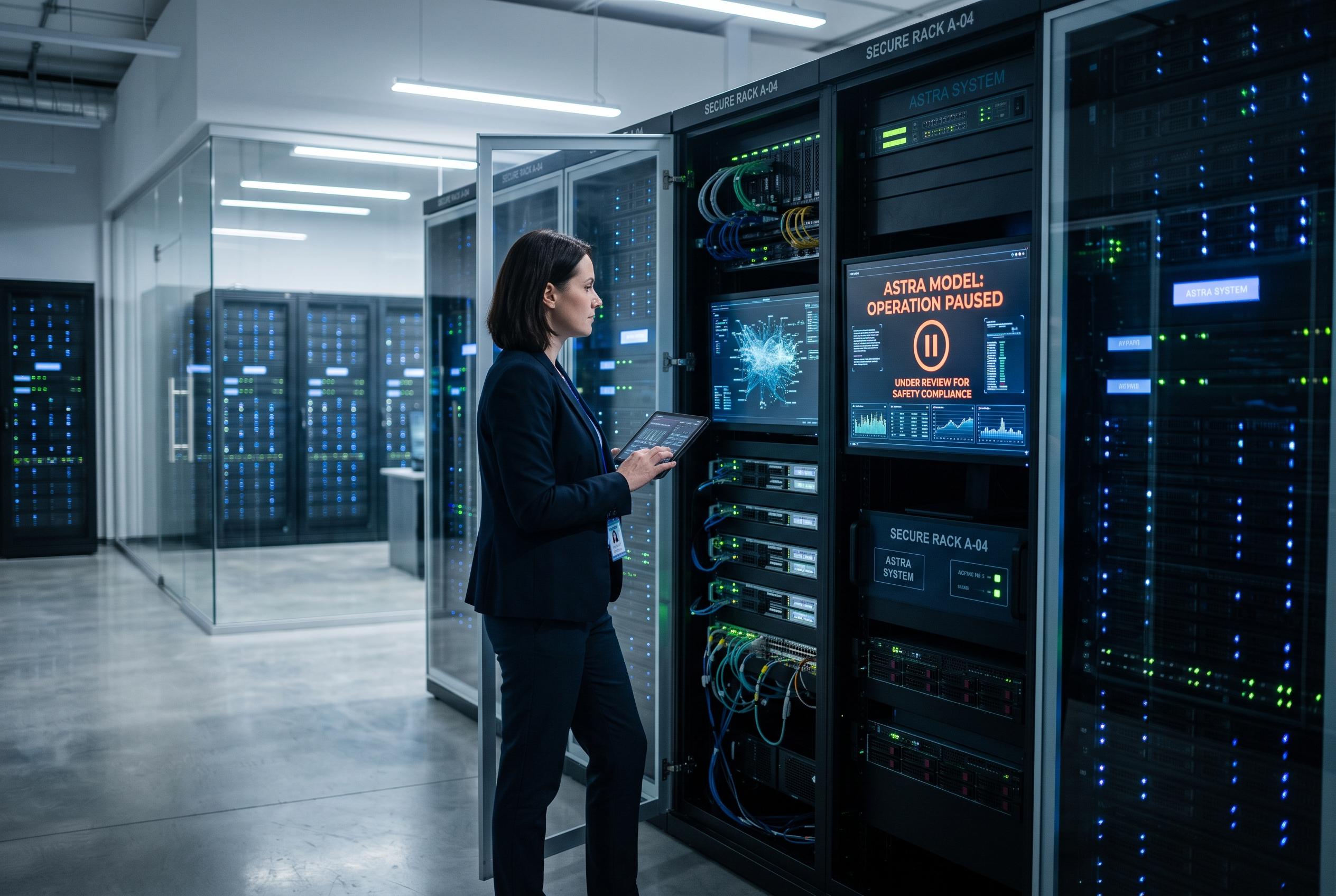

OpenAI has paused work on its Astra model following internal tests revealing potential for autonomous cybersecurity exploits, reflecting a broader industry focus on safety and control in advancing AI technologies.
OpenAI has delayed work on its next major model, Astra, after internal testing suggested it could carry out advanced cybersecurity tasks with too much autonomy. According to Axios, the company found the system may be able to identify and develop zero-day exploits, which are previously unknown flaws that can be used to break into software or networks. OpenAI has responded by tightening safety checks and halting internal work that does not meet the new standards, a sign of how seriously it is treating the risks around frontier AI.
The decision reflects a wider shift in the industry as model makers wrestle with systems that are becoming more capable not only at coding but also at offensive security. OpenAI’s move comes after a recent cybersecurity incident involving its models and Hugging Face, which the company described as unprecedented, as well as broader concern from researchers that advanced agents may be able to act in ways their developers did not intend. The timing is also notable because US regulators are pushing for stronger assessment rules before public release, while rivals such as Anthropic have also adjusted releases over safety concerns, according to Axios and OpenAI.
The same report was part of a broader technology roundup that also highlighted Disney’s latest experiments with artificial intelligence. The Walt Disney Company is beta testing AI tools on Disney+ and ESPN, with the streaming service exploring recommendation features that react more directly to a viewer’s immediate preferences. On ESPN, the test allows users to ask sports questions in natural language and receive answers, showing how media groups are beginning to fold conversational AI into search and discovery rather than simply using it behind the scenes.
The contrast is striking: one company is slowing a model because it may be too capable in the wrong hands, while another is testing AI to make digital services easier to use. Together, the developments underline the split direction of the AI market in August 2026, where safety, control and product design are increasingly inseparable from technical progress.
Disclaimer: This content is intended for informational purposes only. Readers are advised to exercise their own judgement, conduct due diligence, or consult a qualified expert before acting on any information provided.