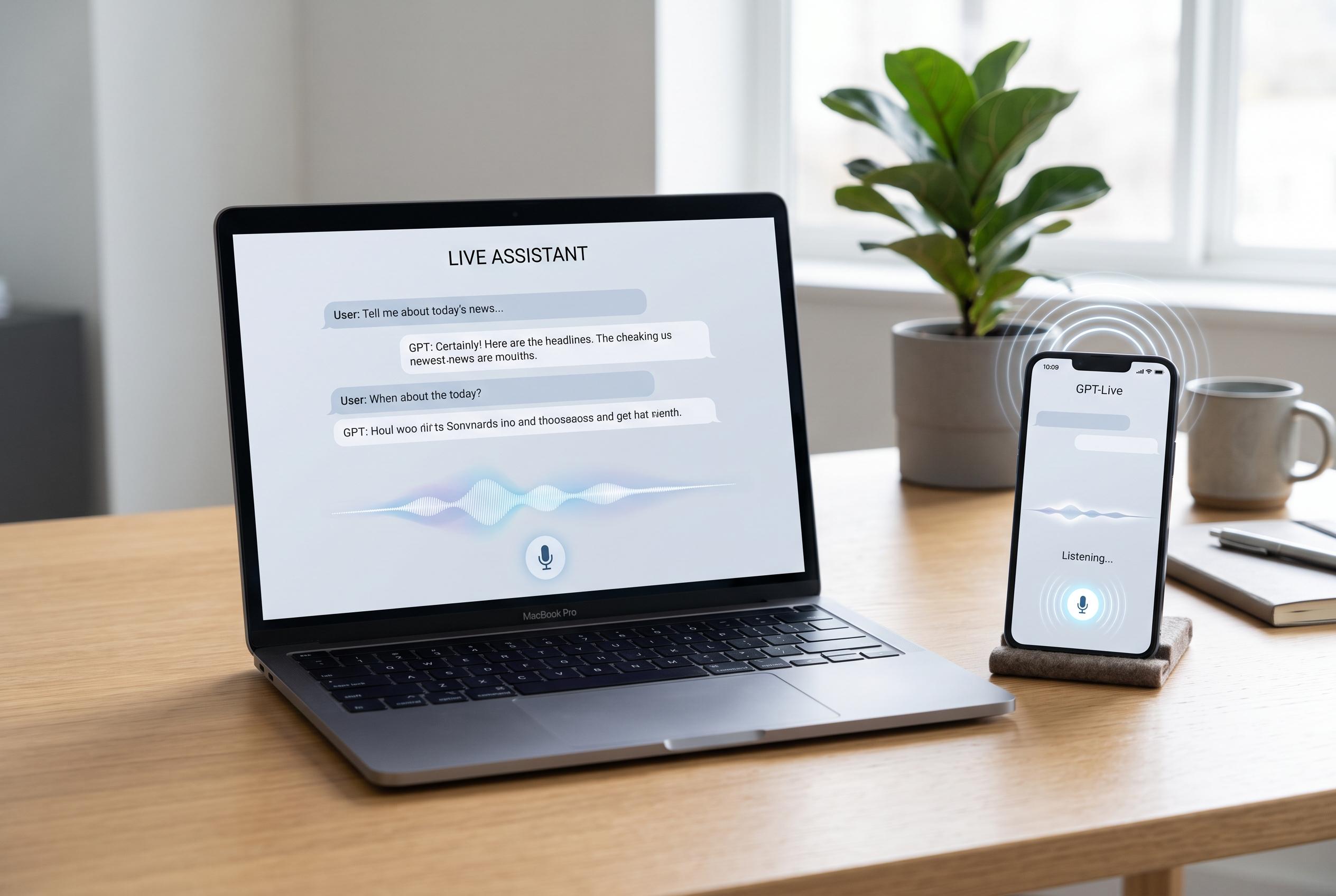

OpenAI introduces GPT-Live, a new voice mode for ChatGPT designed to create seamless, real-time spoken interactions, supporting multitasking and noise resilience across mobile and web platforms.
OpenAI has rolled out a new voice mode for ChatGPT built around GPT-Live, a system designed to make spoken exchanges feel less mechanical and more like a live conversation. According to OpenAI, the model can listen and speak at the same time, which reduces the pauses and interruptions common in earlier voice tools and allows users to break in naturally when they want to change direction. Engadget reported that the underlying architecture is meant to keep track of speech continuously and decide, several times a second, whether to respond or keep listening.
The company says the feature is available through the ChatGPT app on iPhone and Android, as well as on the web, by tapping the voice button and granting microphone access. Users can also keep talking while moving to another app or locking the screen if background conversations are enabled in settings. OpenAI has said GPT-Live comes with remastered voices and can acknowledge the speaker with short phrases while the person is still talking, a small design choice aimed at making the exchange feel more immediate.
OpenAI is also giving users more control over how quickly or deeply ChatGPT reasons during voice sessions. The model offers an Instant mode for faster replies, alongside Medium and High settings for more demanding tasks. For questions that need heavier processing, OpenAI says GPT-Live can hand work off in the background to a more capable model and continue the conversation until the answer is ready. TechCrunch reported that the system also supports search, memory, images and file uploads, while returning visual results for topics such as weather, stocks and sports.
The wider pitch is to make voice interaction with AI more useful in everyday settings, from translation and learning to quick assistance on the move. MacRumors reported that GPT-Live is designed to handle noisy environments better and to keep focusing on the user’s voice rather than stray background sound. OpenAI says it has also added safety training specific to voice use, reflecting the company’s effort to push conversational AI towards a more natural but still controlled experience.
Disclaimer: This content is intended for informational purposes only. Readers are advised to exercise their own judgement, conduct due diligence, or consult a qualified expert before acting on any information provided.