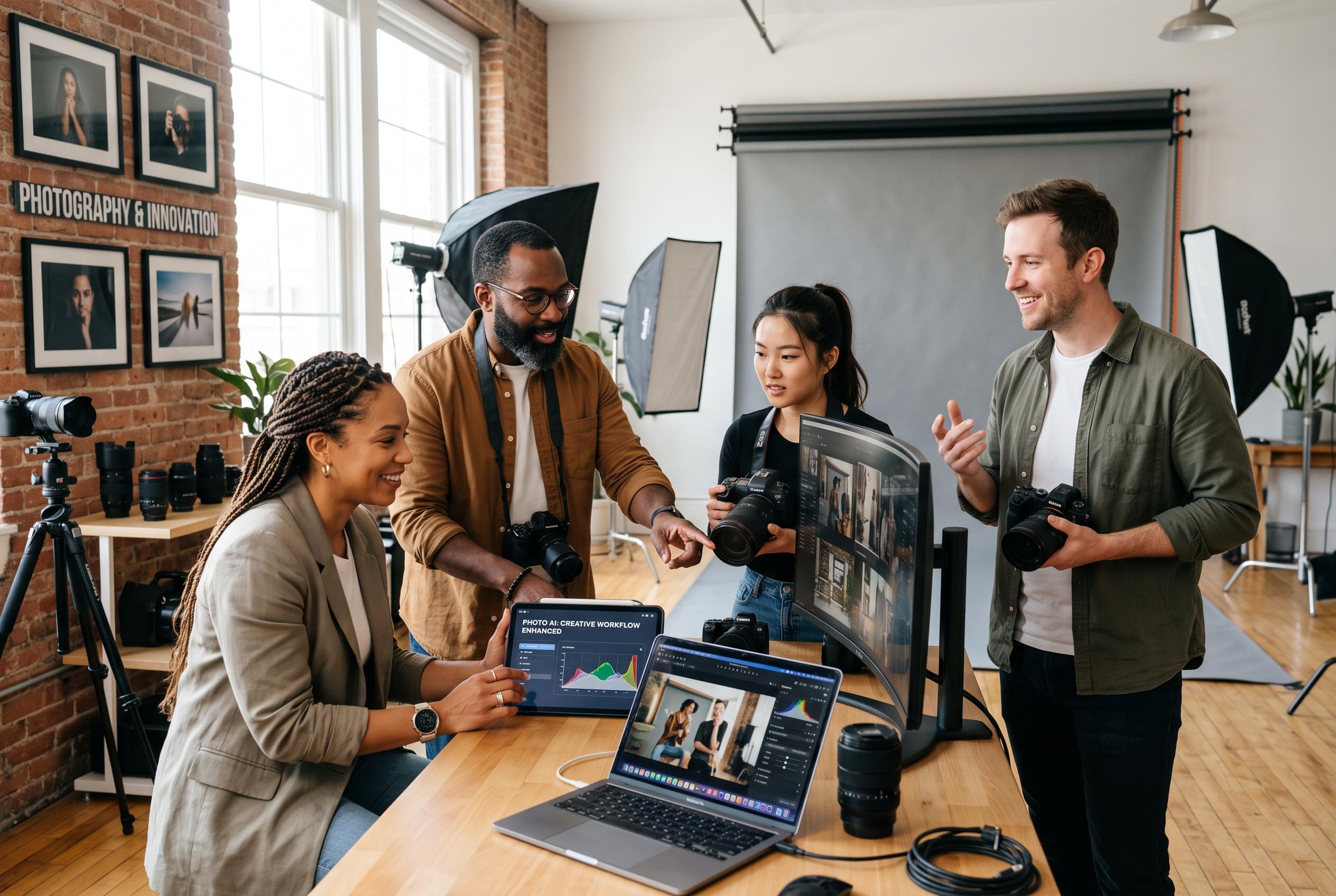

While often seen as a threat, AI is increasingly being adopted by photographers as a practical aid that reduces routine tasks and fosters creative development, reshaping industry perceptions.
Artificial intelligence is often discussed in photography as a threat: to commercial work, to authenticity and to the sense that the craft is being diluted by automation. But as Fstoppers argues, that framing misses a quieter reality. For many photographers, AI is becoming less of a substitute for judgement than a practical aid that reduces routine friction and creates more space for creative decision-making.
In day-to-day workflows, the most obvious uses remain technical rather than artistic. AI tools now handle object removal, sensor-dust cleanup, sky replacement, upscaling and canvas expansion with increasing ease. Those functions do not decide whether an image is worthwhile, but they can rescue a frame, improve print quality or correct small composition errors. That is why many photographers now treat AI as part of post-production rather than an entirely separate category of image-making.
The more interesting shift, however, is conversational. According to the Fstoppers essay, AI can act as a sparring partner that helps photographers see their own work more clearly. Because it has no memory of the cold weather, the long hike or the emotional attachment to a given frame, it can offer a detached reading of recurring themes, lighting choices and subject matter. In that sense, the tool is not being used to make the art; it is being used to test assumptions about the art.
That view is supported by wider industry data. A VSCO survey reported by Digital Camera World found that 83% of photographers have already integrated AI into their workflow, with professionals using it more heavily than hobbyists and many applying it to editing, culling, planning and business tasks rather than to full creative control. A separate global survey cited by TechRadar said 81% of professional photographers saw better work-life balance after adopting AI tools, while 64% said clients did not notice a difference between AI-edited and manually edited images. The takeaway is not that AI has replaced craft, but that it is increasingly being used to remove repetitive labour.
That broader acceptance helps explain why photographers are beginning to use AI in more interpretative ways. The Fstoppers article describes using it to identify visual patterns across a portfolio, stress-test project sequences, draft artist statements and explore layout ideas for zines or books. The point is not to let an algorithm make final calls. It is to use the model as a structured form of outside critique, then apply human taste, context and intent to the result. In practice, that can sharpen a voice rather than flatten it.
The limits still matter. AI cannot supply vision to a photographer who lacks one, and it cannot replace mentoring, peer review or the hard discipline of selecting, editing and sequencing work. But as the technology becomes more embedded in photography software and workflows, the more useful question may be not whether AI belongs in photography, but how much of it is best kept in support of the photographer rather than in charge of the image.
Disclaimer: This content is intended for informational purposes only. Readers are advised to exercise their own judgement, conduct due diligence, or consult a qualified expert before acting on any information provided.