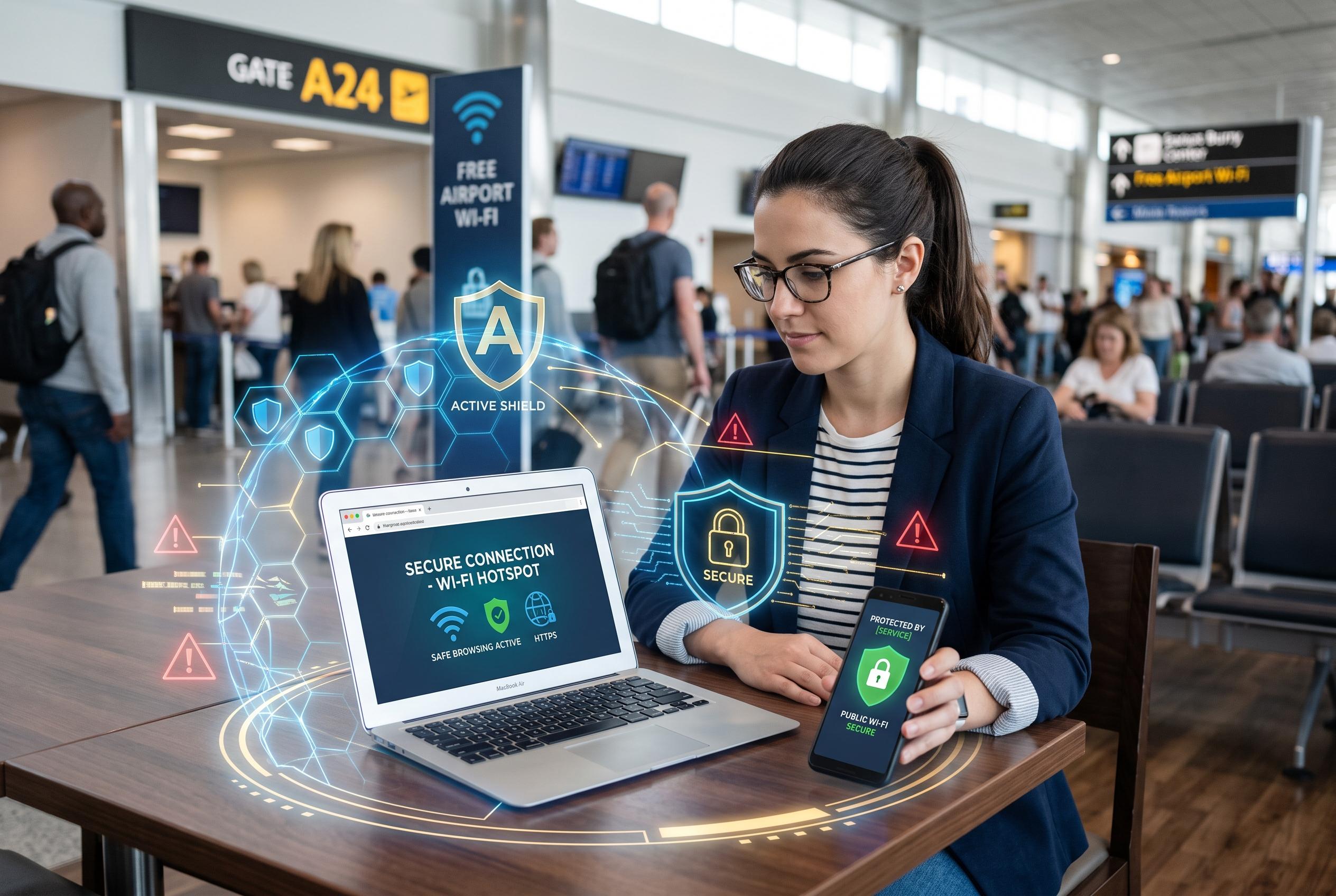

While free Wi‑Fi at airports, hotels, stations, and cafés offers convenience, security experts warn of increasing risks including account theft, malware, and payment fraud, prompting calls for better protection measures.
Free Wi‑Fi in airports, hotels, stations and cafés can be convenient, but security specialists warn that it can also expose travellers to account theft, malware and payment fraud. Panda Security says that open networks are often used precisely because they are easy to join, yet that same openness makes them a weak point for anyone handling booking details, email, maps or online banking while abroad.
The core problem is that many public networks offer little or no encryption, which can allow other users on the same connection to see traffic or intercept login details. Security guides from several cyber protection firms also note that weak protection, shared access and poorly configured hotspots still create ideal conditions for credential theft and data snooping, even when a network appears legitimate.
Threats are becoming more sophisticated. Microsoft experts have warned that attackers linked to the APT29 group have been abusing hotel captive portal equipment to push malware and steal credentials, including through fake login screens and bogus update prompts. That aligns with broader warnings about so-called “evil twin” hotspots: look-alike networks that mimic a real hotel or café Wi‑Fi service in order to trap users and redirect them to phishing pages.
For travellers, the simplest protection is to avoid sensitive transactions on public Wi‑Fi when possible. Panda Security recommends using mobile data or a trusted virtual private network for payments and account access, and treating any unfamiliar network with caution. That advice is echoed across recent security guidance, which says public Wi‑Fi is not safe by default and should be assumed risky unless layered protection is in place.
Disclaimer: This content is intended for informational purposes only. Readers are advised to exercise their own judgement, conduct due diligence, or consult a qualified expert before acting on any information provided.