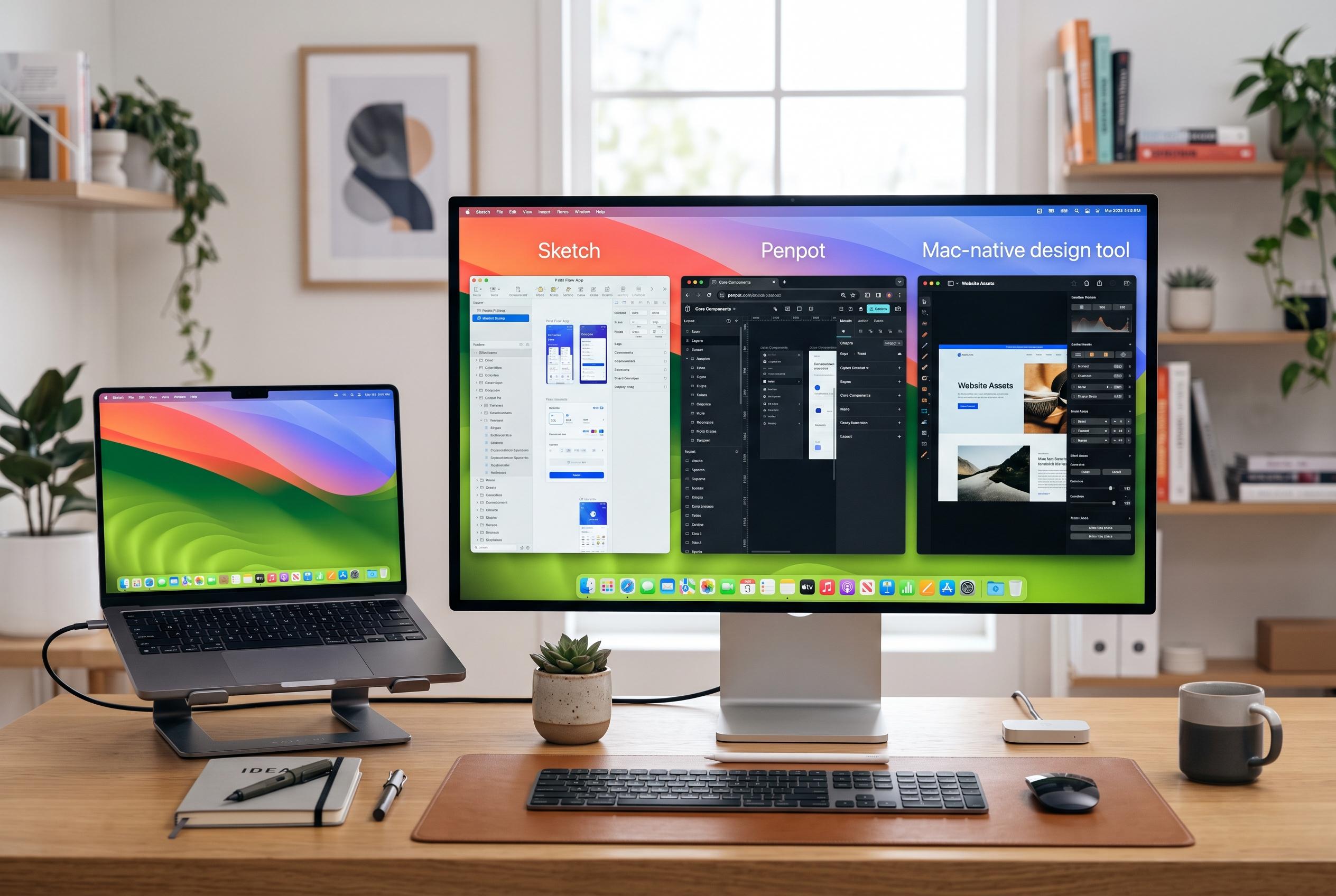

As Figma’s cloud-centric approach faces growing trade-offs, Mac users are increasingly turning to native applications like Sketch and open-source options like Penpot, highlighting a shift towards offline reliability and open formats in design workflows.
Mac designers comparing Figma alternatives are often weighing the same trade-offs: offline access, local file storage, collaboration, cost and how closely a tool fits Mac workflows. The Setapp review argues that Sketch remains the strongest Mac-native option because it behaves like a local desktop app rather than a browser-led wrapper, while Penpot is presented as the most compelling open-source choice for teams that want self-hosting and less dependence on a single vendor.
Figma still has clear strengths, especially for real-time collaboration, but the review says its pricing structure and cloud-only approach have pushed some users to reconsider. That concern is not just about subscription cost. For teams that need reliable offline work, local file control or better performance on a Mac, the experience can feel more constrained than it once did. The article also notes that the fallout from Adobe’s abandoned acquisition of Figma in 2023 prompted many organisations to reassess their design stack.
Among the alternatives, Sketch stands out for Mac users who want speed and native behaviour. It launches quickly, works offline by default and stores files locally, while still offering components, responsive layouts, prototyping and handoff features. Penpot, by contrast, is aimed at teams that prioritise openness and control. It runs in the browser, can be self-hosted, and uses SVG-based files, which the review says helps reduce lock-in. Independent write-ups also describe Penpot as a free, open-source platform with real-time collaboration, shared libraries, design tokens and Dev Mode for CSS export.
The review places Framer in a different category altogether. Rather than acting as a pure design handoff tool, it is positioned as a faster route to publishing live websites, especially for marketing pages and landing pages. For teams already working in production components, UXPin offers a more code-connected workflow, linking design with React and Storybook. That makes it useful for mature design systems, but also more technical than many designers will want. Adobe XD remains available for legacy users, though it is effectively in maintenance mode and is no longer the obvious choice for new projects.
For designers looking for lower-cost or free desktop tools, Lunacy is described as a practical choice. It supports offline work, handles large files and can import .sketch files, which makes it useful for cross-tool collaboration. Pixelmator Pro, meanwhile, is better suited to static assets, illustrations and marketing graphics than to interface design. Linearity Curve fills a different niche again, with native support across Mac and iPad for vector work and Apple Pencil workflows.
The broader lesson is that no single replacement matches Figma across every use case. According to the Setapp review, the best option depends on the job in hand: Sketch for Mac-native UI work, Penpot for open-source collaboration, Framer for live web publishing, UXPin for code-driven systems and Lunacy for a capable free desktop app. For many teams, the decision will turn less on feature lists than on whether they value local control, open formats and offline reliability more than cloud convenience.
Disclaimer: This content is intended for informational purposes only. Readers are advised to exercise their own judgement, conduct due diligence, or consult a qualified expert before acting on any information provided.