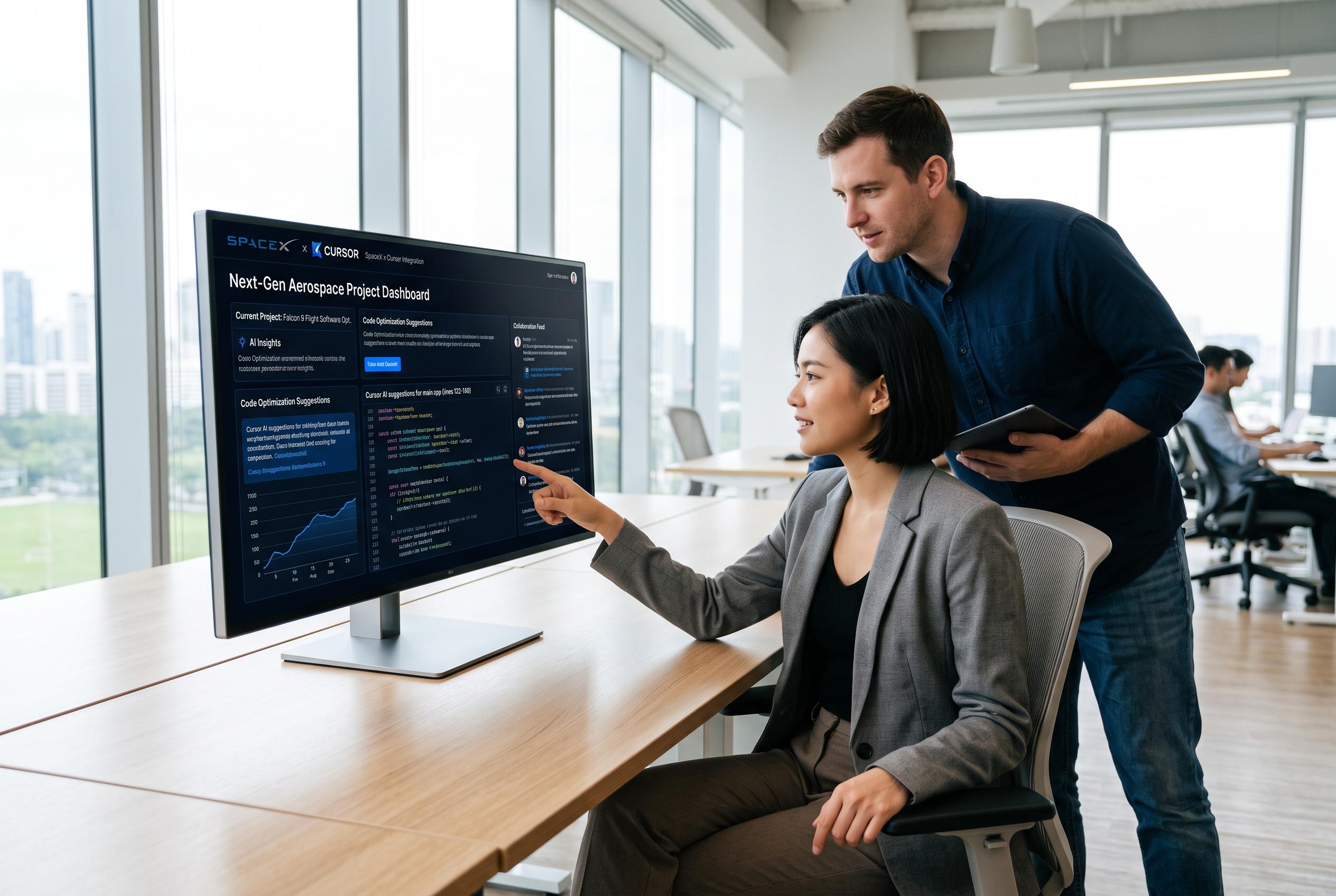

SpaceX and AI coding startup Cursor are set to release their first collaborative AI model as early as Wednesday, signalling a new phase in the company’s aggressive push into advanced AI development, amid industry rivalry and significant corporate restructuring.
SpaceXAI and Cursor are preparing to release their first jointly developed artificial intelligence model as early as Wednesday, after delaying the launch earlier this week to improve efficiency, according to a memo sent to staff. The model has been measured internally against Anthropic’s Claude Opus 4.8 and OpenAI’s GPT 5.5, placing the effort in direct competition with some of the most capable systems now on the market.
The release would be the first product to emerge from SpaceX’s planned purchase of Cursor, the fast-growing AI coding startup. SpaceX agreed in June to buy Cursor in an all-stock transaction valued at $60 billion, a deal expected to close in the third quarter. According to the companies, the model is intended to appear both inside Cursor and in Grok Build, the group’s developer platform.
The project also follows Elon Musk’s claim on 28 June that Grok 4.5, an unreleased model built on the company’s 1.5 trillion-parameter V9 foundation, had entered private beta at SpaceX and Tesla. Musk said early testing suggested performance close to, or possibly beyond, Anthropic’s Opus-tier models, with Cursor data added through supplementary training. Those assertions have not been independently verified, and there is still no public benchmark score for Grok 4.5.
The broader restructuring has moved quickly. SpaceX absorbed xAI, rebranded the unit as SpaceXAI and then announced the Cursor acquisition on 16 June, according to the company’s own statements and subsequent reporting. The timing comes as investors have been watching for evidence that SpaceX can turn its large-scale AI investments into product releases. Shares fell 7% on Tuesday after the company asked regulators for permission to launch as many as 100,000 third-generation Starlink satellites, before recovering slightly in after-hours trading.
Disclaimer: This content is intended for informational purposes only. Readers are advised to exercise their own judgement, conduct due diligence, or consult a qualified expert before acting on any information provided.