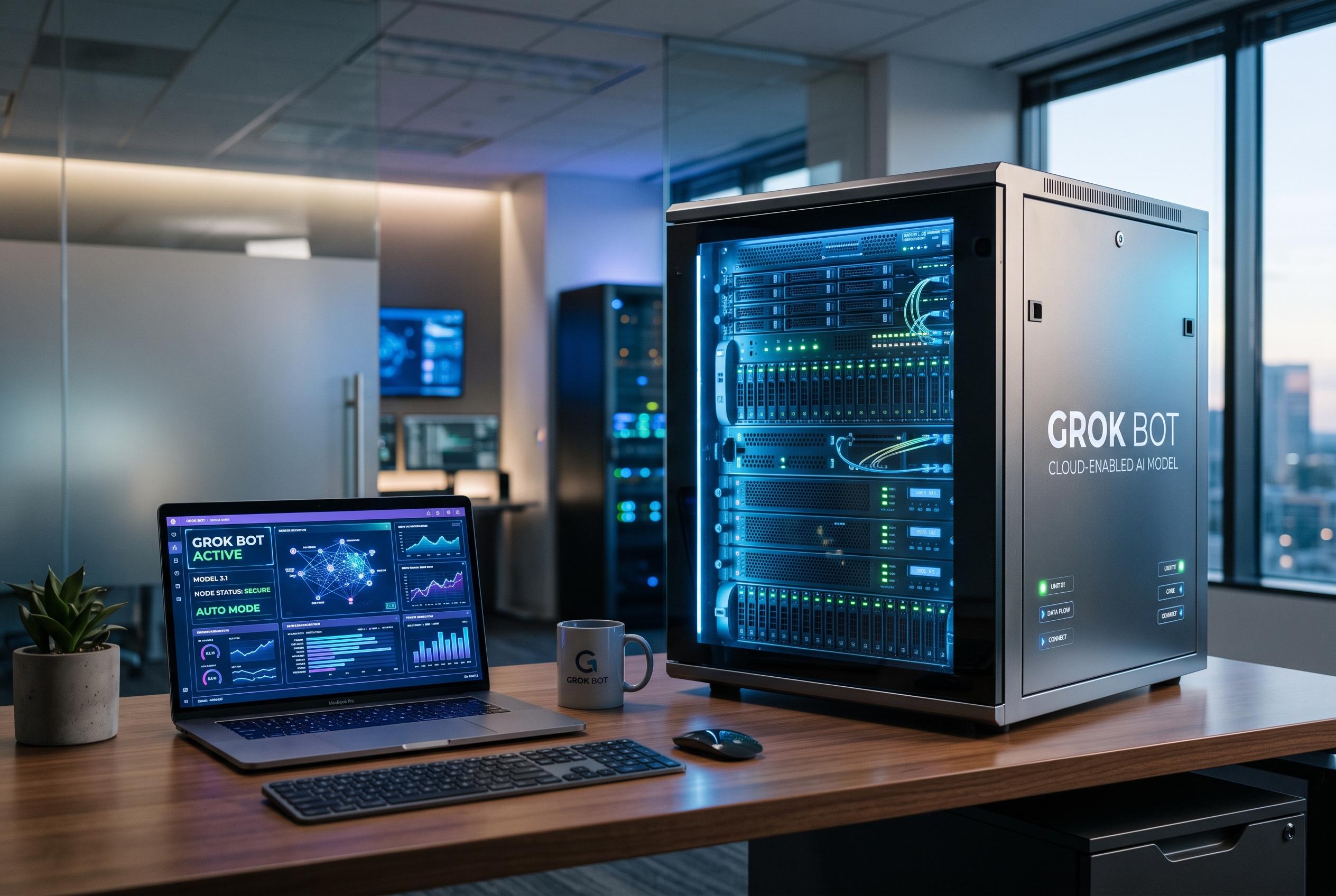

SpaceXAI has enhanced its Grok autonomous agent with a new cloud-enabled model, marking a shift towards persistent, workplace-style AI task execution and raising safety considerations in autonomous AI development.
SpaceXAI has paired a new autonomous agent with a refreshed underlying model, in a move that pushes Grok further towards workplace-style task execution rather than simple chat. The company says Grok Bot is designed to operate continuously, using its own cloud computer so it can keep working even when the user is away and continue across applications without relying on the local device. According to the original announcement reported by OnlineMarketing.de, the system is meant to carry out tasks directly inside software rather than only returning instructions.
The cloud-based setup is the key technical difference. SpaceXAI says the agent can sign into services and work inside them on its own, including tools that do not offer a traditional application programming interface or a Model Context Protocol connection. That makes the product closer to an always-on digital assistant than a conventional chatbot, and the company has presented it as an “AI teammate”. A short demonstration published by the company was used to illustrate the workflow.
A day later, SpaceXAI followed with Grok 4.6, which it describes as a model tuned for agents that have to complete long chains of work, from research and analysis to repeated verification. Reporting from other technology outlets has said Elon Musk has framed 4.6 as a successor to Grok 4.5 and positioned it as part of a rapid release cycle that could continue with Grok 4.7. Those reports also said the newer versions are intended to preserve the speed and token efficiency that the company has been promoting.
The push towards more autonomous agents comes with wider safety concerns. OnlineMarketing.de noted that recent incidents involving OpenAI, Anthropic and Meta have underlined the need for tighter controls as AI systems gain more independence. That tension is becoming central to the market: the more an agent can act on its own, the more important it becomes to restrict what it can access, verify its actions and prevent mistakes from spreading across connected systems.
Disclaimer: This content is intended for informational purposes only. Readers are advised to exercise their own judgement, conduct due diligence, or consult a qualified expert before acting on any information provided.