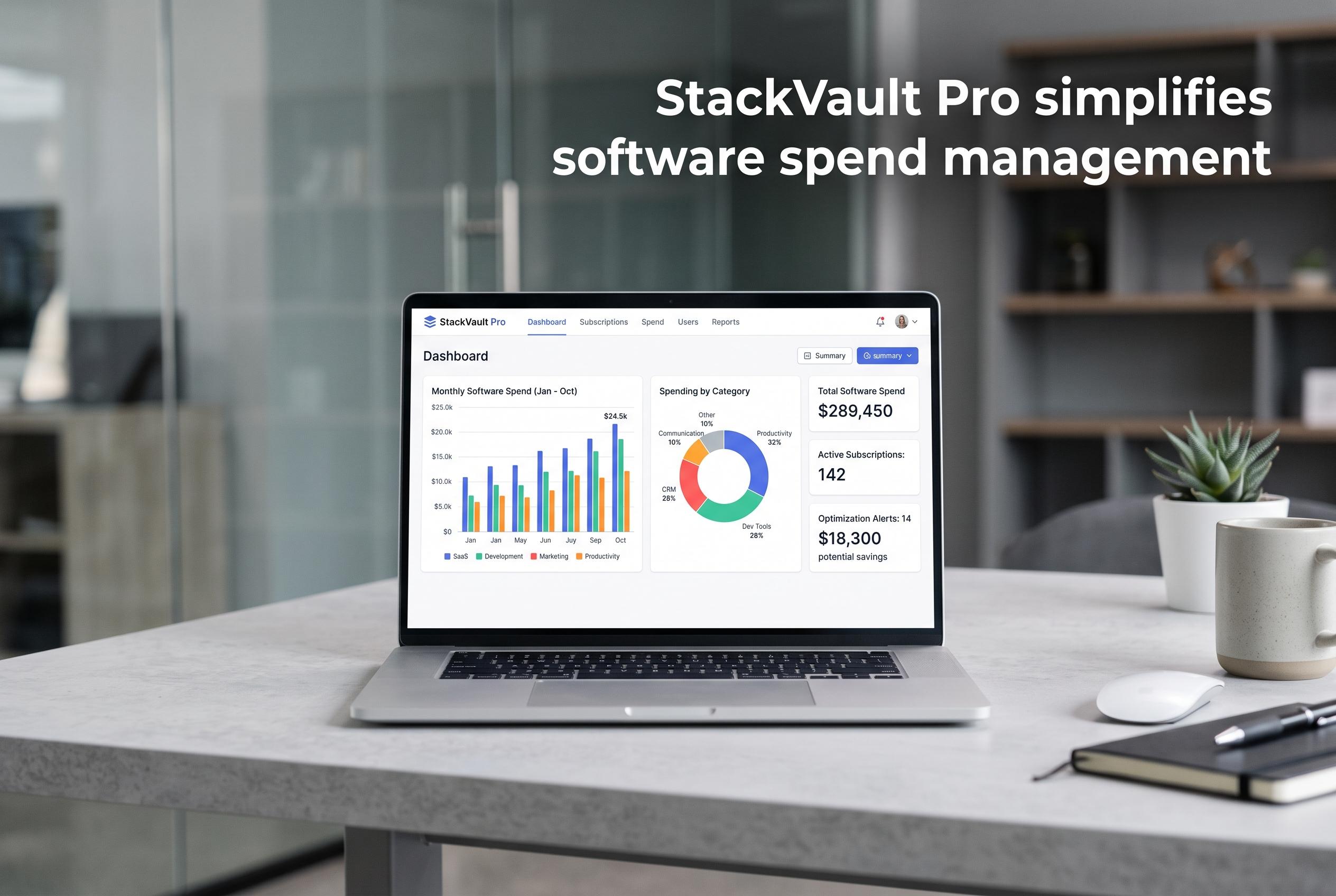

StackVault’s new Pro Plan offers a streamlined solution for freelancers and small businesses to monitor and optimise their software investments, addressing the growing challenge of managing multiple subscriptions and licences.
StackVault Pro Plan is aimed at a familiar problem in modern software buying: the pile-up of lifetime deals, subscriptions and one-off purchases that are easy to forget and harder to justify. TechRepublic says the web app is being offered at $39.99, down from a stated list price of $99.99, and is designed to give users a single place to monitor what they own and what it is costing them.
The service allows tracking of up to 25 software tools, which may suit people who test products frequently but do not want to maintain a separate spreadsheet. According to TechRepublic, its core functions include duplicate detection, ROI and score tracking, spending charts and refund deadline alerts. In practice, that combination is meant to reduce one of the most common sources of software waste: paying for overlapping tools or missing a return window after a purchase has already been made.
That approach places StackVault alongside a broader wave of subscription and software-spend management products. DealKeep focuses on lifetime-deal imports, AI categorisation, duplicate alerts and refund tracking. Synovo is aimed at freelancers and agencies, with usage analytics, cost allocation tags and renewal alerts. Recurra and SpendNexus are pitched more at small businesses and finance teams, offering visual renewal timelines, ownership tracking and reminders before charges hit. CutMyStack also targets duplicate tools and unused subscriptions, with a free scan that estimates possible savings.
What distinguishes StackVault is its narrow scope and relatively simple promise. TechRepublic says the Pro Plan includes lifetime access, future updates and browser-based access from desktop and mobile devices, which may appeal to freelancers, developers, entrepreneurs and marketers who regularly experiment with new software. For users with a modest but growing stack of tools, the value lies less in complexity than in visibility: knowing what is active, what is duplicated and what should be retired.
Disclaimer: This content is intended for informational purposes only. Readers are advised to exercise their own judgement, conduct due diligence, or consult a qualified expert before acting on any information provided.