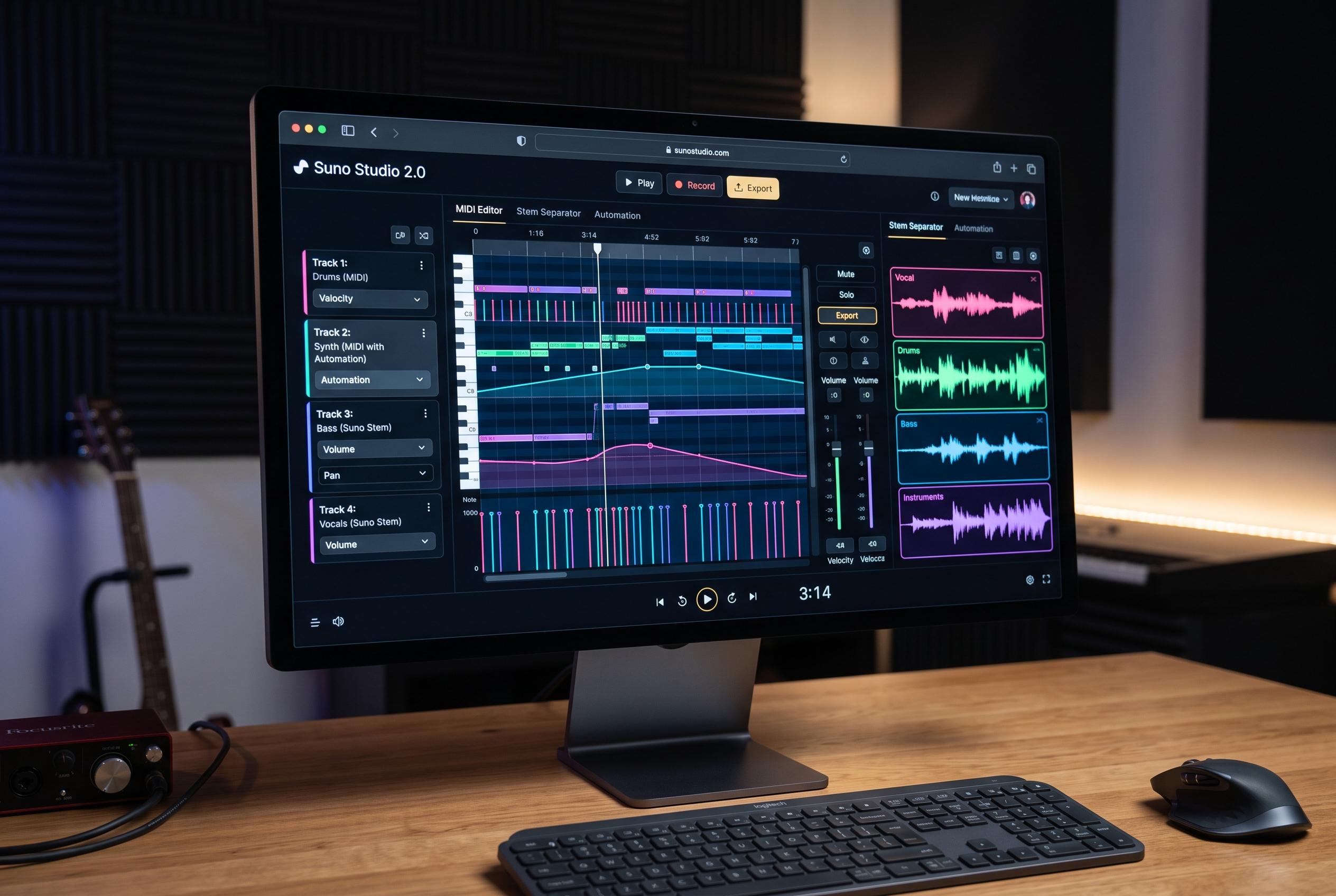

Suno has launched Studio 2.0, a major update to its web-based music production platform, integrating MIDI editing, automation, stem separation, and AI-powered features to edge closer to traditional DAWs in the browser.
Suno has pushed its Studio product further into digital audio workstation territory with Studio 2.0, adding MIDI editing, automation, stem separation, audio effects and unlimited export for Premier subscribers. The update marks a clear move beyond prompt-based generation and towards a more complete production environment, one that can handle both creation and finishing work in a browser. Suno says the aim is to keep familiar studio methods intact while adding AI tools around them.
The biggest addition is MIDI support. Users can now import, record and edit MIDI on the timeline, then shape the result with a new wavetable synthesiser. Suno says MIDI clips can also be used as prompts for new audio generations, giving the feature a dual role inside the workflow. For users without a controller, notes can be entered using a typing keyboard. The company’s own audio editor already offered multitrack editing, EQ, volume, pan and pitch controls, while its help documentation describes Studio as a web-based generative audio workstation built around multitrack creation and audio recording.
Studio 2.0 also adds a beta chat bar that lets users ask the system to generate instruments and vocals or help design plugins. Suno says the chat system is tuned for music production language rather than general conversation. The release includes factory effects such as sidechain compression and convolution reverb, plus the ability to create custom plugins through chat. Automation is another new element, allowing users to draw curves that change track and plugin settings over time. That puts the product closer to established DAW workflows, where arrangement and sound design are built inside the same session.
Stem separation has also been strengthened. Suno says the feature now delivers higher audio fidelity, allowing users to upload outside audio, split it into stems and rearrange the parts inside Studio. The company’s own documentation says its stem tools can separate as many as 12 stems, including vocals, drums and bass, with different separation modes for different tasks. Premier subscribers can export high-quality 32-bit/48kHz multitracks and stems without limits, which removes a common barrier for users moving from experimentation to final production. Suno says Studio 2.0 was shaped by feedback from artists and producers who wanted speed, tactile control and familiar tools alongside AI generation.
Disclaimer: This content is intended for informational purposes only. Readers are advised to exercise their own judgement, conduct due diligence, or consult a qualified expert before acting on any information provided.