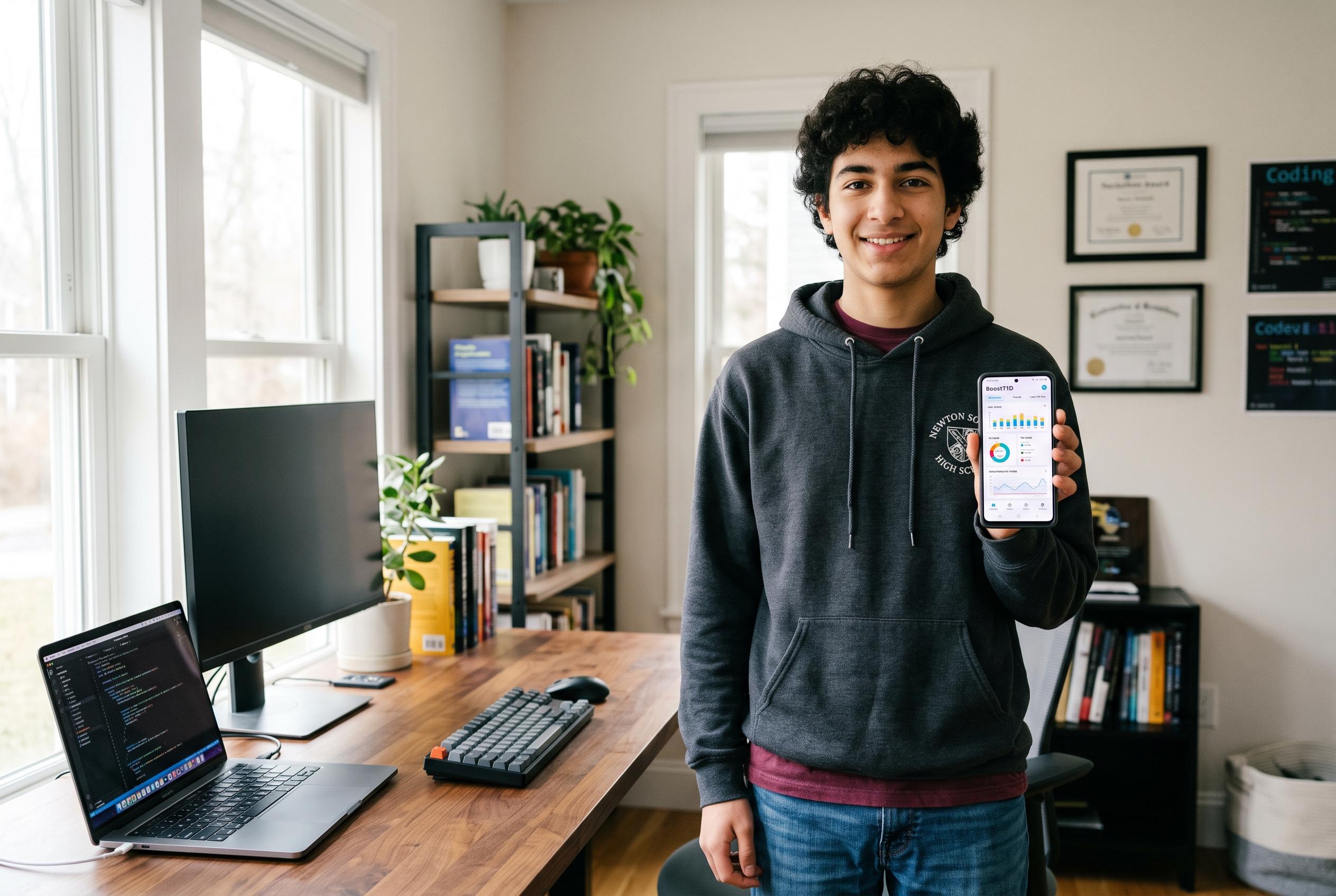

Aaron Prager, a 17-year-old from Newton, Massachusetts, has developed BoostT1D, an innovative AI-enabled mobile app that aids individuals with type 1 diabetes in tracking blood sugar patterns, analysing meals, and connecting users for support, transforming daily disease management through pattern recognition.
Aaron Prager, a 17-year-old from Newton, Massachusetts, has turned a childhood illness into a software project with unusually practical ambitions. His AI-enabled mobile app, BoostT1D, is designed to help people with type 1 diabetes track glucose patterns, analyse meals and spot links between food, blood sugar and insulin use.
The Boston Globe reported that the app has been downloaded almost 2,000 times. Prager has also created a companion website where users can compare notes and offer support, and about 100 people have signed up. The tool can identify food from a smartphone photo and then organise the information into a format that may help users and clinicians understand why blood sugar rises or falls at certain times.
Prager’s work arrives in a field where technology already plays a central role. For the more than 2 million people in the United States living with type 1 diabetes, Bluetooth-enabled glucose sensors and wearable insulin pumps have already changed daily management by making monitoring and dosing more precise. BoostT1D is an attempt to add another layer: pattern recognition. The app stores personal data on the user’s own phone, which Prager says is intended to protect privacy, and it can produce reports users can share with doctors. Because it has not received regulatory approval, it does not tell people how to change insulin doses.
According to Prager, the idea grew out of the routine burden of counting carbohydrates and estimating meals, a task that many people with diabetes know well. He was diagnosed before he was 2 and has been coding since childhood, helped along by parents who work as software engineers. He first built an insulin calculator for a school science project in sixth grade, then released an earlier version of BoostT1D as a website last summer before turning it into a phone app this year.
The project has already earned outside recognition. In July, it won the grand prize in MIT Solve’s “AI for a Better World” student competition. That came after BoostT1D won in US Representative Jake Auchincloss’s district in the Congressional App Challenge and then went on to be named the national winner among district champions. The Congressional App Challenge said the app was selected for its technical strength, creativity and potential to solve a real problem.
Prager’s interest in the issue is personal as well as technical. He said people around him often did not understand the demands of managing type 1 diabetes, especially the isolation that can come with a chronic condition. He was also struck by the lack of specialist care some children face after travelling to Washington for the Breakthrough T1D Children’s Congress, where he met young patients in areas without ready access to endocrinologists.
Now a rising senior at the British International School of Boston, Prager is balancing app development with a demanding academic schedule and college applications. He recently attended Y Combinator’s Startup School in San Francisco, where he heard Nvidia chief executive Jensen Huang urge students to study core STEM subjects. Prager said the experience left him thinking carefully about his own future. He remains interested in software, but said finance and medical technology also appeal to him.
Disclaimer: This content is intended for informational purposes only. Readers are advised to exercise their own judgement, conduct due diligence, or consult a qualified expert before acting on any information provided.