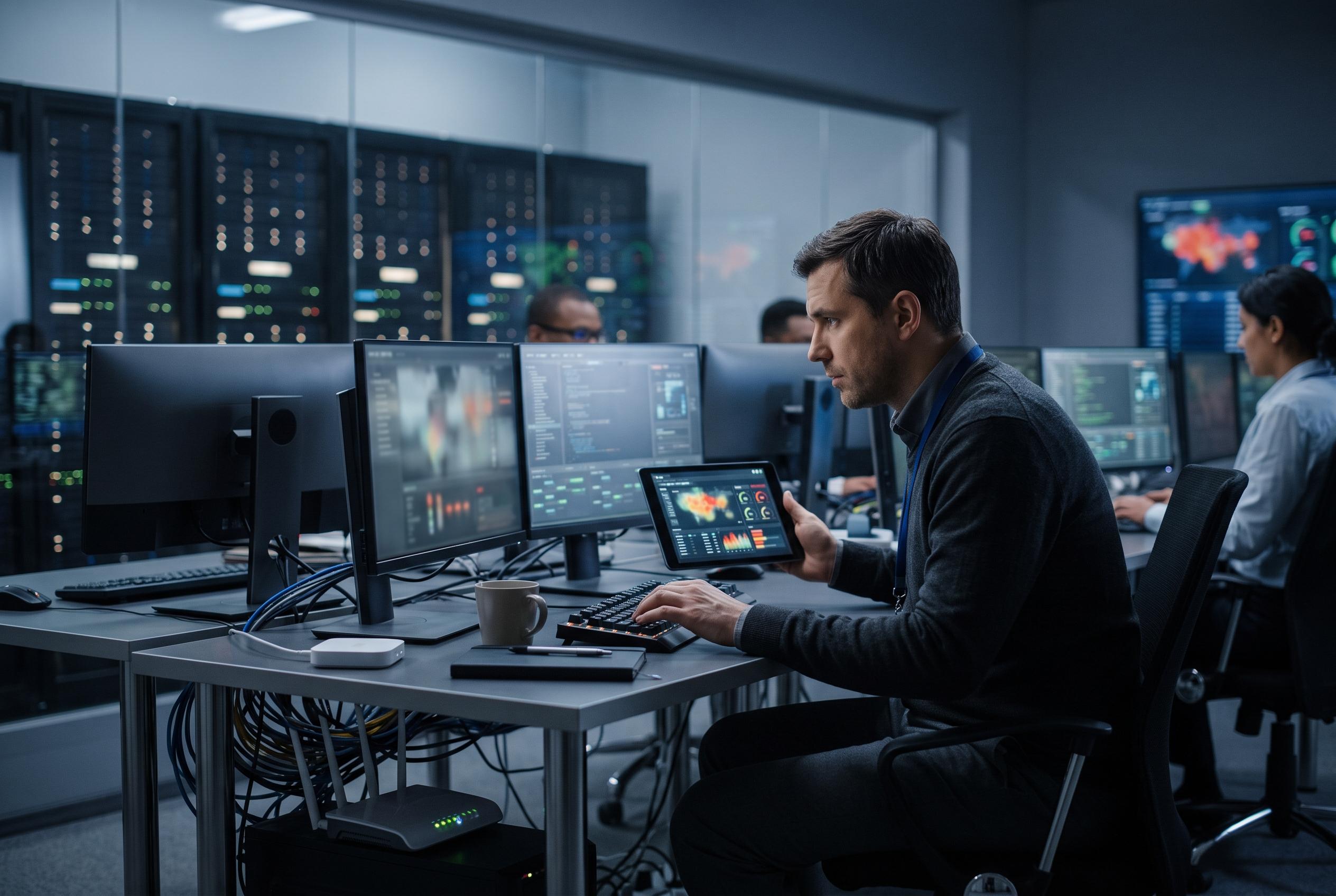

Patrice Caine of Thales warns that AI-enabled attacks are accelerating and calls for greater investment in AI-driven defensive tools, highlighting a shifting landscape in global cybersecurity and geopolitical tensions.
Patrice Caine, the chief executive of France’s Thales, has urged companies and governments to invest more heavily in artificial intelligence tools that can defend against the same technology when it is turned into a weapon. Speaking at a cybersecurity event, he said the pace of AI-enabled attacks was accelerating at a pace he described as alarming, with attackers able to move faster, scale operations more easily and, in some cases, hand greater autonomy to software that no longer needs direct human control.
Caine argued that the defensive side of the debate has not received enough attention. He said AI should be used by security teams to match the speed and scale of the people trying to break into systems, and he presented new Thales security products designed to protect against AI-driven attacks. The company also highlighted a partnership with Google Cloud aimed at helping businesses deploy AI in safer ways.
The Thales chief’s warnings reflect a wider shift in the cybersecurity debate. Analysts and security vendors have increasingly described AI as a force that lowers the barrier to sophisticated attacks, allowing criminals and hostile states to automate reconnaissance, refine phishing attempts and adapt malware more quickly than before. Technical guidance from cybersecurity specialists has also stressed that AI-based malware can change its behaviour to evade detection, which is pushing defenders towards behavioural analytics and constant monitoring of network activity.
His comments also fit into a broader geopolitical context. European governments have been increasingly concerned about sabotage, cyberattacks and other hybrid threats linked to Russia’s war in Ukraine, and Thales has been expanding its role in this market as a major defence and security supplier. The company’s cybersecurity push comes as large institutions outside the technology sector are also organising around the same risk, including a newly expanded chief executive-led coalition focused on the resilience of critical infrastructure and financial systems.
For Thales, the message is that AI is not only an offensive tool. It is also becoming a necessary layer of defence for companies that need to protect sensitive data, critical services and industrial systems from attacks that are becoming faster, more automated and harder to detect.
Disclaimer: This content is intended for informational purposes only. Readers are advised to exercise their own judgement, conduct due diligence, or consult a qualified expert before acting on any information provided.