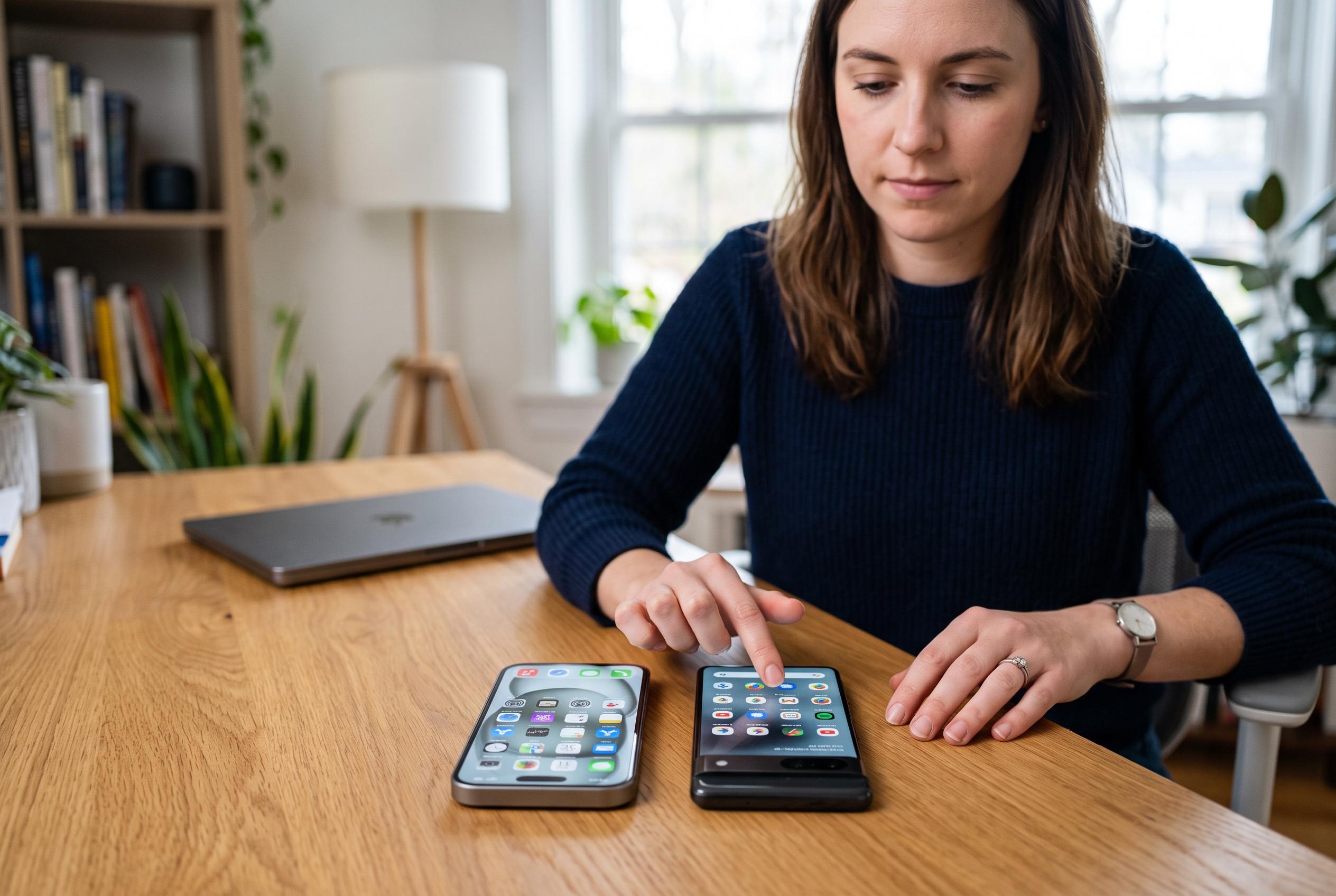

As users consider switching from iPhone to Android, industry insights reveal that while migration tools have improved, the loss of seamless accessories, messaging, and ecosystem integration remains a significant barrier, making the decision more complex than it appears.
Switching from iPhone to Android is often framed as a simple hardware choice. In practice, it can be a break from a tightly linked system of devices, services and habits. Adnan Ahmed, writing for Engadget, described the move after years of moving from Android to an iPhone 15 Pro Max and back again to a OnePlus 15, and his account suggests the real cost is not the handset but the Apple ecosystem around it.
The most immediate losses are often accessories. AirPods still connect to Android, but they lose much of what makes them feel premium on an iPhone: automatic device switching, dependable spatial audio and other Apple-specific features. The Apple Watch is an even harder stop. It does not pair with Android in any meaningful way, and without an iPhone in the loop it cannot operate as intended. That gives Apple’s accessory ecosystem a built-in switching penalty that can outweigh the appeal of a new phone.
Messaging remains another fault line. iMessage is still unavailable on Android, which means conversations with iPhone users fall back to SMS or MMS unless both sides move to another platform. That said, the security gap has narrowed. Industry reporting indicates that Apple enabled end-to-end encrypted RCS messaging between iPhone and Android in May 2026 using the Messaging Layer Security protocol, giving cross-platform chats better protection than before, even if they still do not match iMessage’s deeper integration with Apple devices.
Data migration is less painful than it once was. WhatsApp now supports direct transfer between iPhone and Android, and most users who already rely on Google services will find contacts, calendars and photos easier to move than in the past. Still, the switch is not frictionless for people who live inside iCloud. Android can access iCloud Drive through a browser, but the experience is not native. For anyone using iCloud as a primary file system, shifting to Google One or OneDrive before changing phones may make the transition smoother.
Android’s strengths are clearer once the day-to-day workflow starts. Ahmed pointed to the keyboard as a major advantage: Android offers mature third-party options such as Gboard and SwiftKey, plus more flexible swipe typing and text prediction. File handling is also more direct, with downloads and documents easier to reach and move. Home screen customisation, widgets and launchers remain areas where Android offers far more control, which matters for users who shape their phone around productivity rather than fixed defaults.
iPhone still has advantages, and not only for loyalists. Ahmed said iOS feels more coherent, with a more consistent visual language across first-party and third-party apps. Some applications also remain better supported on iPhone, and in his case that included Flighty, which does not have an Android equivalent. Hardware consistency is another Apple strength. Across the range, iPhones tend to deliver steadier performance in build quality, haptics, speakers and cameras than Android devices that vary more sharply by manufacturer and price point. Recent comparison coverage from Tom’s Guide and other outlets suggests the broader contest has become less ideological and more about trade-offs between consistency and flexibility.
The wider picture is that the ecosystem gap is shrinking, but not equally on both sides. Android’s software and transfer tools have improved, while Apple’s grip on accessories still makes leaving expensive. The result is not that one platform is plainly superior. It is that switching away from Apple is now easier than it was, yet still costly enough that users should think carefully about what they will lose as well as what they hope to gain.
Disclaimer: This content is intended for informational purposes only. Readers are advised to exercise their own judgement, conduct due diligence, or consult a qualified expert before acting on any information provided.