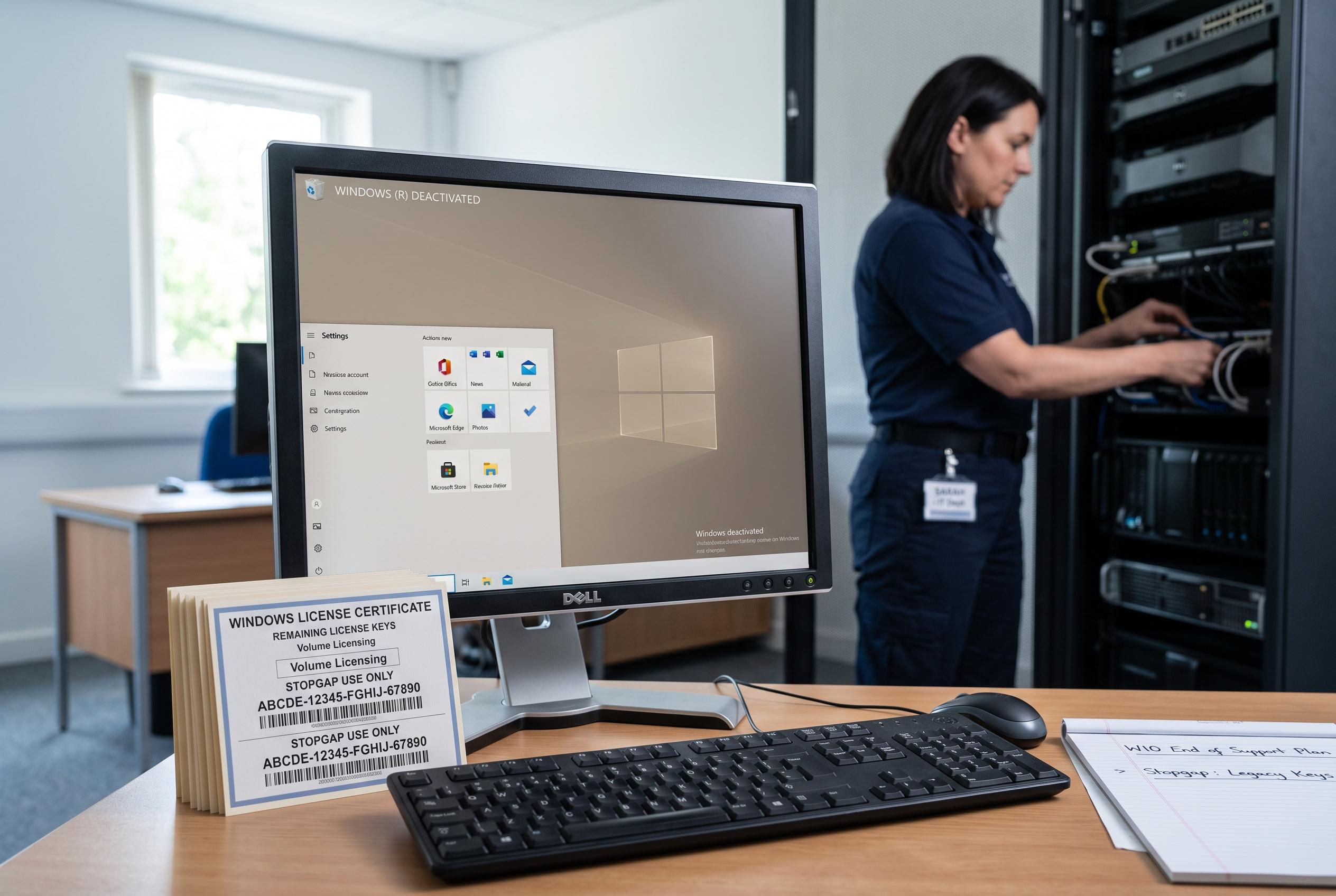

With mainstream support for Windows 10 ending, many users and organisations are weighing the risks and benefits of upgrading or purchasing licences at lower costs, especially for legacy hardware and software.
With Windows 10 now past its support deadline, the case for buying a licence has become narrower but not irrelevant. According to Microsoft, mainstream support ended on 14 October 2025, which means there are no further feature upgrades, security patches or technical support for the operating system. That makes Windows 11 the default recommendation for compatible machines, particularly where the PC is used for work, sensitive data or everyday online activity.
Even so, Windows 10 still has a role on older systems. Machines that fail Windows 11’s hardware checks, such as TPM 2.0, Secure Boot or a recent enough processor, may still run more reliably on Windows 10. The same applies to computers that depend on legacy business software or older peripherals that have not been updated for Windows 11. In those cases, an original licence can keep the device usable and properly activated while organisations or private users plan a longer transition.
Microsoft’s Extended Security Updates programme offers a temporary bridge. The company says personal devices running Windows 10 version 22H2 can receive critical security updates until 13 October 2026, provided recent updates are installed. In the European Economic Area, the extension is available free for private users, while other personal users may need to use Microsoft account-based enrolment, Rewards points or a paid option depending on their circumstances. The ESU scheme is not a long-term fix; it is a limited safety net to reduce exposure during migration.
Price is the other reason some users still look at Windows 10. Microsoft’s own store lists Windows 10 Home at about €145 and Windows 10 Pro at €259, which pushes many buyers towards third-party sellers. That market can offer genuine savings, but it also carries real risks, including counterfeit keys, licences that have already been used and sellers that provide little or no buyer protection. For that reason, the quality of the vendor matters as much as the price.
A legitimate low-cost licence can still make sense, particularly if the aim is to move later to Windows 11. If the hardware is compatible, the upgrade from Windows 10 to Windows 11 remains free and normally preserves activation. In practice, that means a cheaper Windows 10 key can act as an entry point to an authenticated Windows 11 installation, as long as the edition matches. A Home key will not activate Pro, and vice versa.
For users buying from resellers, the basic checks are straightforward. Look for recent and detailed reviews, a clear refund or replacement policy, responsive customer support and secure payment methods such as PayPal or a virtual card. Digital delivery is common and can be perfectly legitimate, but unusually low prices, especially for Pro editions, should be treated with caution. OEM licences are also tied to the first motherboard on which they are activated, so they are not meant to be transferred freely to another PC.
In short, buying Windows 10 after end of support only makes sense in specific circumstances: older hardware, legacy software, secondary machines or a deliberate low-cost route towards Windows 11. For compatible PCs used in demanding or security-sensitive settings, upgrading is the better option. For everything else, Windows 10 can still be a practical stopgap, but only if the licence is genuine and the seller is trustworthy.
Disclaimer: This content is intended for informational purposes only. Readers are advised to exercise their own judgement, conduct due diligence, or consult a qualified expert before acting on any information provided.