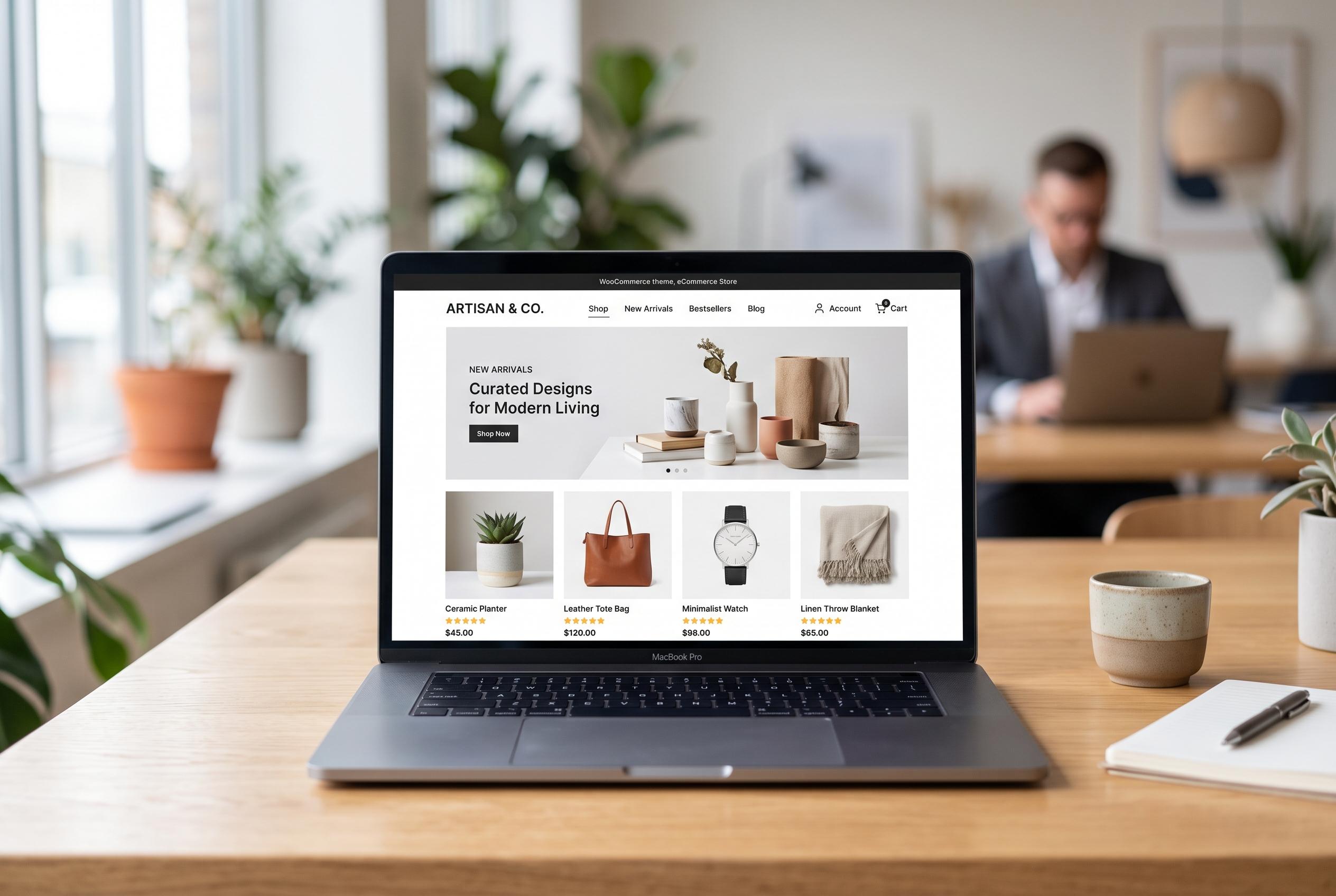

In 2026, online retailers are prioritising theme compatibility and flexibility over rankings, with Astra and Storefront remaining dominant choices for building tailored stores on WordPress and WooCommerce.
For many online retailers building on WordPress in 2026, the theme choice is less about crowning a single winner than matching the storefront to the way the shop will actually be built and maintained. The strongest broad recommendation remains Astra, while Storefront is still the lowest-risk free starting point. For stores that want a more packaged premium experience, themes such as Flatsome, WoodMart, Divi, Shoptimizer and Botiga remain in contention, with Kadence, Blocksy, OceanWP, GeneratePress and Neve better suited to lighter or more flexible builds.
The distinction matters because WordPress provides the site framework, WooCommerce adds commerce functions such as products, cart and checkout, and the theme shapes the customer-facing presentation as well as much of the editing process. WooCommerce supports both classic themes and block-based workflows, so the right choice depends on the store’s catalogue, budget, technical skill and preferred design process. In practice, that means a theme should be judged by fit rather than by an abstract ranking.
Astra continues to stand out because it combines WooCommerce-aware layout controls, starter templates and a relatively adaptable workflow. Several recent round-ups, including one from TechBloat, describe it as a strong option for speed-conscious stores that still want block editor compatibility and practical shop controls. Supporters of the theme argue that this mix makes it useful for small businesses that want to launch quickly without giving up room to refine the storefront later.
Storefront, by contrast, is valued for caution rather than flair. WooCommerce says it is the official theme, built and maintained by the team behind the commerce plugin, and that deep integration is its main advantage. IsItWP and WPBingo both present it as a reliable free baseline: plain out of the box, but stable, compatible and easy to customise for developers or merchants who want a clean foundation.
That split between convenience and control also explains why flexible themes such as Kadence, Blocksy, OceanWP, GeneratePress and Neve keep appearing in 2026 shortlists. TechBloat groups them with Astra as the most useful free or freemium options for merchants who want lighter builds, block editor support or broad compatibility. These themes are not automatically fast in every setup, but they do give store owners more room to balance design, performance and editing workflow.
Premium themes are better treated as packaged systems than as neutral templates. Flatsome and WoodMart are often chosen for stores with denser catalogues or merchandising-heavy layouts, while Shoptimizer is aimed more directly at conversion-focused shops. Divi appeals to merchants who want visual control inside a larger builder ecosystem, whereas Botiga is usually better suited to smaller, cleaner product ranges. The trade-off is familiar: more built-in features can reduce design work, but they also raise the cost of setup and long-term maintenance.
Performance claims should be treated with care. No single benchmark proves that one WooCommerce theme is universally the fastest, because hosting, plugins, product images, fonts, scripts and caching often matter more than the theme label itself. A minimal theme can still feel slow on a crowded stack, while a feature-rich one can perform well if it is configured carefully. The safer approach is to test the same store setup on the same hosting with the same assets and plugin set before drawing conclusions.
For most merchants, the practical decision is straightforward. Choose Storefront when official compatibility and simplicity matter most. Choose Astra when you want the broadest general-purpose recommendation. Choose Kadence or Blocksy for a modern block-editor workflow, OceanWP or GeneratePress for a more flexible or restrained build, and a premium packaged theme only when its design system genuinely matches the business model. For highly bespoke stores, a custom or child-theme route may be the better long-term investment than another off-the-shelf purchase.
Disclaimer: This content is intended for informational purposes only. Readers are advised to exercise their own judgement, conduct due diligence, or consult a qualified expert before acting on any information provided.