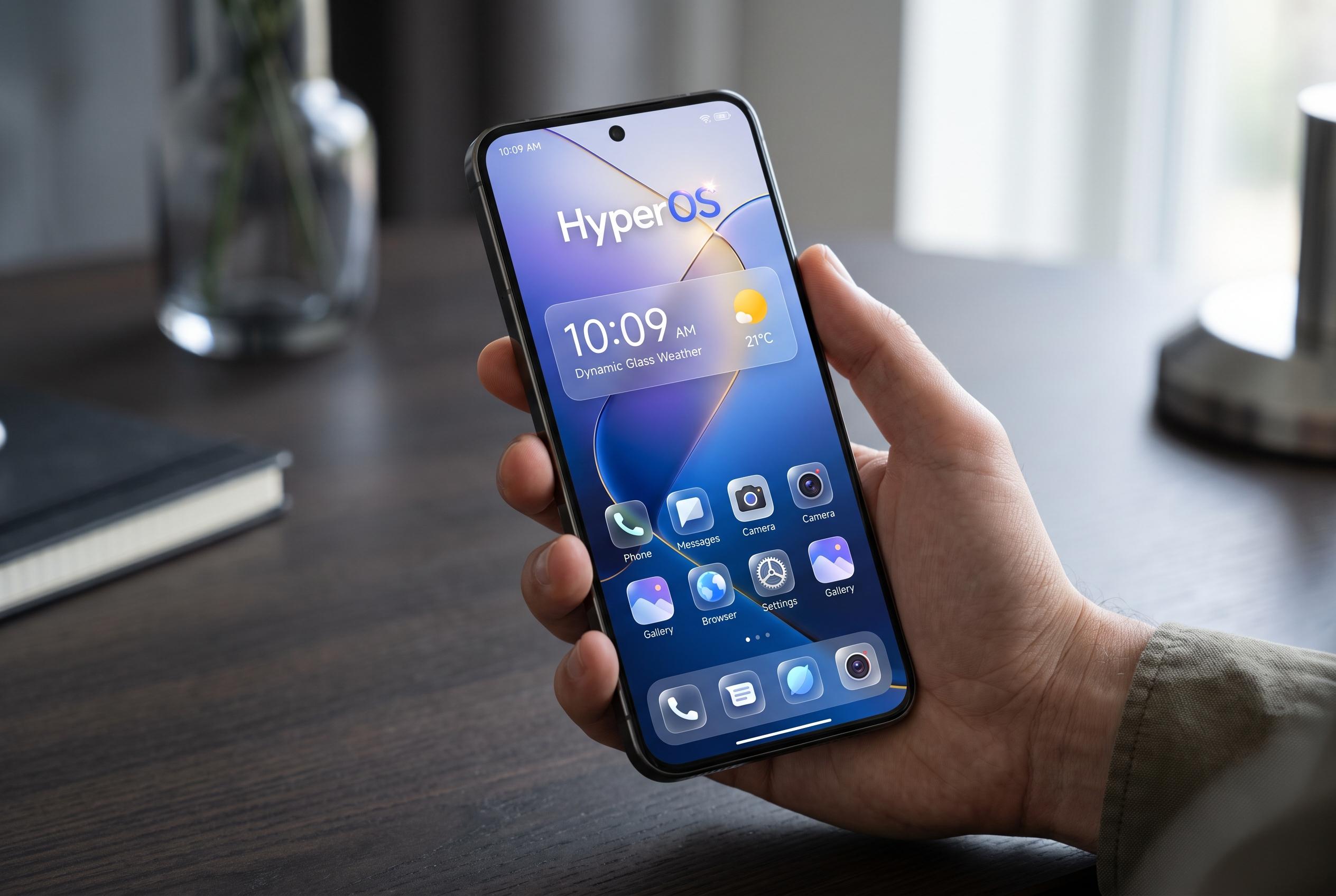

Leaked details reveal Xiaomi’s upcoming HyperOS 4 will bring a dramatic visual transformation with real-time glass effects, AI enhancements, and a refreshed interface tailored to flagship devices, signalling a significant UX shift for the brand.
Xiaomi is preparing a substantial visual overhaul for its phones, with HyperOS 4 expected to reach China first before a wider international rollout. Leaks cited by Spanish technology site El Androide Libre suggest the update will move Xiaomi closer to a full “glass” design language, with transparency and layered lighting effects rendered in real time rather than applied as a simple theme on top of the interface.
The biggest change appears to be technical as well as cosmetic. According to the leaked material, Xiaomi is shifting towards hardware-driven glass effects that use the processor and GPU to calculate transparency, reflections and composition on the fly. That would make the interface behave more like Apple’s iOS glass-inspired visuals, with backgrounds, widgets and notifications adapting more naturally to whatever sits behind them. Gizmochina reported that HyperOS 4 is also expected to be based on Android 17 and to include broader security and privacy improvements.
Not every handset is likely to get the full effect. The leaked code reportedly points to support only on phones using Snapdragon 8 Elite, Dimensity 9500 or Xiaomi’s own XRing chips. Other devices should still receive a simplified version of the interface, which would mimic the same design language with less precise rendering. That would leave a clear split between Xiaomi’s newest flagships and older models, even if the company keeps the broader visual redesign consistent across the range.
The update is also expected to reshape the lock screen and home screen. Reports describe a larger digital clock with translucent styling, stacked notification cards and new widget layouts that let music, weather, calendar and volume controls sit in a single space. Xiaomi is also said to be adding more flexible folder sizing on the home screen, alongside tighter integration with Xiaomi HyperConnect, which would better surface connected products such as headphones, watches, washing machines and the Xiaomi SU7 electric car.
Artificial intelligence remains a central theme. In China, the Super XiaoAI assistant is reportedly gaining a floating interface and an expert mode for more complex tasks, while the notes app is expected to add meeting recordings, automatic summaries, task extraction and outline generation. The keyboard is also said to be getting instant translation, spelling correction and text rewriting. Cinco Días reported that Xiaomi may begin beta testing in China on August 7, 2026, with a full local launch expected later in the month or in early September, followed by a broader international release.
Disclaimer: This content is intended for informational purposes only. Readers are advised to exercise their own judgement, conduct due diligence, or consult a qualified expert before acting on any information provided.