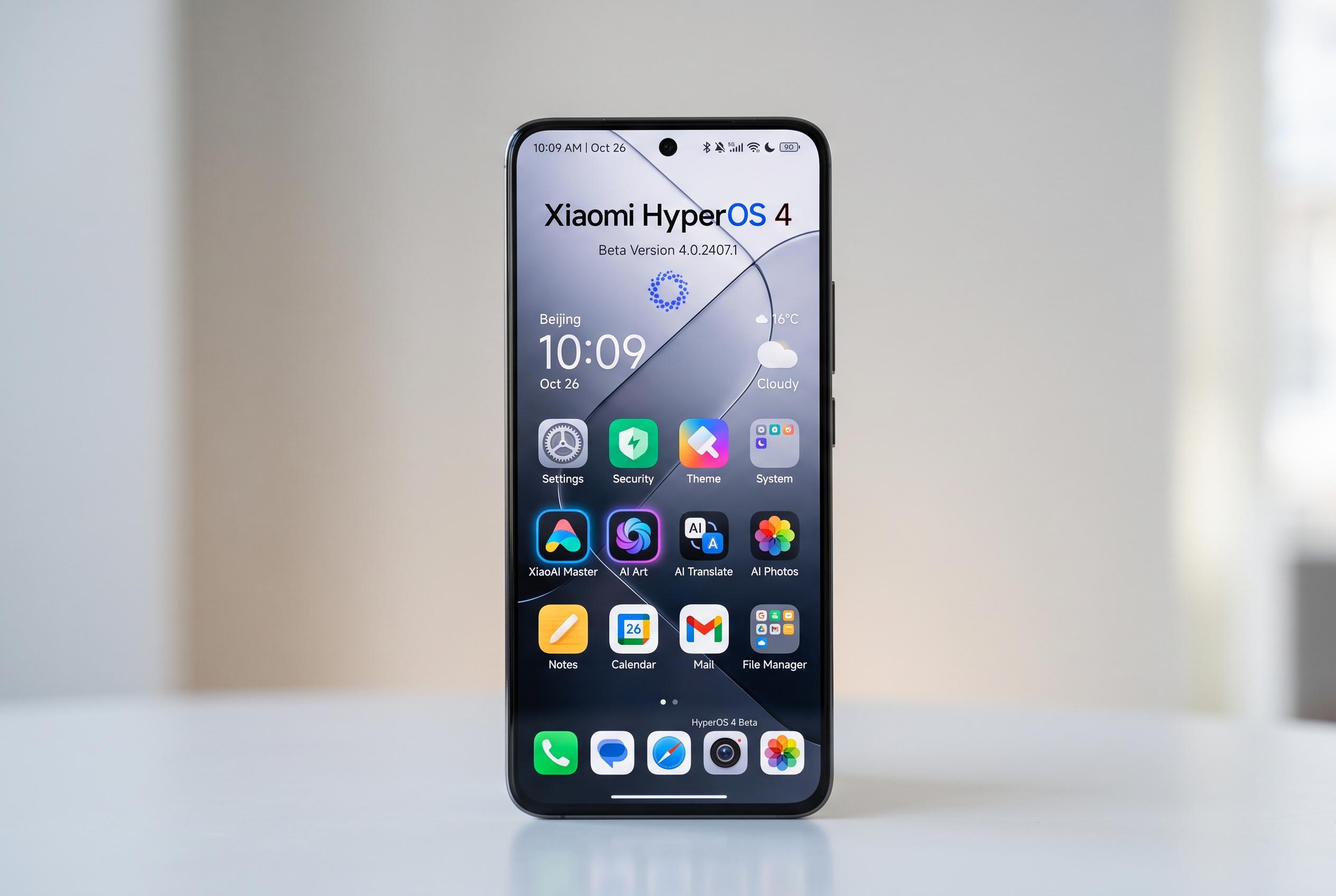

The second beta of Xiaomi’s HyperOS 4 brings a redesigned interface, enhanced AI tools, performance boosts, and a revamped system architecture, marking a significant step forward for its flagship devices.
Xiaomi is preparing the second beta of HyperOS 4, a major software refresh built on Android 17 and aimed first at its newest flagship phones and tablets. The update is being positioned as more than a routine annual refresh: alongside a redesigned interface, Xiaomi is promising deeper AI tools, performance gains and a broad set of bug fixes intended to make the system feel smoother in day-to-day use.
The most visible change is the new “Soft Light Glass” styling, which introduces more translucent controls, light-reflection effects and refined toggles across the system. Xiaomi is also touting faster responsiveness, with claims of a 17.5% improvement in UI reaction times and a 28.9% reduction in frame drops during animations. In practical terms, that points to a focus on visual consistency and fewer stutters rather than a wholesale redesign. Reports on HyperOS 4 have also described a wider architectural shift, with some industry watchers saying Xiaomi is aiming to strip out remaining MIUI-era code and push a cleaner software base across phones, tablets and foldables.
The beta is also expected to expand Xiaomi’s so-called HyperIsland area, adding drag-and-drop actions for quickly saving files, photos and text. On the AI side, Xiaomi’s MiMo features are said to include outline generation, automatic summaries and voice-to-text transcription inside native apps. Earlier reporting suggests the company is treating these contextual tools as a central part of the next software cycle, alongside tighter privacy and security features. That said, beta software of this kind often exposes rough edges, and community guidance around Xiaomi’s testing programmes has traditionally advised users to expect occasional reboots, app compatibility issues or other early-build problems before the stable release.
Xiaomi’s rollout is expected to come in three waves, beginning in mid-August with the Xiaomi 17 family, Redmi K90 models and the Xiaomi Pad 8 series. A second wave is due later in August for devices including the Xiaomi 17 Max, 17T series, Xiaomi 15 series and Redmi K Pad 2, while September should bring the beta to older devices such as the Redmi K80 series, Xiaomi Mix Flip 2 and several Pad models. Separate reporting earlier this year indicated that Xiaomi intended to unveil HyperOS 4 in July or August, with a broader stable rollout likely to follow later, around October, after beta testing has matured. Beta access is typically handled through Xiaomi’s Mi Pilot programme in the Mi Community app, with Chinese testers usually getting first access and global recruitment opening later.
Disclaimer: This content is intended for informational purposes only. Readers are advised to exercise their own judgement, conduct due diligence, or consult a qualified expert before acting on any information provided.