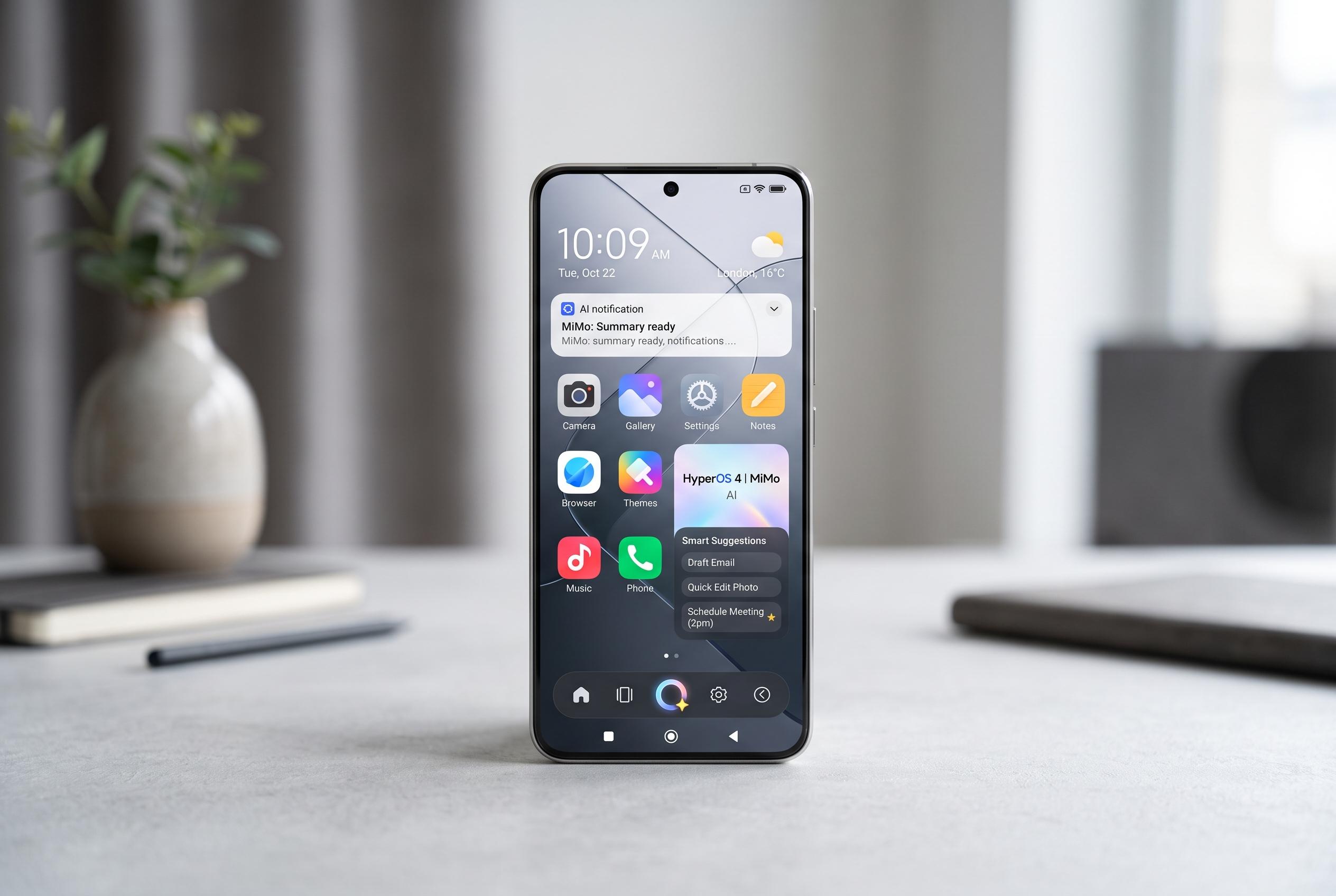

Xiaomi begins rolling out HyperOS 4 in China, featuring a fresh visual design, faster performance, and a new AI assistant powered by its MiMo large language model, signalling a significant upgrade in its Android-based software.
Xiaomi has begun distributing HyperOS 4, its next software release built on Android 17, but only for devices in China for now. The company is positioning the update as a broad refresh rather than a minor patch, with a new glass-like visual style, a beta-first rollout and Super AI Assistant 2.0, which Xiaomi says is powered by its own MiMo large language model.
The redesign is the most visible change. According to Xiaomi’s announcement as reported by TelecomTalk and Gizmochina, the interface uses translucent layers and refraction effects that aim to give menus, notifications and widgets a more polished appearance. Personalisation has also been expanded: users will be able to move notifications and the clock, resize folders and group widgets more freely. Xiaomi has also reworked app behaviour so that switching between portrait and landscape mode should feel smoother.
Performance claims are part of the pitch as well. Xiaomi says apps can open up to 18% faster after 9 hours of phone use than on HyperOS 3, helped by on-device artificial intelligence that predicts what resources a user may need and preloads them into memory. The company also says the new assistant will handle tasks such as voice transcription, note organisation and photo search, which places HyperOS 4 more clearly in the category of an AI-led platform update.
Reports from Gizmochina and Gadgets 360 suggest the wider rollout will take place in stages, with global availability to follow China after the initial beta phase. Leaks cited by those outlets point to the Xiaomi 17 series and Redmi K90 series as early test devices, while stable builds for older phones may not arrive until around October 2026. Separate reports also point to deeper privacy and security work, an interactive lock-screen feature and a stronger visual identity that some observers say resembles Apple’s Liquid Glass concept, though Xiaomi has not framed it that way itself.
Disclaimer: This content is intended for informational purposes only. Readers are advised to exercise their own judgement, conduct due diligence, or consult a qualified expert before acting on any information provided.