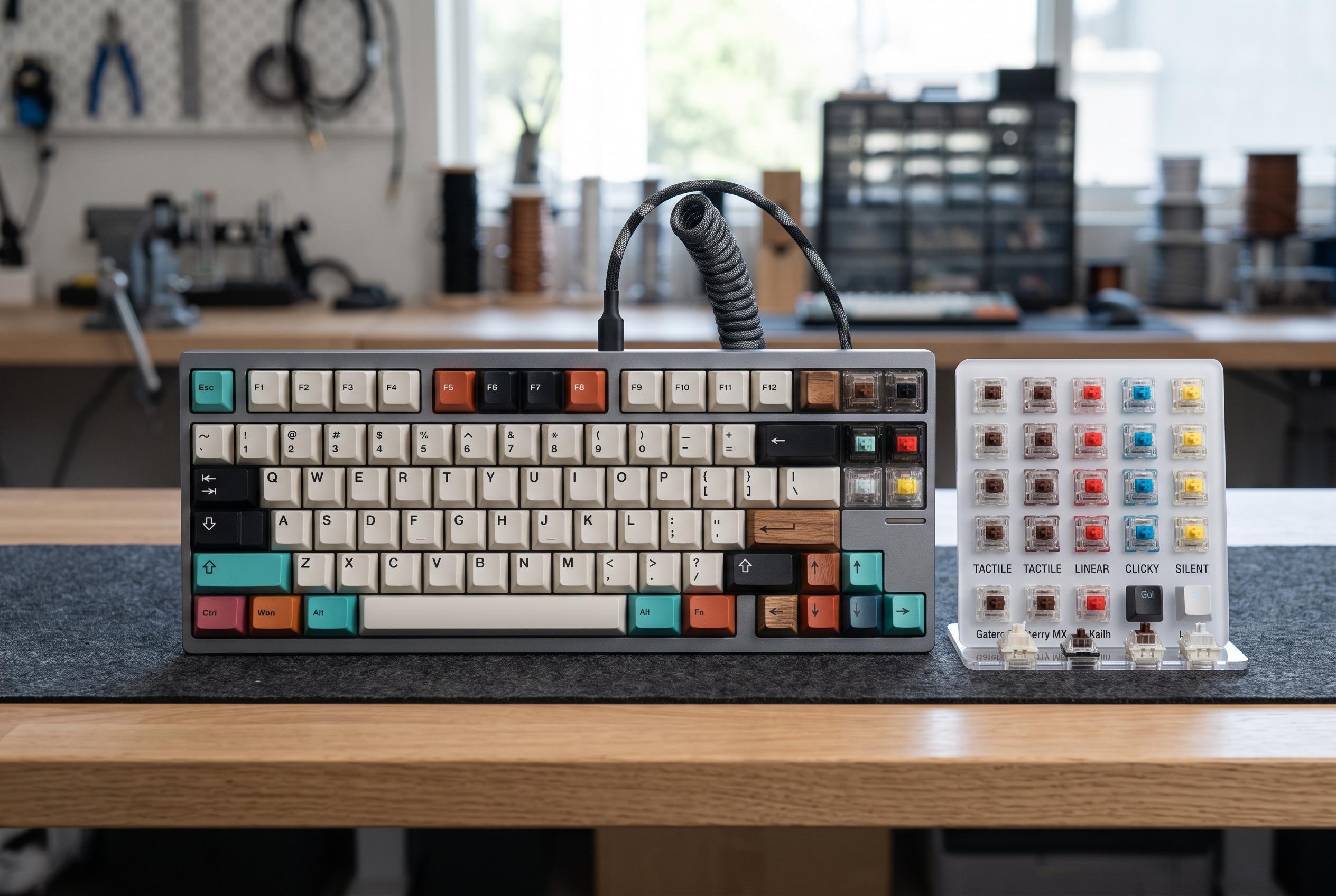

The mechanical keyboard landscape has expanded dramatically in 2026, introducing innovative switch types that cater to gamers, typists, and casual users alike, creating both exciting choices and new complexities for buyers.
Mechanical keyboard switches are no longer a specialist topic reserved for enthusiasts. In 2026, buyers face a wider spread of choices than ever, from familiar Cherry MX-style designs to optical, Hall Effect and Topre systems. The result is a market that offers more performance and customisation, but also more confusion for anyone trying to choose the right board for work, gaming or general use.
The traditional starting point is the mechanical switch. These use a spring-loaded stem and physical contacts to register a keypress, and they remain popular because they are durable, responsive and often easy to maintain. Many keyboards also allow hot-swapping, which means switches can be replaced without soldering. That flexibility has helped mechanical boards stay dominant even as newer technologies have emerged.
Mechanical switches are usually grouped into three familiar types: linear, tactile and clicky. Linear switches move smoothly from top to bottom, with no bump at the actuation point, making them a common choice for gaming and quieter shared spaces. Tactile switches add a small bump that gives clearer feedback without much noise, which is why they are often recommended for both typists and gamers. Clicky switches add an audible click on top of the bump, which some users enjoy, although the sound can become intrusive.
Switch colours remain a useful shorthand. Red is commonly associated with linear switches, brown with tactile and blue with clicky designs, according to beginner guides from sites such as HobbyStack and PCWorld. Those colour cues are not universal across every brand, but they remain a practical way for shoppers to understand the basic feel they are likely to get before buying.
Optical switches work differently. Instead of metal contacts, they use an infrared beam that is interrupted when the key is pressed. Corsair describes this approach as a way to improve speed and durability, while gaming brands such as Razer have pushed optical designs with adjustable actuation and rapid trigger features. The main limitation is compatibility: optical switches cannot be swapped into a mechanical board, and mechanical switches cannot be fitted to an optical one.
Hall Effect switches go further. They use magnets and sensors rather than physical contacts or light beams, allowing the actuation point to be tuned with unusual precision. That has made them especially attractive in competitive gaming, where very short actuation distances and rapid repeated inputs can matter. Razer, Wooting, SteelSeries, ASUS, Corsair, Keychron and Logitech are among the companies now competing in this space, reflecting how quickly the category has moved into the mainstream.
Topre switches occupy a separate niche. These capacitive designs combine a rubber dome with a spring and are prized by some heavy typists for a softer, more refined feel. They tend to be expensive, but for users who spend long hours at a keyboard, the extra cost can be justified by comfort alone. At the other end of the market, membrane and scissor-switch keyboards remain the budget option: quieter and cheaper, but generally less durable and less satisfying to use.
For most buyers, the decision comes down to use case. Competitive players will usually get the most from Hall Effect hardware, with optical switches as a strong alternative. Casual gamers can still do very well with a standard mechanical board. Programmers and office users may prefer tactile switches for balance, with Topre as a premium comfort option. And for anyone simply wanting an inexpensive keyboard, even a basic membrane model will still do the job.
Disclaimer: This content is intended for informational purposes only. Readers are advised to exercise their own judgement, conduct due diligence, or consult a qualified expert before acting on any information provided.