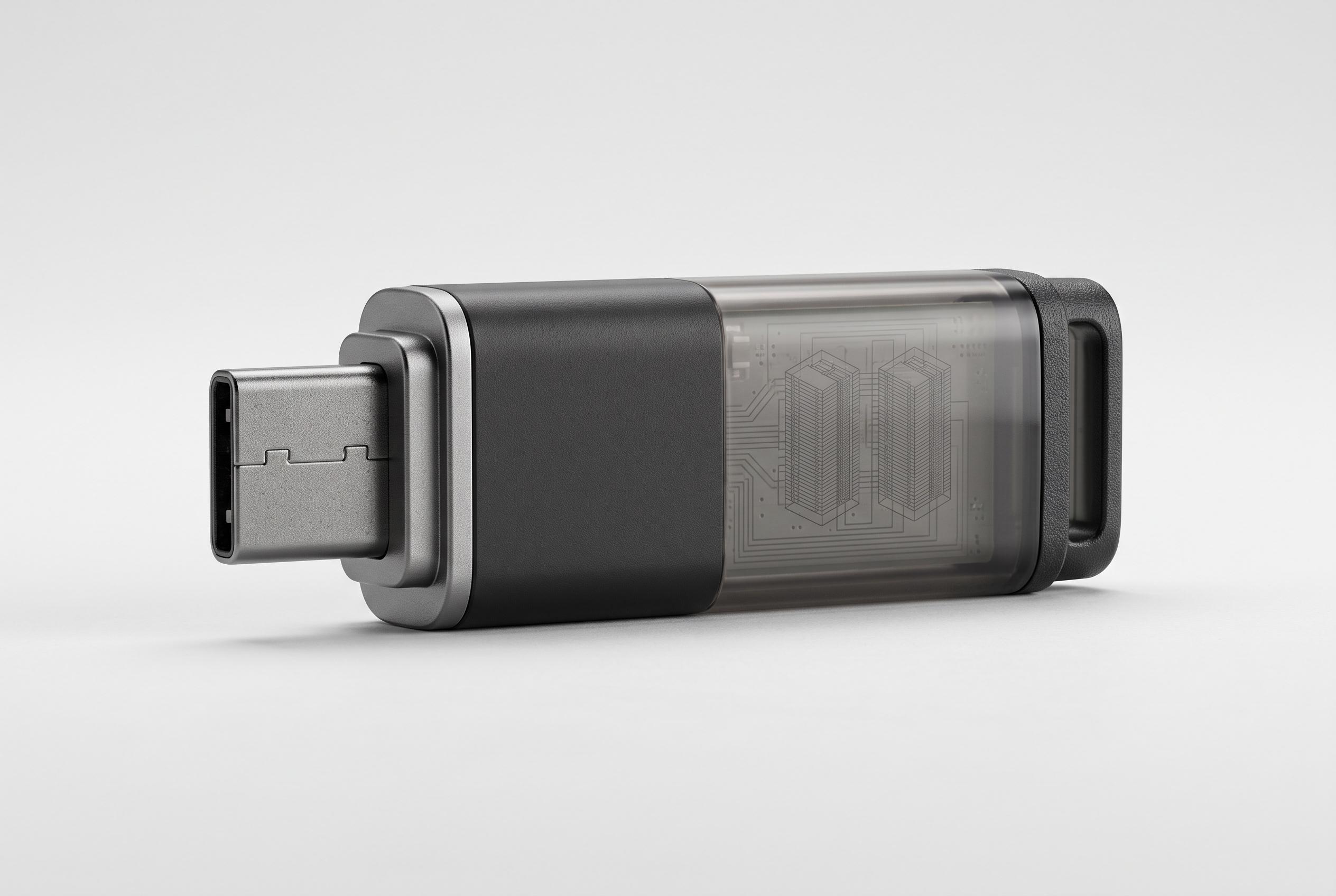

The ongoing evolution of NAND memory, including 3D stacking and cell complexity, is enabling higher-capacity USB flash drives without changing their outer size, revolutionising portable storage options.
The reason USB flash drives keep growing in capacity is not the plastic shell, but the memory architecture inside it. For years, NAND makers have reduced cell size, stored more than one bit in each cell and, more recently, stacked cells in layers using 3D NAND. The result is far denser storage without a proportionate rise in size, which is why a modern high-capacity drive can still be no larger than an old low-end model.
A clear early sign of that shift came in February 2005, when Toshiba and SanDisk announced an 8-gigabit NAND chip built on 70-nanometre process technology. According to reports from the time, it delivered 1GB on a single chip, used multi-level cell design to store two bits per cell and was less than 5% larger than the prior 4-gigabit part. The companies said it would become a production workhorse, bringing substantial cost reductions to flash products.
By 2013, the market had moved on again. Kingston unveiled the DataTraveler HyperX Predator 3.0 in 512GB and 1TB versions, which at the time was presented as the largest-capacity USB 3.0 flash drive available. Contemporary reports said the 1TB model was expected to sell for around $2,000, while the 512GB version was priced at $1,750. That stark pricing underlined how quickly capacity had risen, even if high-end flash remained expensive.
What often matters most, though, is not raw size but the type of NAND and the rest of the drive’s design. TLC NAND, which stores three bits per cell, is widely used in consumer USB drives because it lowers cost, but larger capacity does not automatically mean faster performance. Controller quality and the USB interface also play a major role, so two drives with the same headline capacity can perform very differently in practice.
Disclaimer: This content is intended for informational purposes only. Readers are advised to exercise their own judgement, conduct due diligence, or consult a qualified expert before acting on any information provided.