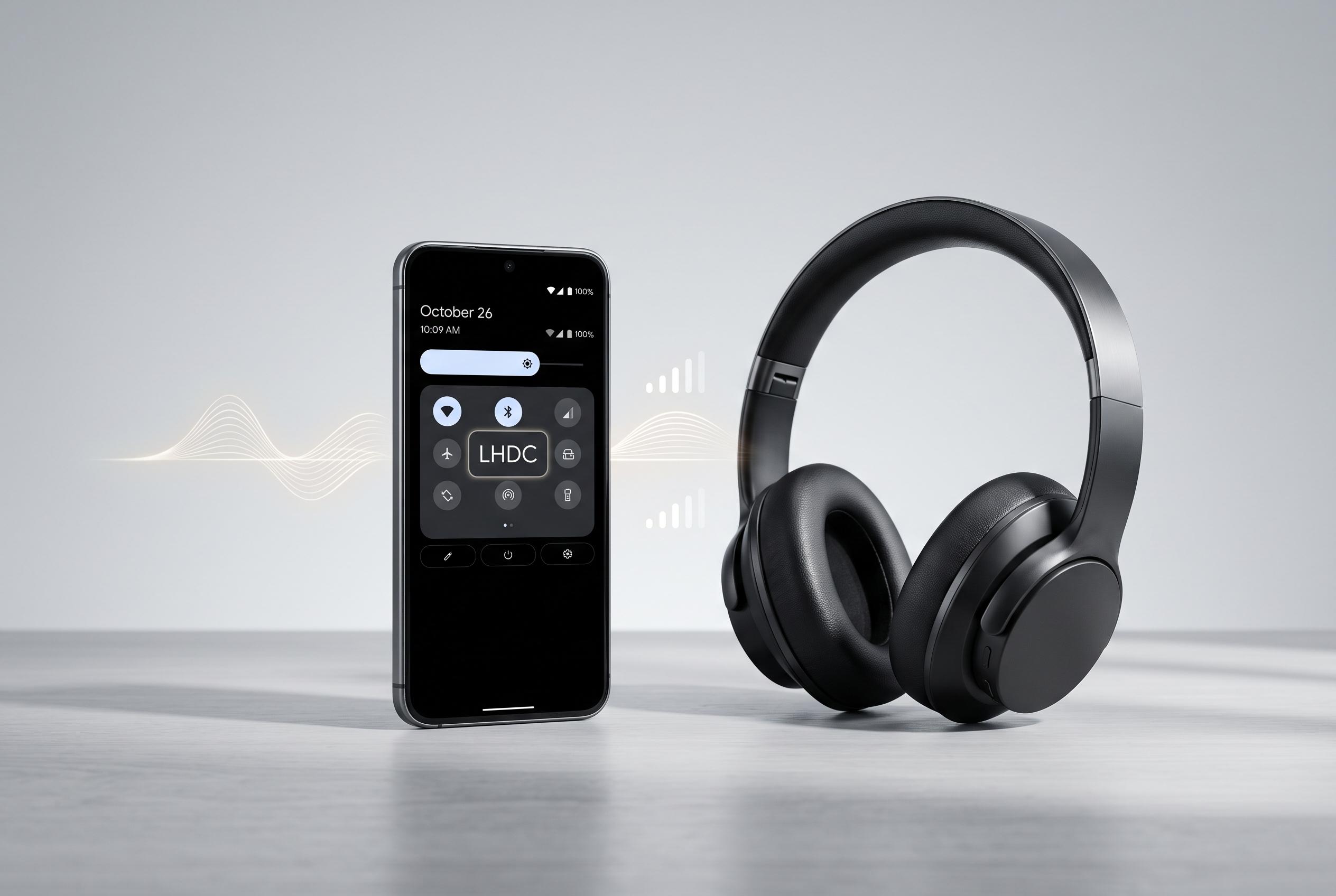

Google’s latest Android update adds native support for LHDC, a high-resolution Bluetooth audio codec, offering Pixel users a significant upgrade in wireless sound quality, albeit with compatibility caveats.
Google has quietly added a useful but narrowly targeted audio upgrade to Pixel phones running Android 17: native support for LHDC, the Low Latency High-Definition Audio Codec. For users with compatible earbuds and a lossless library, it gives Bluetooth listening another high-quality path alongside Sony’s LDAC. The change is unlikely to matter to casual listeners, but it is significant for anyone who cares about wireless sound quality. According to Android Authority, SoundGuys and Yahoo’s audio coverage, the codec can deliver high-resolution audio at up to 24 bit/96 kHz. The Italian report that prompted wider attention also notes that the feature is not prominently surfaced in the interface.
In practical terms, LHDC is meant to reduce the gap between wired and wireless listening. Until now, many Pixel owners who wanted the best possible Bluetooth output had to rely on LDAC-capable headphones. Otherwise, the phone would fall back to AAC or SBC, which are fine for everyday use but less suitable for high-resolution material. Android 17’s support for LHDC gives users a second premium option, although the benefit depends on the quality of the source file, the headphones and the radio environment.
The setting is tucked away in Developer Options rather than in Android’s standard Bluetooth menus. To find it, users must first enable the developer section, then go to System, open Developer Options and look under Bluetooth Audio Codec. There, LHDC v5 can be selected if the connected earbuds or headphones support it. That qualification matters: if the accessory does not support the codec, the option will not appear or will remain unavailable. Android Authority and SoundGuys both report that this is a device-to-device feature, not a blanket system switch.
Compatibility remains the main constraint. Savitech, the codec’s developer, maintains a list of supported products, but the ecosystem is still smaller than for AAC or SBC. Reports cited by the Italian article say some Nothing, Motorola and Sennheiser products are among the compatible devices, while Google’s own Pixel Buds do not appear to support the required LHDC v5 profile. That makes pre-purchase checks essential. A box marked “Hi-Res Audio” is not enough on its own; the headphone or earbud must explicitly support LHDC.
There are also practical trade-offs. Transmitting near 1 Mbps over Bluetooth can use more battery on both the phone and the headset, and crowded wireless environments can force a fall-back to a more stable, lower-quality mode. Companion apps may also need manual adjustment, with some manufacturers limiting sample rates unless a high-resolution setting is enabled. For listeners using services such as Tidal or Apple Music Lossless, the codec could be a meaningful improvement. For everyone else, AAC remains perfectly adequate. Even so, Android 17’s LHDC support is a discreet but technically important addition for Pixel owners who want better wireless audio.
Disclaimer: This content is intended for informational purposes only. Readers are advised to exercise their own judgement, conduct due diligence, or consult a qualified expert before acting on any information provided.