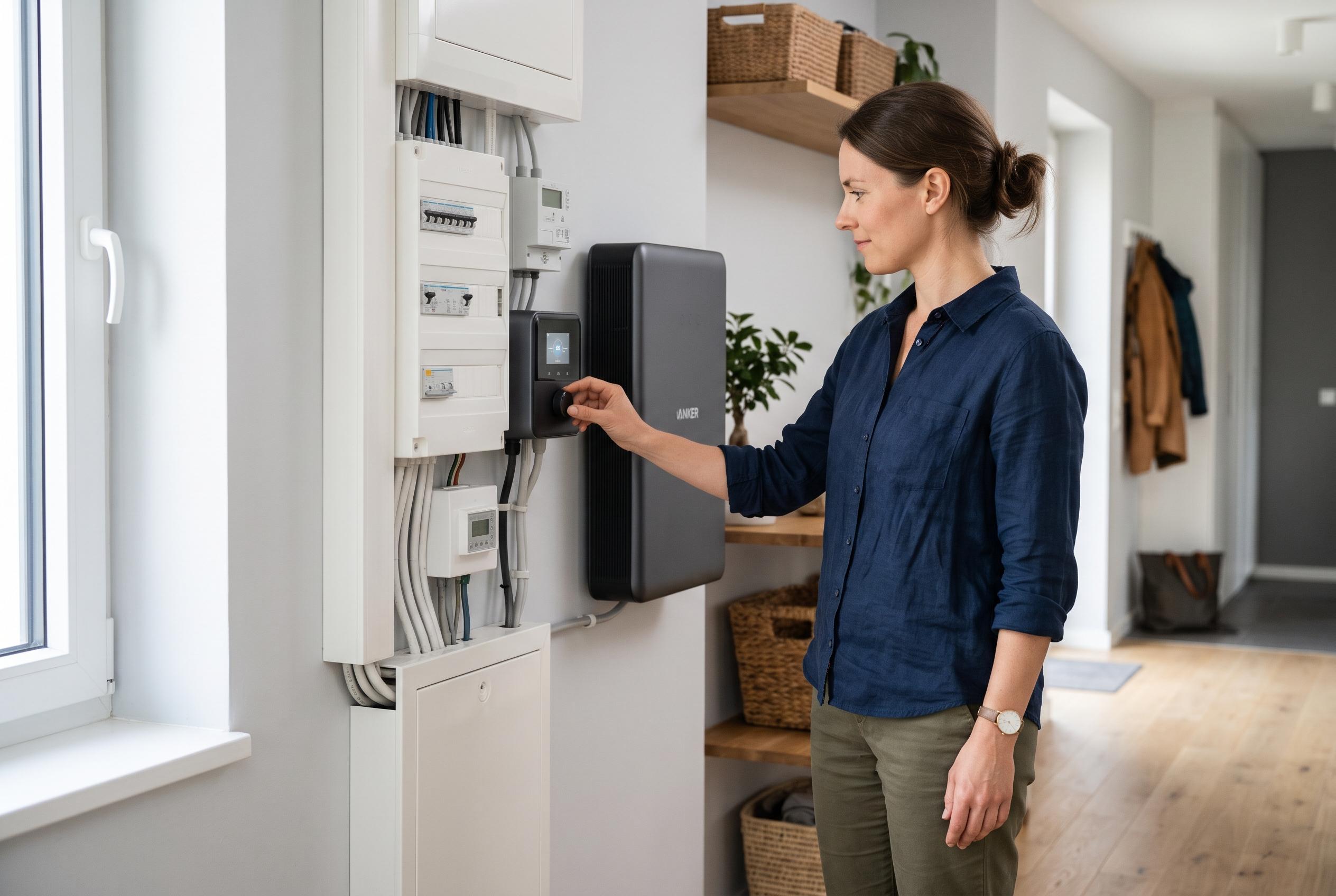

Anker is rolling out smarter Solarbank controls that use forecasts, household habits and live electricity prices to automate charging, reduce waste and potentially cut bills.
Anker Solix is pushing a major software upgrade to its PowerOS energy management platform, promising more intelligent control across its Solarbank storage range. The rollout begins this month and will continue in stages through to December 2026, with the company positioning the update as a way to raise solar self-consumption and lower household electricity bills through automation.
At the centre of the package is a self-learning engine that Anker says blends weather forecasts, solar generation predictions, household usage patterns and live electricity prices when deciding when to charge and discharge batteries. The company says that homes on variable tariffs could save as much as 30% when using the Smart mode. PowerOS will also gain Tariff Auto-Match, which identifies whether a customer is on a fixed, time-of-use or dynamic tariff, including price models linked to providers such as Tibber, Amber, Kraken and EPEX SPOT, according to the company’s announcement and Computer Base’s reporting.
For users in Germany and the Netherlands, Anker is adding Negative Price Hunter, a feature designed to take advantage of periods when wholesale electricity prices turn negative. The battery can then charge from the grid at little or no cost and avoid more expensive consumption later in the day. Another new function, Surplus Alert, is intended to warn users in advance when strong solar generation is expected, so that heavier appliances such as washing machines or tumble dryers can be scheduled to run when there is excess power available.
The update also targets larger PV systems. According to the company, Solar Clipping Optimisation, which it also calls Full Sun Capture, will deliberately discharge storage before peak midday generation so that the battery has spare capacity when production spikes. Anker says that approach can lift usable solar yield by up to 25%, reducing the amount of energy curtailed by the inverter. The suite also includes proactive alerts for severe weather and grid faults, plus a diagnostic tool that monitors charging efficiency and battery health and provides step-by-step troubleshooting guidance.
A second wave of features is due in December 2026. That will add Intent-Aware Energy Management, which lets users describe household changes in plain language, such as guests staying over, remote working or a planned holiday, before the system suggests an operating strategy for confirmation. A Proactive Daily Energy Report is also planned to summarise savings and generation. The update will reach all ten supported Solarbank models in some form, but the more advanced AI functions and tariff automation are reserved for newer hardware, including the Solarbank 3 Pro, Solarbank 4 Pro, the Max series and XE.
Disclaimer: This content is intended for informational purposes only. Readers are advised to exercise their own judgement, conduct due diligence, or consult a qualified expert before acting on any information provided.