
Anker steps into hearing care with AI-powered, self-fitted OTC hearing aids, but uncertainties remain over pricing, clinical validation, and market timing amidst a competitive regulatory landscape.
Anker has taken its clearest step yet into hearing care, but its first over-the-counter hearing aid still looks more like a controlled market entry than a full retail launch. The company’s US hearing-health site is now inviting buyers to a “3-Month Free Trial” with a refundable deposit due by 31 October, yet it still does not show a retail price. Timelines are also unsettled: Forbes reported that the product was expected later in 2026, while HearingTracker said, citing Techlicious, that Anker was targeting the first quarter of 2027 for the US market. (health.anker.com)
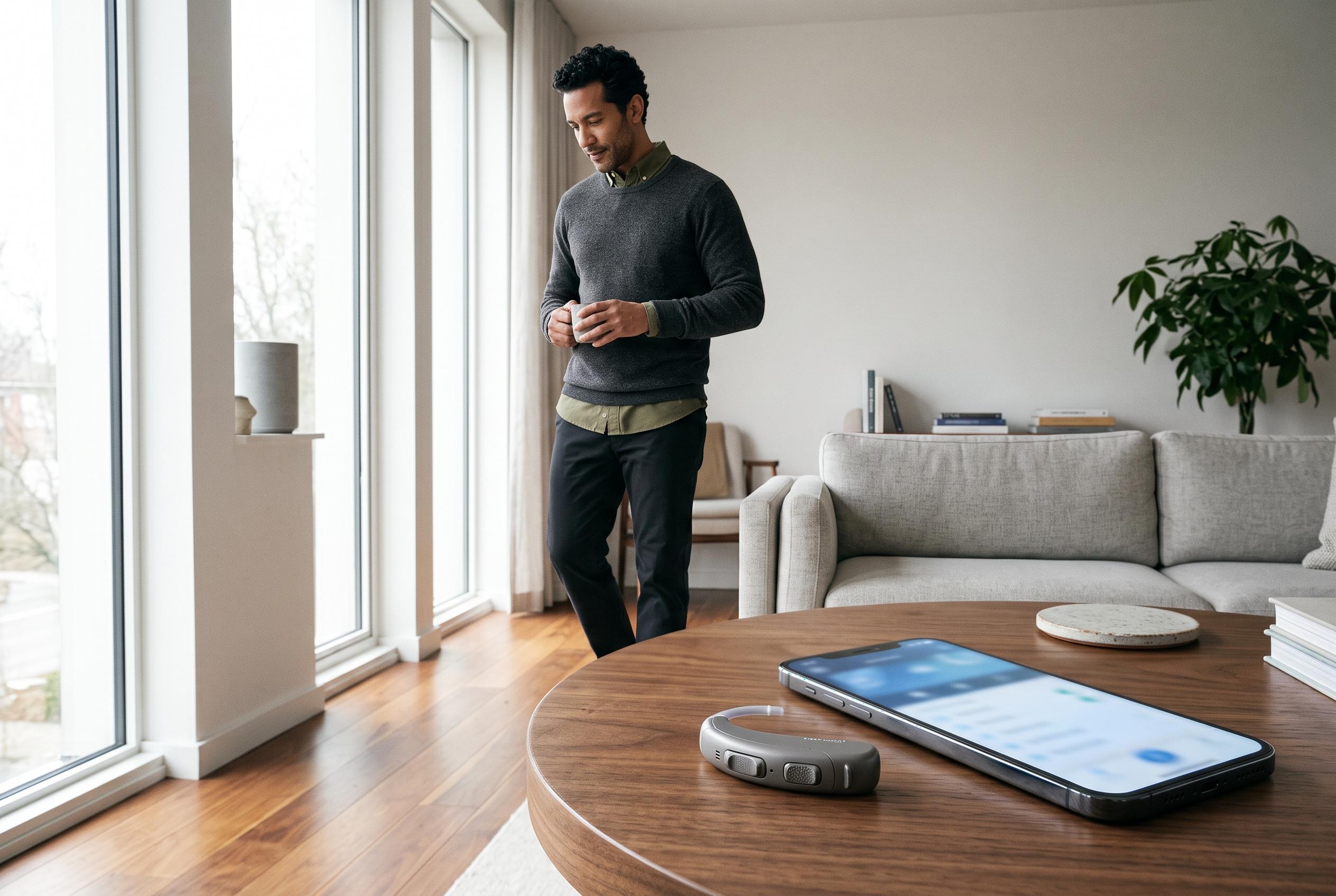
On specification, the RIC Hearing Aids Pro are pitched well above a basic sound amplifier. Anker’s product page describes a receiver-in-canal design with a dual-chip architecture combining its THUS AI processor with a separate Bluetooth system-on-chip. The company says a deep neural network-powered four-microphone array processes speech in real time, with the left and right aids sharing data to improve directionality, reduce reverberation and cut feedback. HearingTracker added that Anker says the THUS chip is handling 7.2 billion operations per second, and noted that the same chip family has already appeared in the company’s Soundcore Liberty 5 Pro earbuds. (health.anker.com)
The intended user is also clearer in the official material than in much of the launch coverage. Anker says the aids are suitable for adults aged 18 or older with mild to moderate hearing loss and are designed for self-fitting rather than a clinic-led set-up. The company’s site says users complete fitting and adjustments in the Anker Health app and can book optional remote video support, while HearingTracker reported that Techlicious had been told to expect a built-in hearing test and physical controls. Frandroid characterised the product as a prescription-free medical device adjusted at home, underscoring how far Anker is moving beyond the chargers and batteries with which it built its name. (health.anker.com)
Battery life and day-to-day usability sit at the centre of the pitch. Anker says five minutes in the charging case should deliver about two hours of use, with up to 12 hours from the aids themselves and up to 36 hours in total with the case. The case is unusual for this category because it includes its own display for battery level, Bluetooth status and listening mode, allowing status checks with what the company markets as “No phone. No app.” The specification sheet also lists Bluetooth 5.4, dual-device support, IP68 dust and water resistance, a weight of 6.61g per aid and a one-year warranty. Forbes noted that Anker was presenting the quick-charge claim as the fastest in its class, but that remains a company assertion rather than an independently validated ranking. (health.anker.com)
The more serious question is whether Anker has shown enough evidence to support its claims on real-world speech understanding. HearingTracker reported that the company had spoken of reaching up to 90% speech intelligibility in settings such as restaurants and meeting rooms, but said that “no testing protocol or supporting clinical data has been made public”. The same report said pricing, Bluetooth streaming details, support terms, warranty conditions and exact self-fitting steps had not all been clearly disclosed at launch, although Anker’s site now gives more detail on returns and a one-year warranty. In hearing care, those omissions matter because published validation and after-sales support often determine whether a product is credible beyond its launch presentation. (hearingtracker.com)
The hearing aids are also part of a much broader Anker strategy. Forbes said Soundcore unveiled nine products at IFA 2026 in Berlin, with THUS positioned as a common audio-AI platform across several of them. Les Numériques linked the new hearing aids to Anker’s earlier sleep-focused ear devices, suggesting that the company is turning a niche wellness push into a wider health-technology effort. TechRadar placed the device בתוך a larger IFA roundup and wrote: “Finally, we have the Anker RIC Hearing Aids, which continue a growing trend among audio companies: using their tech to create over-the-counter hearing devices.” (forbes.com)
That wider market context is not uniformly favourable. HearingTracker noted that Anker is entering the category after LXE Hearing’s US wind-down and the end of the WSA-Sony OTC collaboration, both reminders that consumer-electronics visibility does not guarantee a durable hearing-aid business. European reporting points to a crowded and uneven regulatory picture as well. Les Numériques said Philips already sells CE-marked hearing aids in Europe, while Apple’s hearing-aid function for AirPods remains blocked in France, highlighting the difference between dedicated medical devices and consumer audio hardware with hearing features added on top. (hearingtracker.com)
For buyers outside the US, the uncertainty is sharper still. Frandroid reported that Anker had not announced a French price or local release date and said there was no guarantee of a launch there. TechRadar likewise said there was no price or release date in the IFA material it saw. Taken together, the picture is of a product with a more developed technical story than its initial coverage suggested, but one that still has open questions on geography, timing, evidence and channel strategy. Anker’s first OTC hearing aid may yet become a serious contender, but for now it remains a promising launch that is not fully commercially defined. (frandroid.com)
Disclaimer: This content is intended for informational purposes only. Readers are advised to exercise their own judgement, conduct due diligence, or consult a qualified expert before acting on any information provided.