
The ASUS ROG Strix Scope II 96 Wireless offers a compact layout, quiet switches, and multi-device connectivity, setting a new standard for high-end wireless keyboards despite its premium price.
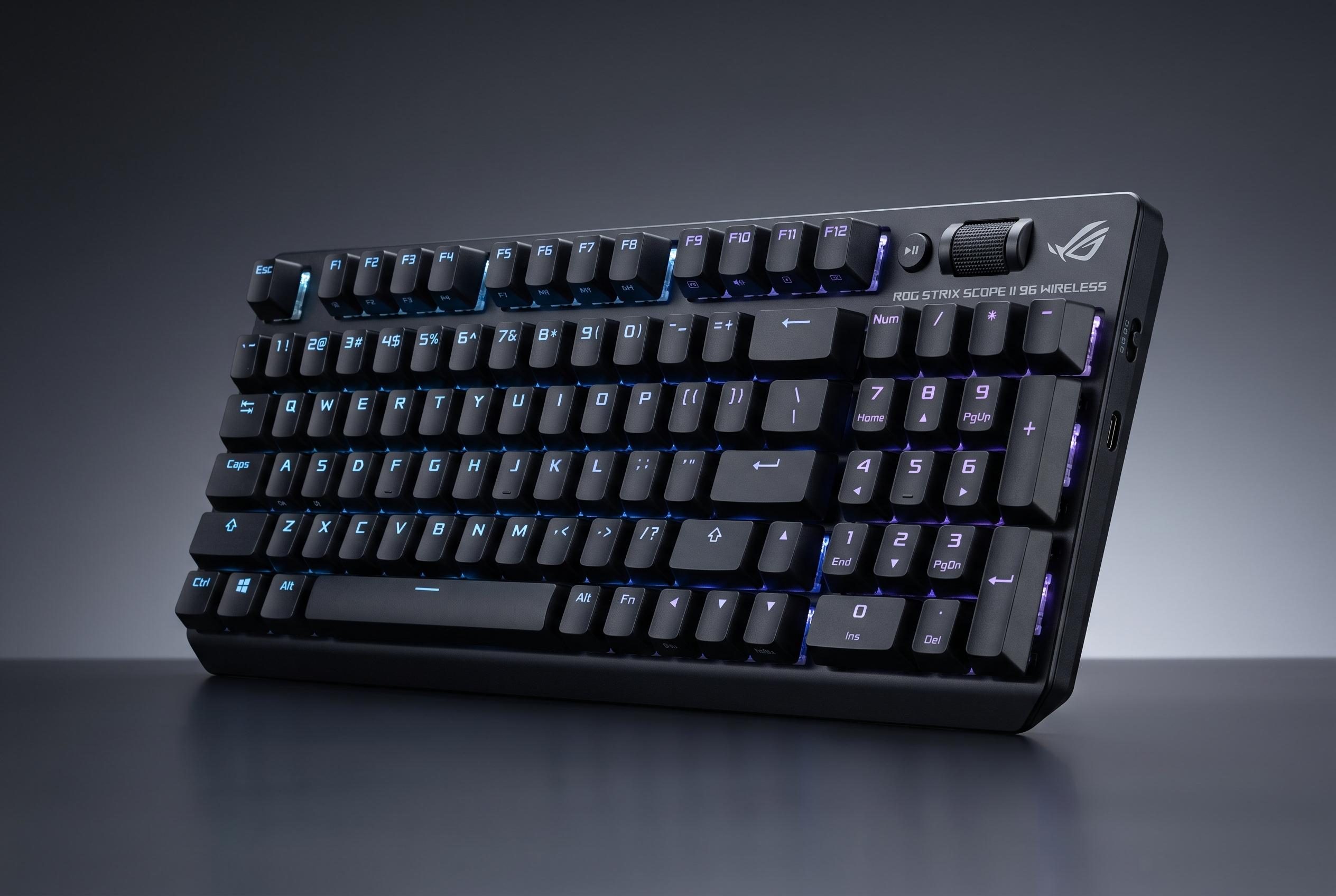
ASUS’s ROG Strix Scope II 96 Wireless is aimed at a very specific kind of buyer: someone who wants a full set of keys without surrendering an entire desk to a traditional full-size board. The 96% layout keeps the numpad, function row and arrow cluster, while compressing the gaps to make the keyboard only modestly wider than a typical tenkeyless model. That design makes it more practical than compact gaming boards for work, spreadsheets and mixed use, while still trimming some bulk from a conventional layout.
The stronger case for the Scope II 96 Wireless is not the size, but the typing experience. The keyboard ships with ASUS’s ROG NX Snow linear switches, which reviewers describe as smooth, quiet and already well lubricated. Rtings noted the inclusion of sound-dampening materials, while Tom’s Hardware highlighted the keyboard’s foam and aluminium top plate as part of a build focused on both acoustics and durability. The switches are hot-swappable, so users can replace them without soldering, which gives the board more longevity than many premium gaming keyboards.
ASUS has also tried to make the hardware useful rather than merely feature-rich. A detachable wrist rest comes in the box, and the top-right corner carries a scroll wheel paired with a button that changes the wheel’s function. In practice, that lets the user switch quickly between volume, media control and lighting adjustments. The board also includes the ROG Omni Receiver, which can allow compatible ASUS peripherals to share one wireless dongle, reducing USB clutter. According to Tom’s Guide and PCWorld, the companion software is a weaker point, but the hardware itself is widely seen as the stronger part of the package.
Connectivity is broad as well. The keyboard supports wired USB, 2.4GHz wireless through ASUS’s SpeedNova system and Bluetooth with up to three saved devices. ASUS claims up to 1,500 hours of battery life with RGB lighting turned off on the 2.4GHz connection, and external reviews broadly echo that the battery performance is a major selling point. With lighting enabled, endurance falls sharply, but it still remains a long-lasting board by wireless mechanical keyboard standards. The main drawback is price: at about R3,500 locally, it sits firmly in premium territory. Even so, the combination of compact layout, quiet switches, hot-swap support, multi-device wireless and an included wrist rest makes it one of the more complete high-end keyboards on the market.
Disclaimer: This content is intended for informational purposes only. Readers are advised to exercise their own judgement, conduct due diligence, or consult a qualified expert before acting on any information provided.