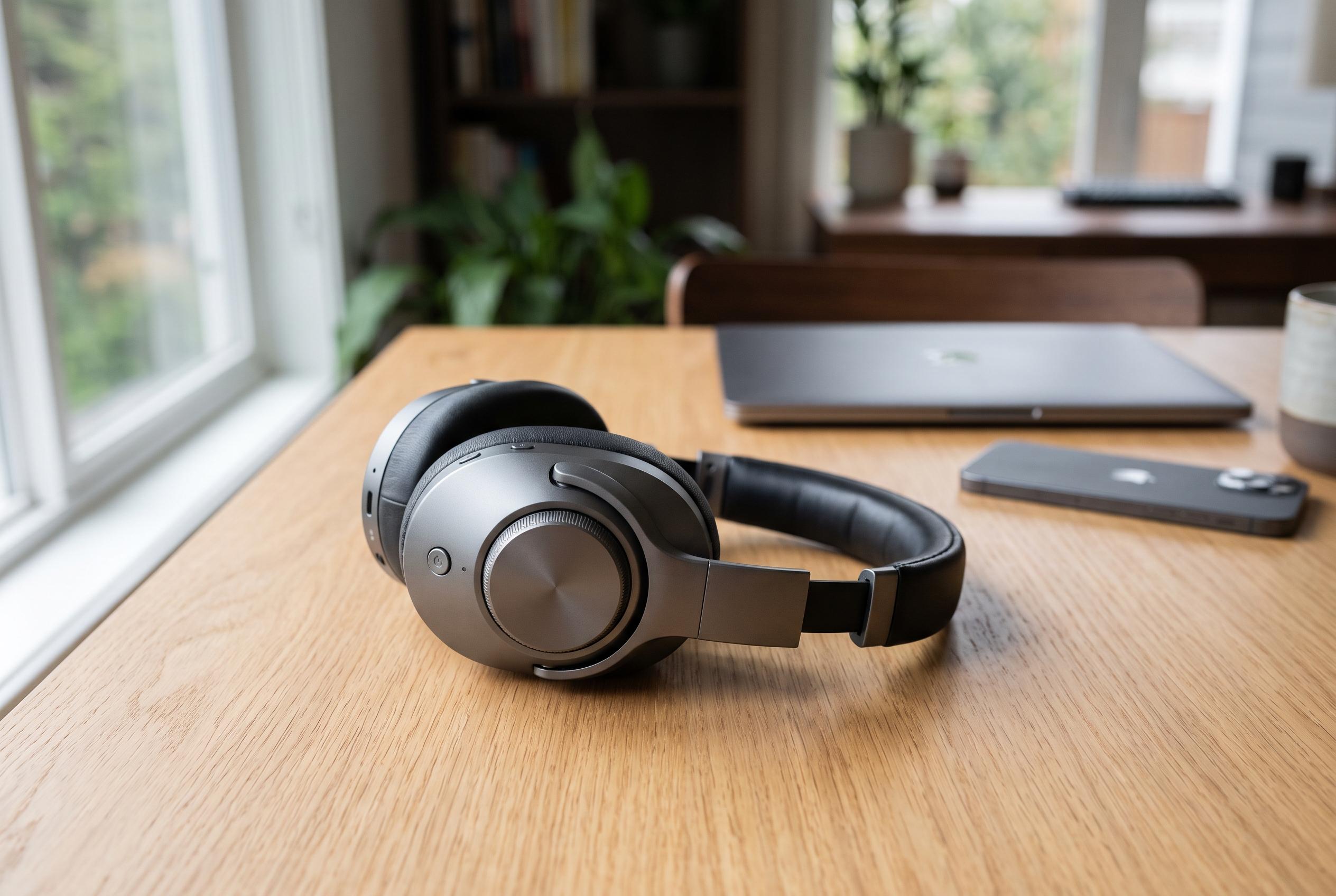

The Neptune N9 V2 combines a restrained aluminium design with 2.4GHz wireless, 10ms claimed latency, multi-platform support and a rotary volume control in its Ultimate version.
ATK’s Neptune N9 V2 headset aims to balance restrained styling with gaming-focused hardware. In a hands-on account published on SMZDM, the reviewer praised the clean side profile, noting the recessed perforated aluminium panels and the absence of unnecessary visual clutter. ATK’s own product listing describes the headset as available in several finishes, with a metal grille design intended to give it a more premium look. The overall effect is less aggressive than many esports headsets and closer to a minimalist desktop accessory than a piece of overt gaming gear.
The most visible refinement in the Ultimate version is the move from simple volume keys to a rotary control. In practical terms, that makes adjustment faster and more intuitive, especially mid-game. The reviewer also highlighted the headset’s weight of about 283g and its slow-rebound memory foam ear cushions, which are meant to ease pressure around the ears during long sessions. A separate retail listing for the N9 Pro places the weight at roughly 270g, suggesting the platform remains in the same light-to-moderate range across the family.
ATK pairs that physical design with fairly ambitious audio specifications. The Neptune N9 V2 uses 53mm titanium-coated drivers, according to ATK’s product pages, while the SMZDM review says the headset supports a visualised virtual 7.1 mode that makes directional cues such as footsteps and gunfire easier to separate. ATK also says the model carries Hi-Res Audio certification and supports 2.4GHz wireless, Bluetooth, 3.5mm analogue input and USB audio, which gives it unusually broad compatibility for a gaming headset. The company lists support for PC, mobile devices and consoles including Nintendo Switch, PS4 and PS5.
Latency and battery life are part of the pitch as well. The review says ATK’s second-generation SmartSpeedX wireless system delivers 10ms one-way transmission latency and 23ms end-to-end latency, figures that would place it among the faster consumer gaming headsets if consistently achieved in real use. ATK’s published specifications also claim up to 130 hours of playtime from the 1500mAh battery. On the software side, the headset works with ATK HUB on desktop and web, where users can adjust EQ, microphone settings and other profiles, save them to the device and, according to ATK, switch automatically between app-specific settings. The result is a product that is trying to cover both gaming and everyday listening without forcing the user into a single configuration.
Disclaimer: This content is intended for informational purposes only. Readers are advised to exercise their own judgement, conduct due diligence, or consult a qualified expert before acting on any information provided.