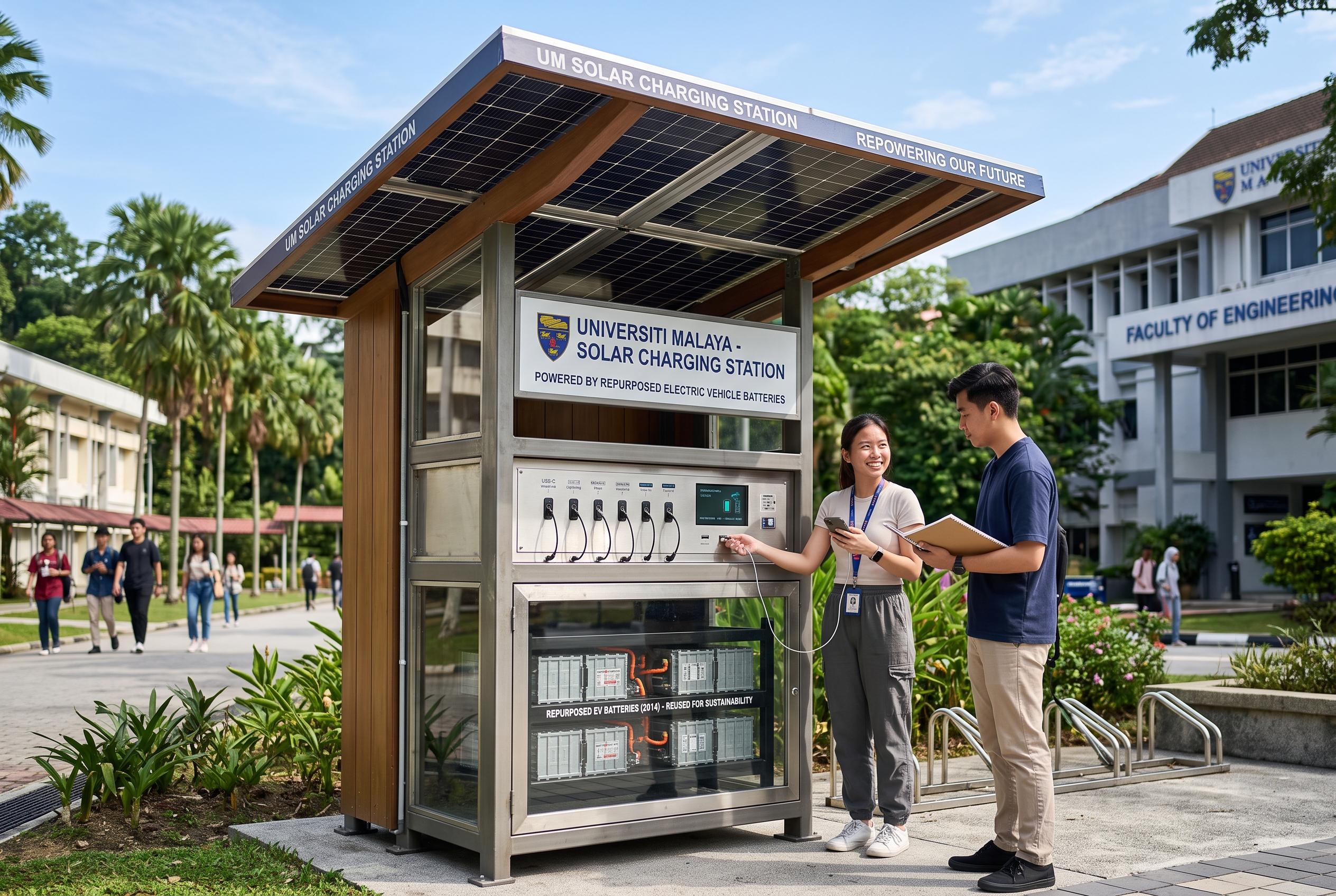

A solar-powered smartphone charging station at UM campus showcases how ageing electric vehicle batteries can be given a second life, supporting sustainable development and rural electrification projects.
BMW Group Malaysia and Universiti Malaya have moved their battery-reuse project from research into visible campus use, installing a solar-powered smartphone charging station at the UM Central bus stop. The site serves more than 3,000 people a day and is meant to show how ageing electric vehicle batteries can be given a useful second life outside cars.
According to the companies’ announcement, the charging point uses lower-capacity battery packs that are better suited to light loads such as mobile devices. The station is built around a 1.5kWh system made from three battery modules that are about 10 years old. It provides three USB-C ports and one Lightning port for older Apple devices, with a combined maximum output of 200W and a 100W cap on any single port.
BMW said the unit also includes data loggers to track battery performance and usage, while a trained group of students will monitor and maintain the installation. The company expects the system to remain in service for at least five years. That timeline reflects the reality of battery degradation: once packs can no longer support more demanding applications, their value falls for heavier off-grid uses as well.
The campus charger is only one part of the wider partnership between BMW Group Malaysia and UM. Earlier statements from both sides said the collaboration is also intended to support rural electrification through the repurposing of higher-capacity battery packs, including a planned deployment to Pos Sinderut in Kuala Lipis, Pahang, for the Semai Orang Asli community. Universiti Malaya has said the batteries are being channelled through its Power Energy Dedicated Advanced Centre, with the broader project tied to community engagement and sustainable development work on campus and beyond.
Disclaimer: This content is intended for informational purposes only. Readers are advised to exercise their own judgement, conduct due diligence, or consult a qualified expert before acting on any information provided.