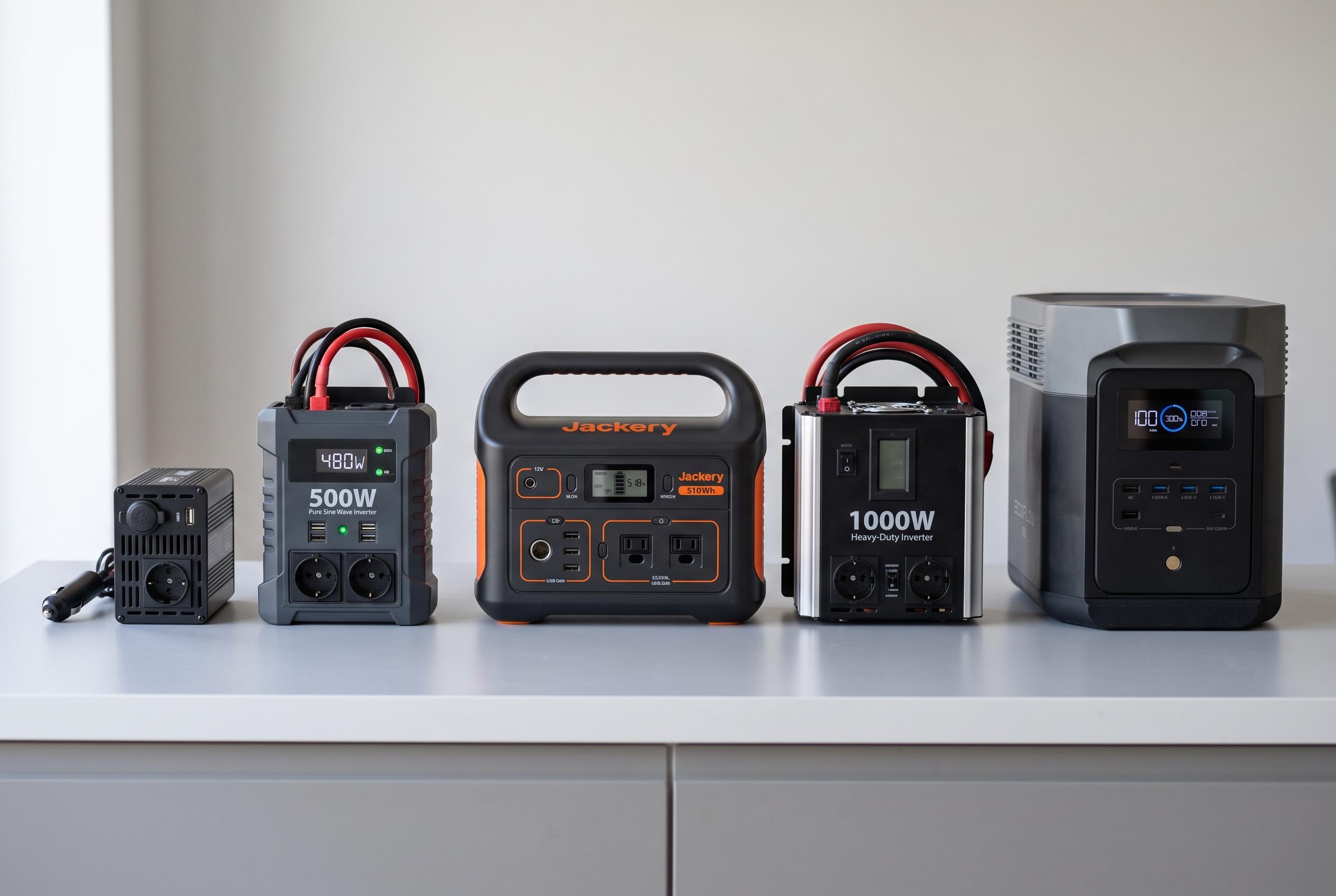

A new guide details five varied vehicle-friendly power solutions, emphasising the importance of matching device needs to the right inverter or power station rather than relying on marketing labels, catering to drivers seeking simple charging, delicate electronics compatibility, or emergency backup.
Choosing the right vehicle-friendly power option depends less on marketing labels than on how much electricity you actually need, how sensitive your kit is and whether you are looking for a simple inverter, a battery-backed unit or a portable power station. The guide from Carstechie frames the market around five compact products aimed at road trips, camping, emergency use and light off-grid work, with each one tailored to a different type of user.
For drivers who mainly want to charge phones, tablets and laptops on the move, the Pro Chaser 400W inverter is presented as the most straightforward option. According to the guide, it provides 400W of continuous power, 800W at peak, two AC sockets and two USB ports, with a 30-inch cable that gives passengers more placement flexibility inside a car. The trade-off is that it is best kept well below its maximum rating during use, especially if several devices are drawing power at once.
The Kzreect 350W pure sine wave inverter is aimed at users who need cleaner power for more delicate electronics. The guide says its pure sine wave output makes it a better fit for laptops and CPAP machines, while its USB-C charging options add extra convenience for modern devices. Its appeal is strongest for people already using compatible battery systems, but that also means buyers must check battery fit carefully because the unit is sold without one.
The most versatile all-rounder in the selection is the VTOMAN Jump 600X, which combines a 299Wh lithium iron phosphate power station with jump-start capability for a vehicle. Carstechie says the unit can be expanded to 939Wh with an extra battery and offers 600W of continuous output, along with a regulated 12V section for DC devices. That makes it a more serious choice for campers and drivers who want backup power as well as emergency starting support.
If the priority is simply to power several things at once, the MOVFFGGRM inverter stands out for quantity rather than refinement. The guide describes it as a 500W continuous unit with a 1000W surge rating, three AC outlets and four USB ports. It is pitched at users who may need to run multiple small devices from a vehicle, though the practical limit remains the sustained wattage, which the guide warns should not be exceeded for long periods.
At the budget-light end of the range, the PlantPalGear inverter is built around Dewalt 20V battery packs. That makes it especially relevant to tradespeople and DIY users who already own those batteries and want a compact way to charge small devices or power light equipment away from mains electricity. Carstechie notes that its 220W rating keeps it firmly in the short-burst, low-load category, not the high-demand one.
Taken together, the five products show how broad the category has become: some buyers need a simple way to keep devices alive on a motorway run, while others want something closer to a mobile power system for emergencies or outdoor living. The key decision, as the guide suggests, is matching the inverter type, output and power source to the job, rather than assuming one unit can do everything.
Disclaimer: This content is intended for informational purposes only. Readers are advised to exercise their own judgement, conduct due diligence, or consult a qualified expert before acting on any information provided.