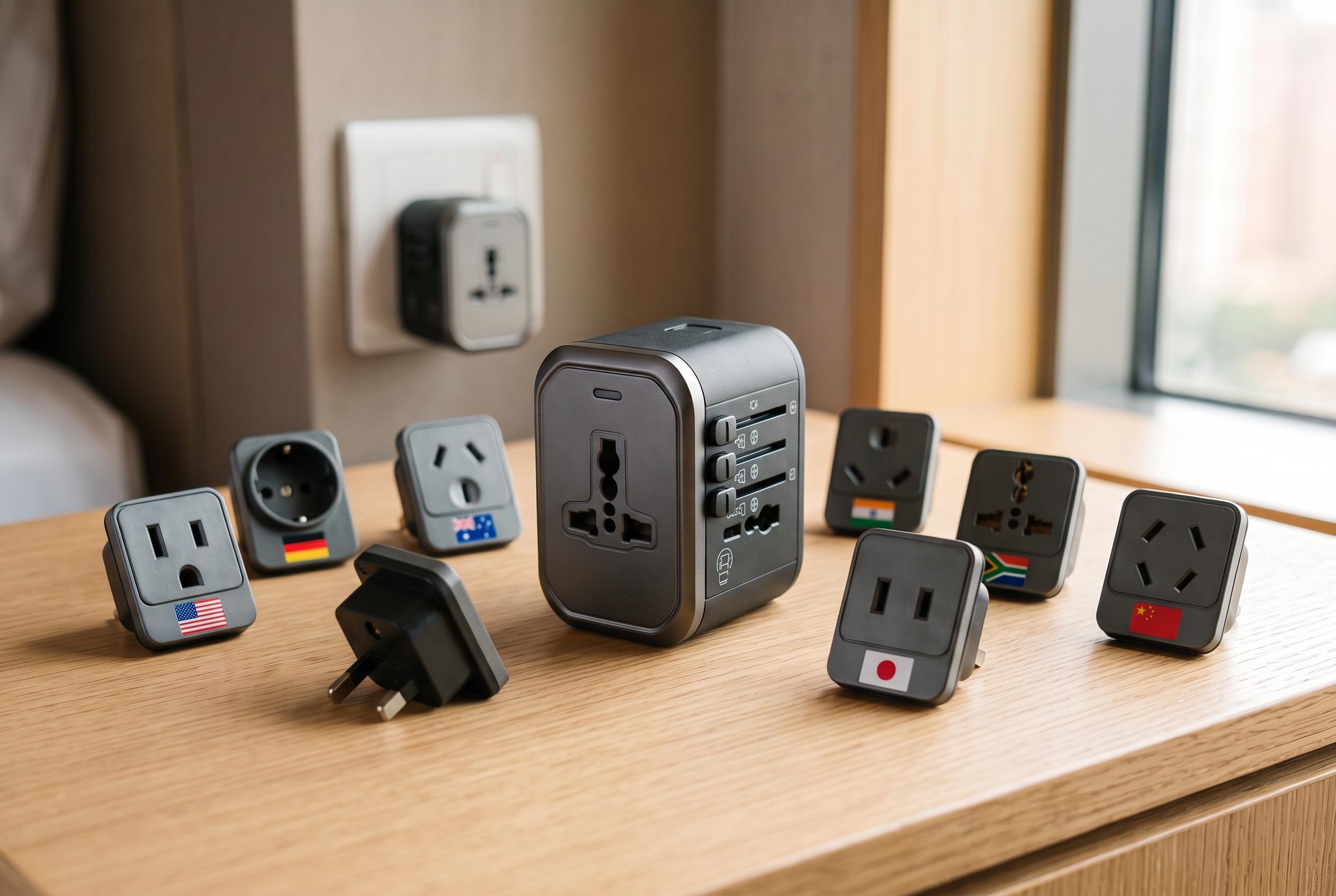

Travellers must understand the differences between universal travel adapters and travel-ready chargers to ensure safety and compatibility across varying voltage and socket types abroad, avoiding costly damage or hazards.
Travellers face two separate problems abroad: making a plug fit the socket, and ensuring the device can tolerate the local voltage. According to ZDNET, that distinction matters because many chargers now work across a wide voltage range, but the wall outlet itself still varies sharply from country to country.
The simplest way to think about it is that an adapter changes shape, not electricity. Gear Apt and other travel-gear guides make the same point: a basic plug adapter is usually for one socket type, while a universal travel adapter is designed to handle several regions and often adds USB ports. Neither device converts voltage, so travellers still need to check whether their equipment is dual-voltage before plugging in.
That warning is particularly important for older or higher-powered items. Travel Power Plugs and similar buying guides stress that a universal adapter is only a connector, not a transformer, and that safety features such as a fuse, solid build quality and the correct current rating are essential. Cheap adapters without proper protection can expose live parts, which is why poorly made models are best avoided.
ZDNET’s review also draws a clear line between a universal travel adapter and a travel-ready charger. The former combines multi-region plug compatibility with a charging function and can be used with devices from elsewhere, while the latter is essentially a charger with interchangeable prongs clipped on for different countries. In practice, that means the adapter is more flexible if you travel frequently or need to bridge foreign sockets, whereas the charger can be neater if you mainly want one compact power brick for your own devices.
For most people, the right choice depends on how they travel. If space is tight, a universal travel adapter is often the more practical option because it reduces the number of items to pack and can help in hotel rooms where outlets are scarce. If there is room for both, ZDNET’s experience suggests the combination offers the most versatility, particularly when charging multiple devices across different plug standards. The key point remains the same: know the outlet type, know the voltage, and do not assume that a plug adaptor will protect your electronics.
Disclaimer: This content is intended for informational purposes only. Readers are advised to exercise their own judgement, conduct due diligence, or consult a qualified expert before acting on any information provided.