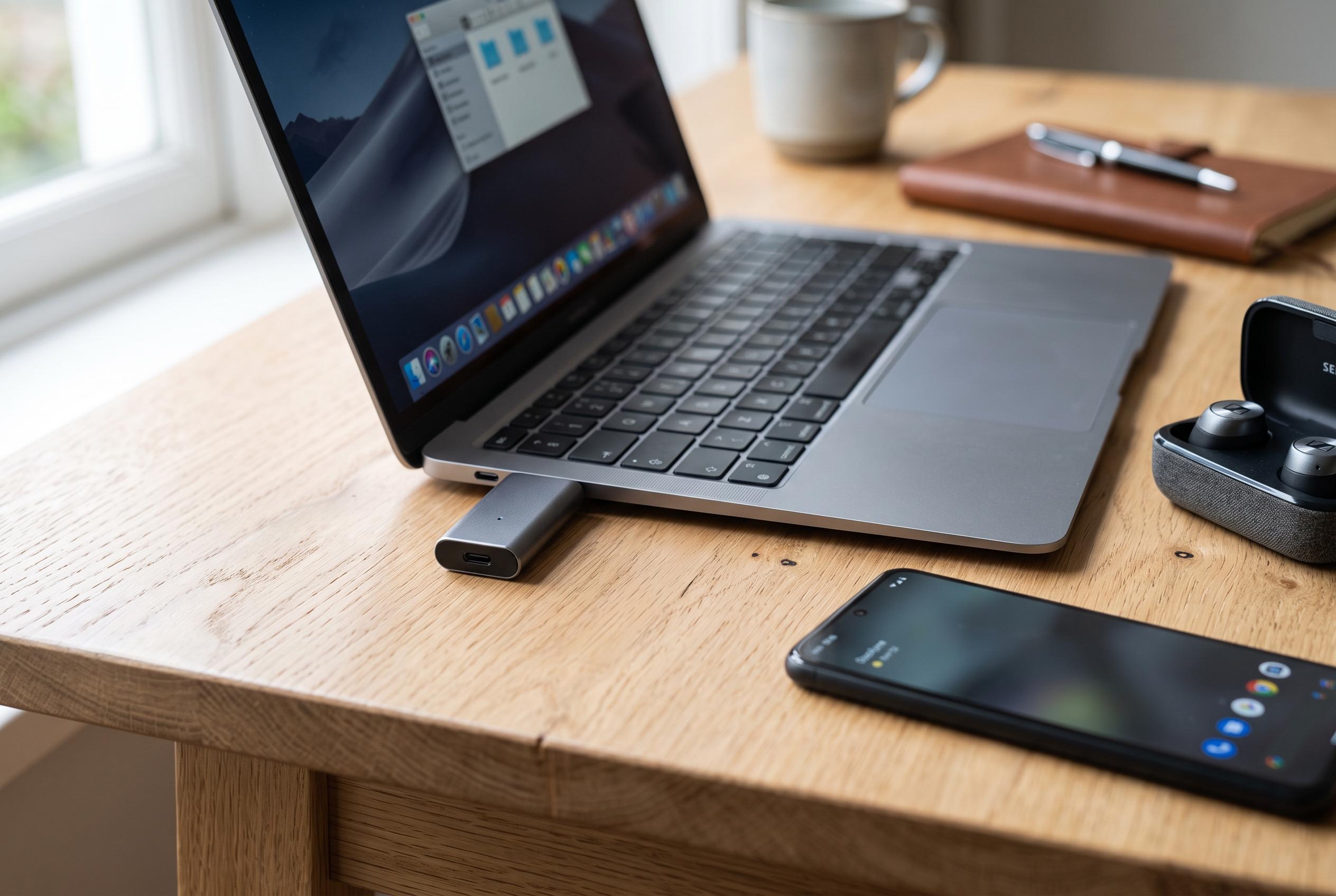

With a wide range of USB Bluetooth adaptors available, experts advise selecting models based on specific needs such as audio quality, device support, and range, rather than price alone.
A basic USB Bluetooth adaptor can be enough for a PC user who only needs to connect a headset, keyboard or mouse. Engadget says the simplest models, often around the $10 mark, are usually small, quick to set up and less awkward than cheap external aerials. Examples such as the ASUS USB-BT500 and TP-Link Nano 2-in-1 AC600 are presented as practical entry-level options for straightforward use.
Once a setup involves audio quality, multiple devices or more exacting performance, the decision becomes more technical. According to Engadget, the key issue is codec support, because Bluetooth codecs determine how sound is encoded and transmitted. Standard SBC support is universal, but higher-quality options such as AptX Low Latency can raise bitrate and reduce delay. That makes products like the Avantree DG80 attractive for audio use, although its scope is narrower because it is audio-only. For broader compatibility, Engadget points to the Creative BT-W5 as a stronger all-rounder.
Recent buying guides from Laptop Mag, iTechGuides and PCGuide largely echo that view, with repeated recommendations for the ASUS USB-BT500, TP-Link UB500 and Avantree DG80 across different use cases. These round-ups suggest that buyers should compare Bluetooth version, compatibility and latency rather than treating every dongle as interchangeable. The common theme is that low price alone is not the main criterion; the right adaptor depends on whether the user wants simple pairing, better audio, or support for several peripherals.
For more demanding installations, range and simultaneous connections matter just as much. Engadget cites the Sena UD100-G03 as an example of a device built for multi-device use, with support for up to seven connections and a quoted 900-foot range that can be extended further with upgrades. Other 2026-focused round-ups, including one from Fone.tips, continue to emphasise the same practical filters: Bluetooth generation, device compatibility, audio support and range. In short, the best adaptor is the one matched to the workload, not merely the one with the lowest asking price.
Disclaimer: This content is intended for informational purposes only. Readers are advised to exercise their own judgement, conduct due diligence, or consult a qualified expert before acting on any information provided.