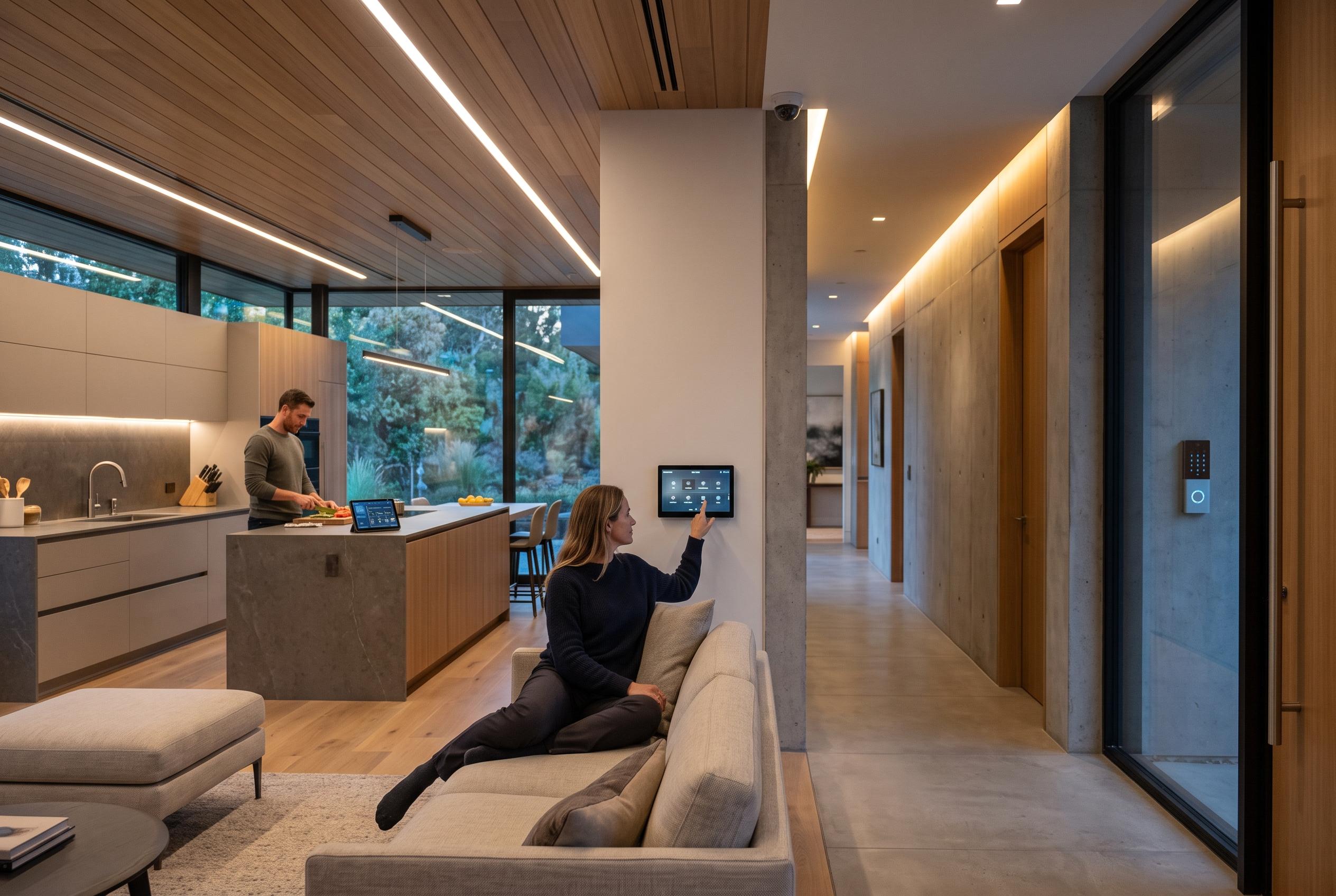

Effective smart home integration hinges on thoughtful architecture, prioritising security and a zone-based approach to ensure reliability and ease of maintenance amidst evolving standards and technologies.
Smart home integration rarely fails because the hardware itself is poor. More often, it fails because the home has been built as a set of separate systems rather than as one coherent network. One app runs the lights, another the thermostat, a third the cameras and a voice assistant is then expected to stitch everything together. The result is usually not convenience but friction. That is why the central problem is architectural, not decorative: a smart home needs a plan, not just more products.
The first mistake is buying devices without thinking about how they will communicate. Recent industry coverage on smart home ecosystems points to the same issue repeatedly: fragmentation, inconsistent software support and too many competing protocols. Wi-Fi, Zigbee, Z-Wave, Bluetooth Low Energy and Matter all exist in the same space, but they do not solve the same problem in the same way. The more translation layers a home needs, the more likely it is that automations will break, notifications will lag or devices will stop responding after an update.
Security should shape the system from the start, not be added as an afterthought. Guidance from the National Institute of Standards and Technology stresses baseline cybersecurity capabilities for connected devices, along with secure onboarding and lifecycle management. In practice, that means choosing products that support strong account protection, regular software updates and reliable vendor support. It also means avoiding setups that depend on awkward workarounds or scattered logins, especially where locks, alarms, cameras and occupancy routines are concerned.
A unified automation platform usually does more to improve reliability than a new gadget ever will. Reports on smart home integration and professional building systems show the same pattern: when one layer manages routines, device relationships and control logic, troubleshooting becomes far simpler. Instead of each product trying to coordinate directly with every other product, the platform becomes the command layer. That reduces duplication, lowers the chance of conflicting rules and makes it easier to add new equipment later without rebuilding the whole home.
Cloud services can help, but only when they support the system rather than dominate it. According to smart home integration guides and case studies, a cloud-based environment can make remote access, permission management and cross-brand coordination much smoother. It can also centralise updates and reduce the need for manual pairing. But the strongest systems tend to be hybrid. They keep critical functions such as entry sensors, locks and alerts dependable even when internet connectivity is poor, while still using the cloud for syncing, notifications and user management.
A more practical way to design the home is to think in zones and outcomes, not categories of devices. Front entry, bedtime, away mode and package delivery are better organising principles than camera, bulb, plug or speaker. In a well-designed zone, every device has a clear purpose and contributes to one result. That approach also makes weak links easier to spot. If a device does not support the outcome cleanly, it may not belong in the system.
Integration is also a maintenance task. Smart homes change over time as apps update, routers are replaced, standards evolve and manufacturers alter support. Industry commentary from smart home and automation specialists notes that long-term reliability depends on keeping an inventory of devices, reviewing automations and removing hardware that no longer serves a purpose. The most dependable smart homes are not the ones with the most products. They are the ones built around trust, disciplined architecture and a system that is maintained like any other essential part of the house.
Disclaimer: This content is intended for informational purposes only. Readers are advised to exercise their own judgement, conduct due diligence, or consult a qualified expert before acting on any information provided.